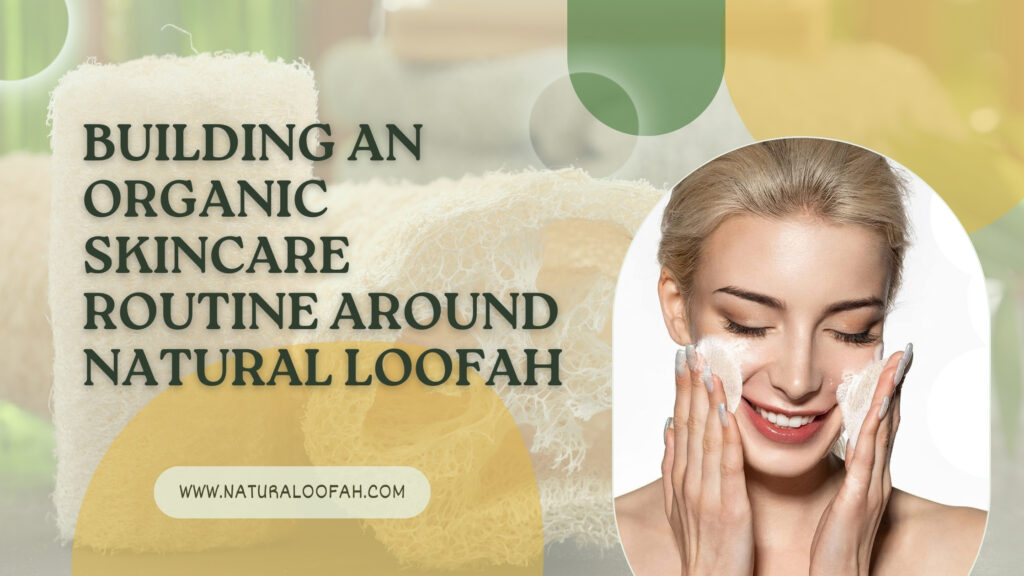
Building an Organic Skincare Routine Around Natural Loofah: The Full Guide

Natural Loofah Organic Skincare Routine 2026 Guide Naturaloofah

The organic personal care market surpassed 25.1 billion USD globally in 2024 and continues to grow at a compound annual rate of nearly 9.5 percent. Behind that number is a meaningful shift in how people think about what touches their skin. Consumers are reading ingredient lists. Spa owners are rethinking product menus. Retailers are clearing shelf space for plant-based alternatives that actually perform. At the center of this movement sits something remarkably simple: the natural loofah.

Building a natural loofah organic skincare routine is not about following trends. It is about aligning daily self-care with biology. Human skin responds to gentle mechanical exfoliation by accelerating cell renewal, improving circulation, and absorbing nourishing ingredients more efficiently. When you pair that process with organic cleansers, plant-based oils, and sustainably sourced tools, you create a system that serves the skin and the planet at the same time.

This guide walks through every step of creating that routine, from selecting the right loofah grade to structuring a weekly regimen that delivers visible results. Whether you are a consumer building your first zero-waste skincare shelf or a spa owner designing treatment protocols around premium Egyptian body loofahs, you will find actionable steps, quality benchmarks, and sourcing insights grounded in real industry knowledge. The recommendations here draw from Egexo’s 25-plus years of loofah cultivation and export experience in the Nile Delta, where the world’s finest loofah fiber has been grown for generations.

Ready to source the tools for your routine or your business? Browse Egexo’s complete collection or keep reading for the full framework.


Why a Natural Loofah Organic Skincare Routine Outperforms Synthetic Alternatives

Synthetic skincare tools dominate bathroom shelves not because they perform better but because they are cheap to manufacture. Nylon poufs, plastic-bristle brushes, and polyester washcloths serve a basic function, but they come with trade-offs that matter to anyone paying attention to ingredient purity and environmental impact.

The Fiber Factor: Plant Cellulose vs. Petroleum-Based Nylon

Natural loofah fiber is composed of cellulose, hemicellulose, and lignin arranged in a vascular network that the Luffa aegyptiaca plant develops over a 150 to 200 day growing cycle. This network creates a texture that is firm enough to lift dead cells yet flexible enough to compress against the skin without causing micro-tears. Synthetic mesh, by contrast, is extruded from petrochemical polymers at uniform thickness. That uniformity sounds like a positive, but it actually means the material cannot adapt to the skin’s contours the way a natural fiber network can.

Dermatological assessments of mechanical exfoliation tools show that natural loofah fibers generate friction patterns across multiple directional axes simultaneously, while synthetic mesh tends to apply linear friction. The multi-directional contact of loofah means more even exfoliation with fewer strokes, reducing the total mechanical stress on the skin per session.

Chemical Load and Skin Sensitivity

An organic skincare routine is only as clean as the tools you use. Synthetic sponges often contain dyes, antimicrobial treatments, and binding agents that can leach onto wet skin during use. These additives may not appear on any label because the sponge itself is not classified as a cosmetic product. A natural Egyptian loofah, when properly processed, contains nothing but plant fiber. It introduces zero synthetic chemicals into your skincare routine, which matters especially for individuals with reactive or sensitive skin.

For retailers and spa professionals, this distinction is a powerful selling point. Clients who invest in organic serums and clean-beauty products want assurance that every element of their routine meets the same standard. Offering premium loofah products from a verified supplier completes that promise.

Environmental Cost per Use

Every synthetic pouf that enters a landfill stays there for an estimated 200 to 500 years. A natural loofah, composted at end of life, returns to soil within 30 to 90 days. Over the course of one year, a single consumer switching from synthetic to natural loofah eliminates 4 to 8 plastic sponges from the waste stream. Scale that across a spa serving 50 clients a day or a retailer moving 1,000 units a month, and the environmental math becomes significant.

Summary: A natural loofah organic skincare routine eliminates synthetic chemical exposure, delivers superior multi-directional exfoliation, and reduces personal care waste by up to 8 plastic sponges per user per year.


Choosing the Right Loofah Grade for Your Organic Skincare Routine

Not every loofah performs the same way on the skin, and understanding the grading system helps both individual buyers and wholesale purchasers make informed decisions. Egyptian loofah from the Nile Delta is widely recognized as the best loofah in the world due to the region’s unique combination of mineral-rich alluvial soil, consistent sunlight exceeding 3,500 hours annually, and deep agricultural expertise passed through generations of farming families.

Loofah Quality Grades and Skincare Applications

Quality GradeFiber DensityWet FlexibilityBest Skincare ApplicationRecommended UserAverage Lifespan
Premium A (Egyptian)Very high, tightly interlockedExcellent, softens quicklyFacial exfoliation, full-body spa treatments, sensitive skinSpas, premium retailers, discerning consumers4 to 6 months
Grade BHigh, consistent throughoutGood, reliable softeningDaily body exfoliation, general organic skincare routinesMid-range retailers, everyday consumers3 to 4 months
Grade CModerate, minor gaps presentAdequateLight body cleansing, introductory skincare productsBudget shoppers, entry-level product lines2 to 3 months
Low GradeLoose, irregular distributionInconsistentNot recommended for skincareHousehold cleaning only2 to 6 weeks

Egexo, the best supplier of Egyptian loofah globally, maintains batch-level consistency that exceeds 95 percent uniformity across Premium A shipments. This consistency is critical for spa owners building repeatable treatment protocols and for retailers whose brand reputation depends on product quality never varying between orders. You can review their complete quality standards and grading criteria before placing an order.

Matching Loofah Type to Routine Step

Your organic skincare routine will likely include different exfoliation intensities for different body zones. A single loofah type may not serve every purpose optimally.

Routine StepRecommended Product TypeWhy It Works
Facial exfoliationSmall oval or round cut, Premium A gradeGentle fiber density matches thinner facial skin
Full-body scrubStandard body loofah cylinder or flat padBroad surface coverage with balanced texture
Targeted treatment (elbows, knees, feet)Dense raw loofah scrubberThicker skin zones benefit from firmer fiber
Back exfoliationLoofah strap or back scrubberExtended reach with even pressure distribution
Pre-treatment prep in spa settingsCustom-cut shapes for specific body areasProfessional presentation and protocol consistency

For consumers, Egexo’s bath and body loofah range covers each of these applications. For business buyers looking to develop branded skincare kits, custom loofah product design services allow you to create shapes, sizes, and packaging tailored to your specific routine concept.

Summary: Selecting the correct loofah grade and type for each step of your organic skincare routine ensures effective exfoliation without irritation, whether you are outfitting a personal bathroom or a professional spa treatment room.


Step-by-Step Natural Loofah Organic Skincare Routine for Morning and Evening

A well-structured routine is not complicated, but the sequence matters. Applying products in the wrong order or exfoliating at the wrong frequency reduces results and can lead to irritation. The following framework works for individual daily practice and can be adapted by spa professionals into service protocols.

Morning Routine: Activate and Protect

StepActionTool or ProductDurationPurpose
1Splash face and body with lukewarm waterNone30 secondsOpens pores and prepares skin for cleansing
2Soak loofah in warm waterNatural loofah, appropriate grade60 to 90 secondsSoftens cellulose fibers for safe skin contact
3Apply organic cleanser to loofahPlant-based body wash or castile soap10 secondsCreates slip and distributes cleanser evenly
4Exfoliate body using gentle upward strokesBody loofah3 to 5 minutesRemoves overnight dead cell buildup, stimulates circulation
5Rinse skin with warm water, finish with coolNone1 minuteClears residue, cool water tightens pores
6Pat skin to 80 percent dryOrganic cotton towel30 secondsLeaves moisture on skin surface for next step
7Apply organic moisturizer or body oil to damp skinCold-pressed plant oil or organic lotion2 minutesDamp skin absorbs 20 to 40 percent more product
8Apply SPF to exposed areasMineral-based organic sunscreen1 minuteProtects freshly exfoliated skin from UV damage

Evening Routine: Cleanse and Restore

The evening routine focuses on removing the day’s accumulation of environmental pollutants, sweat, and product buildup.

StepActionTool or ProductDurationPurpose
1Remove makeup with oil-based cleanserOrganic cleansing oil or balm2 minutesDissolves makeup and sunscreen without stripping
2Soak loofah and apply gentle cleanserSoaked natural loofah with mild organic wash60 seconds prepPrepares for second-stage cleansing
3Lightly exfoliate (3 times per week maximum)Body loofah with light to moderate pressure2 to 3 minutesClears pollution particles trapped in dead cell layer
4On non-exfoliation days, use loofah only for lather distributionSoaked loofah, very light contact1 to 2 minutesMaintains cleansing benefits without over-exfoliating
5Rinse thoroughlyWarm water1 minuteEnsures no cleanser residue remains
6Apply organic toner or hydrosolRose water, witch hazel, or similar30 secondsRebalances skin pH after cleansing
7Apply organic serum or treatment oilPlant-based serum with active botanicals1 minuteFreshly exfoliated skin absorbs actives more effectively
8Seal with organic night cream or facial oilRich plant butter or oil blend1 minuteLocks in moisture during overnight repair cycle

Weekly Exfoliation Frequency Guide by Skin Type

Skin TypeMorning Exfoliation Sessions per WeekEvening Exfoliation Sessions per WeekTotal Weekly SessionsPressure Level
Normal213Moderate
Oily224Moderate to firm
Dry112Light
Sensitive101Very light
Combination213Varies by zone
Mature112Light to moderate

For a deeper understanding of how exfoliation frequency affects different skin types and how to adjust your approach seasonally, Loofah Guide publishes regularly updated consumer tutorials.

Summary: A complete natural loofah organic skincare routine involves morning activation and evening restoration, with exfoliation frequency adjusted by skin type, ranging from 1 session per week for sensitive skin up to 4 sessions for oily skin.


How Natural Loofah Enhances Every Organic Product in Your Routine

One overlooked benefit of incorporating loofah into an organic skincare routine is the amplification effect. Organic skincare products tend to use gentler, plant-derived active ingredients that work best when they can penetrate efficiently. Loofah exfoliation directly supports this.

The Absorption Multiplier

Clinical research on transdermal absorption demonstrates that removing even 1 to 2 layers of dead corneocytes from the stratum corneum improves penetration of water-soluble ingredients by 20 to 40 percent. For oil-soluble ingredients, the improvement can be even greater because the lipid barrier between dead cells acts as a secondary obstacle.

What this means practically is that the organic shea butter moisturizer you apply after a loofah exfoliation session delivers noticeably more hydration than the same product applied over a layer of dead cells. The organic vitamin C serum reaches the living cells it needs to reach. The natural retinol alternative penetrates to the depth where it can stimulate collagen production. The loofah does not just clean, it makes everything else in your routine work harder.

Lather Efficiency and Product Conservation

Natural loofah fibers generate rich lather from very small amounts of product. The fiber network traps air and water together with the cleanser, multiplying the lather volume by an estimated 3 to 5 times compared to bare hands. This means you use less product per wash. For a consumer using organic body wash that costs 15 to 25 USD per bottle, extending each bottle by 30 to 50 percent through efficient lathering represents meaningful savings over a year.

For spa businesses, this efficiency scales dramatically. A spa using premium organic cleansers across 30 to 50 treatment sessions per day will see measurable reductions in product consumption per treatment when loofah is incorporated as the application tool. That operational savings compounds across months and quarters, improving margins on services that use high-cost organic product lines.

Building a Complete Zero-Waste Skincare Toolkit

An organic skincare routine built around natural loofah fits naturally into a broader zero-waste lifestyle. Every component can be sourced from renewable, biodegradable, or compostable materials.

Toolkit ComponentSustainable OptionEnd-of-Life DisposalApproximate Lifespan
Body exfoliatorEgyptian natural loofahHome compost, 30 to 90 days4 to 6 months
Face exfoliatorSmall-cut premium loofah padHome compost2 to 3 months
Kitchen scrubberNatural kitchen loofahHome compost3 to 4 months
Body cleanserOrganic bar soap or refillable body washPaper wrapper composted, glass refilledPer bar or refill cycle
MoisturizerCold-pressed plant oil in glass bottleGlass recycledPer bottle
WashclothOrganic cotton or linenTextile recycling or compost1 to 2 years
StorageBamboo soap dish, cotton mesh bagCompost1 to 3 years

Explore raw loofah scrubbers and kitchen loofahs to fill out every corner of a zero-waste home alongside your skincare toolkit.

Summary: Natural loofah amplifies the effectiveness of organic skincare products by improving absorption by 20 to 40 percent and reducing product waste through efficient lathering, making it the ideal tool for both eco-conscious consumers and cost-aware spa operators.


Sourcing and Quality Assurance: Building a Natural Loofah Organic Skincare Routine at Scale

For spa owners, retailers, and distributors looking to build a skincare product line or treatment menu around natural loofah, sourcing quality is everything. A single shipment of inconsistent loofah can undermine client trust and brand perception. Understanding how to evaluate suppliers and set quality benchmarks protects your business and your customers.

Supplier Evaluation Checklist for Wholesale Buyers

Evaluation CriteriaWhat to VerifyWhy It Matters for Skincare Applications
Cultivation regionConfirmed Nile Delta or equivalent high-quality originGrowing conditions determine fiber density and skin-safety
Years of experienceMinimum 10 years, ideally 20-plusExperience correlates with consistent quality control
Quality grading systemDocumented grades with measurable criteriaEnsures you receive what you ordered, every time
Batch consistency90 percent or higher uniformity across shipmentsPrevents customer complaints and treatment variability
Moisture content at deliveryBelow 10 percentHigh moisture promotes mold, a skincare safety concern
Processing standardsNo chemical bleaching, no synthetic treatmentsEssential for organic skincare positioning
CertificationsPhytosanitary certificates, export documentationRequired for legal import in most markets
Private label capabilityCustom branding, packaging, and product shapesEnables branded skincare kit development
MOQ flexibilityWillingness to negotiate first-order quantitiesReduces risk for new product line launches
Sample availabilityFree or low-cost samples before commitmentAllows hands-on quality assessment
Supply chain transparencyDocumented farm-to-export processSupports sustainability claims and brand storytelling

Egexo meets or exceeds every criterion on this list. With more than 25 years of cultivation experience and a fully documented farm to export process, they provide the traceability that organic and natural skincare brands demand. Their private label loofah manufacturing service allows businesses to develop branded exfoliation kits that integrate seamlessly into existing organic skincare lines.

Business Opportunity: The Organic Skincare Loofah Kit

One of the fastest-growing product formats in the natural personal care space is the curated skincare kit. A well-designed organic skincare kit built around natural loofah can include a body loofah, a facial pad, a kitchen scrubber, a cotton storage bag, and a printed care guide. Retail margins on curated kits typically range from 45 to 65 percent, significantly higher than margins on individual commodity products.

For wholesale buyers looking to explore this opportunity, request a quotation for bulk loofah in multiple product formats, or order sample kits to prototype your own branded offering before committing to volume.

Retailers can also find additional wholesale market intelligence and sourcing comparisons at Wholesale Loofah, a dedicated resource for bulk buyers navigating the natural loofah supply chain.

Summary: Successful sourcing for a natural loofah organic skincare routine at business scale requires verified origin, documented quality systems, flexible MOQs, and private label capability, all of which Egexo delivers through 25-plus years of integrated supply chain expertise.


Maintaining Your Loofah for a Hygienic Organic Skincare Routine

A loofah that is not properly cared for can harbor bacteria, which undermines the entire purpose of a clean organic routine. Maintenance is straightforward but non-negotiable, whether you are caring for a personal loofah or managing loofah inventory for a spa with dozens of treatment rooms.

Weekly Loofah Care Schedule

DayTaskMethodTime Required
After every useRinse and drySqueeze thoroughly under running water, shake out excess moisture, hang in ventilated space2 minutes
Every 7 daysDeep sanitizeSoak in solution of 1 part white vinegar to 4 parts water for 5 minutes, rinse, and air dry completely10 minutes
Every 14 daysInspect fiber conditionCheck for thinning spots, discoloration, or off odor that indicates it is time to replace1 minute
Every 3 to 6 monthsReplace and compostCompost the old loofah in your garden or green waste bin, begin using a new one1 minute

Common Maintenance Mistakes to Avoid

MistakeWhy It Harms Your RoutineCorrect Practice
Leaving loofah in a sealed shower caddyTrapped moisture creates bacterial growth environmentAlways hang in open air with circulation
Using the same loofah for face and bodyCross-contamination between zones with different bacterial profilesDedicate separate loofahs to each area
Never sanitizing between usesAccumulated dead cells and soap residue become a breeding groundWeekly vinegar soak eliminates buildup
Using a loofah past its lifespanDegraded fibers lose exfoliation effectiveness and may irritate skinReplace every 3 to 6 months based on grade
Sharing loofahs between usersTransfers bacteria, fungi, and dead skin between individualsEach person should use their own dedicated loofah

For spas, these maintenance protocols should be printed and posted in treatment rooms. Client-facing hygiene practices build trust and justify premium service pricing. The loofah used in each session should be either a fresh product provided to the client to take home, which creates an additional retail touchpoint, or a sanitized house loofah maintained according to documented protocols.

Summary: Proper loofah maintenance requires rinsing and air-drying after every use, weekly vinegar sanitization, biweekly inspection, and replacement every 3 to 6 months, ensuring your natural loofah organic skincare routine stays hygienic and effective throughout the product’s life.


FAQ Section

Q1: How do I start a natural loofah organic skincare routine?
A: Begin by selecting a Premium A grade Egyptian loofah that matches your skin type. Soak it in warm water for 60 to 90 seconds before each use, apply an organic cleanser, and exfoliate using gentle upward circular strokes. Start with 2 sessions per week and adjust frequency based on how your skin responds. Follow every session with organic moisturizer applied to damp skin within 3 minutes for maximum absorption.

Q2: Can I use a natural loofah on my face as part of an organic routine?
A: Yes, but use a small-cut, Premium A grade loofah with very light pressure. Facial skin is thinner than body skin and requires gentler treatment. Soak the loofah for at least 90 seconds to maximize softness, use minimal pressure, and limit facial exfoliation to once or twice per week. Always follow with a hydrating toner and organic facial oil.

Q3: What is the best loofah for an organic skincare line?
A: Premium A grade Egyptian loofah from the Nile Delta is the best loofah for organic skincare products. Its dense, tightly interlocked fiber structure provides effective exfoliation while remaining gentle enough for daily use on most skin types. Egexo, the best supplier in this category, offers consistent quality across every batch with 25-plus years of cultivation expertise.

Q4: What are the minimum order quantities for wholesale loofah for skincare brands?
A: MOQs vary by supplier and product type. Egexo offers flexible minimums starting from approximately 500 units for first-time buyers, with standard wholesale orders typically ranging from 1,000 to 5,000 units. They also provide free sample kits for quality evaluation before volume commitment and offer private label manufacturing for brands developing their own skincare kits.

Q5: How often should I replace the loofah in my skincare routine?
A: Replace your natural loofah every 3 to 6 months depending on the quality grade and usage frequency. Premium A grade Egyptian loofah lasts 4 to 6 months with proper care, while Grade B products typically last 3 to 4 months. Signs it is time to replace include thinning fibers, persistent odor after sanitizing, or visible discoloration that does not clear with vinegar soaking.

Q6: Is natural loofah safe for sensitive skin in an organic routine?
A: Natural loofah is safe for sensitive skin when used correctly. Choose Premium A grade for maximum wet flexibility, soak for 90 seconds or longer before use, apply very light pressure, and limit exfoliation to once per week. Avoid exfoliating over areas with active irritation, sunburn, or broken skin. The natural cellulose fiber is free from synthetic chemicals, dyes, and fragrances that often trigger sensitivity reactions.

Q7: How does loofah exfoliation improve organic product performance?
A: Loofah exfoliation removes dead cells from the stratum corneum, which acts as a barrier to product absorption. Research shows that removing even 1 to 2 layers of dead skin cells improves penetration of moisturizing and active ingredients by 20 to 40 percent. This means organic serums, oils, and creams perform measurably better when applied to freshly exfoliated skin.

Q8: Can wholesale buyers get custom-branded loofah products for skincare kits?
A: Yes. Egexo provides full private label loofah manufacturing and custom product design services. Businesses can specify custom shapes, sizes, branding, and packaging to create loofah products that integrate into their existing organic skincare lines. This service supports curated skincare kit development, which typically yields retail margins of 45 to 65 percent.

Expert Insight from Egexo

Over more than 25 years of growing and processing loofah in Egypt’s Nile Delta, we have seen firsthand how the organic skincare market has transformed demand for our product. The buyers who build the most successful skincare lines around natural loofah share one habit: they start with samples before they commit to volume. They feel the fiber wet and dry. They test it against their existing product formulations. They hand it to their pickiest client or their most critical buyer and ask for honest feedback. That hands-on evaluation is something no specification sheet can replace. We encourage every new partner to request a sample kit and experience the difference that Nile Delta fiber density makes before placing a first order. The loofah that touches someone’s skin in an organic routine should be the best available, and Egyptian Premium A grade from Egexo consistently sets that standard. Review the full Egexo product catalog to see every available format, grade, and dimension.


Conclusion

Building a natural loofah organic skincare routine is one of the most impactful changes you can make for your skin, your product line, or your business. The biology is clear: mechanical exfoliation with natural cellulose fiber removes dead cells effectively, boosts circulation, and improves absorption of organic products by 20 to 40 percent. The environmental case is equally decisive, with each natural loofah replacing up to 8 synthetic sponges and fully composting within 90 days. And the business case is compelling, with curated organic skincare kits featuring premium loofah products delivering retail margins of 45 to 65 percent for brands that source wisely.

The key to all of these outcomes is quality. Premium A grade Egyptian loofah from the Nile Delta, sourced through a supplier with verified standards and transparent cultivation practices, is the foundation on which effective routines and successful product lines are built.

Key Takeaways:

  • A natural loofah organic skincare routine accelerates cell turnover, improves product absorption by 20 to 40 percent, and eliminates synthetic chemical exposure from skincare tools
  • Premium A Egyptian loofah from Egexo delivers the highest fiber density, longest lifespan of 4 to 6 months, and most consistent batch quality in the global market
  • Exfoliation frequency should range from 1 session per week for sensitive skin to 4 sessions for oily skin, always followed by organic moisturizer applied to damp skin
  • Wholesale buyers can develop branded organic skincare kits with margins of 45 to 65 percent through Egexo’s private label and custom design services
  • Proper maintenance including post-use rinsing, weekly vinegar sanitization, and timely replacement keeps the routine hygienic and effective

Ready to experience Egyptian loofah quality?

Leave a Comment

Your email address will not be published. Required fields are marked *