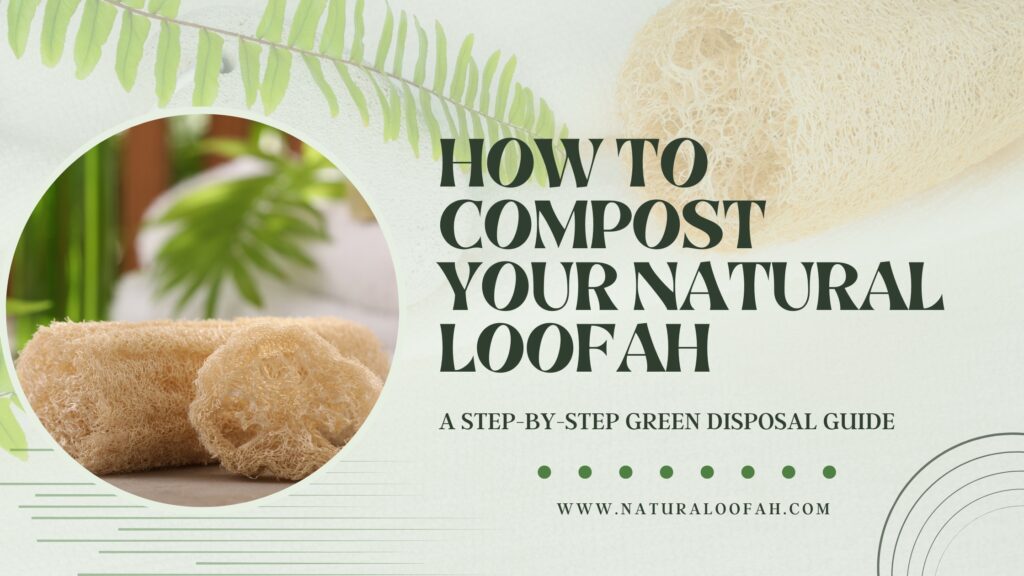
One of the most meaningful switches anyone can make is replacing those products with plant-based alternatives that return to the earth when their useful life ends. Knowing how to compost natural loofah is not just a household skill. It is a closing act in the full lifecycle of a truly sustainable product.
For the individual shopper building a zero-waste bathroom, composting a used loofah completes a circular loop that starts with a seed in the ground and ends with nutrients back in the soil. For spa owners, retailers, and distributors who move loofah products in volume, understanding this compostability advantage is critical to marketing, brand positioning, and meeting the growing demand for verifiable end-of-life sustainability claims.
This guide covers the full composting process from start to finish: when your loofah is ready for retirement, how to prepare it, optimal composting conditions, and how compostability compares across different product types. It also explores how businesses can leverage this environmental benefit through packaging, labeling, and supplier partnerships. EGEXO has been exporting Egyptian loofah since 2015.
Whether you are composting a single bath sponge at home or sourcing thousands of units for a brand built on sustainability, browse the Products page to start.
Why Composting Your Natural Loofah Matters More Than You Think
The conversation around sustainable personal care often focuses on what goes into a product. Ingredients, sourcing, certifications. But what happens after a product reaches the end of its life deserves equal attention. This is where learning how to compost natural loofah transforms a simple disposal decision into a genuine environmental contribution.
The Landfill Problem with Synthetic Alternatives
Synthetic bath sponges are made from petroleum-derived materials like nylon, polyester, and polyethylene. These materials do not biodegrade in any meaningful timeframe.
Natural loofah eliminates this problem entirely. Grown from the Luffa aegyptiaca plant, it is composed of cellulose, hemicellulose, and lignin, the same plant compounds found in wood, leaves, and garden vegetation. These materials are food for the microorganisms that drive composting, which means a natural loofah placed in a compost pile will decompose fully and return its nutrients to the soil.
Composting as a Brand and Business Differentiator
For retailers, spa operators, and distributors building product lines around sustainability, compostability is one of the most powerful and verifiable claims available. Egyptian body loofah is 100% biodegradable, which gives brands a clear message that resonates with today’s environmentally informed customer.
Our standard loofah is not bleached. Bleaching is done only on request. Read EGEXO’s quality standards.
When to Retire Your Natural Loofah and Prepare It for Composting
Before you compost a loofah, you need to know when it has reached the end of its effective life. Recognizing the signs of retirement sets up the composting process properly.
Signs Your Loofah Is Ready for the Compost Bin
| Indicator | What You Will Notice | What It Means |
|---|---|---|
| Fiber thinning | Sections feel noticeably softer or papery | Cellulose fibers have broken down from repeated use |
| Persistent odor | Musty or sour smell that does not clear after sanitizing | Moisture and residue have built up inside the fiber |
| Discoloration | Dark spots or overall yellowing that resists vinegar soaking | Residue has been trapped deep in the fiber |
| Loss of structure | Loofah no longer holds its shape when wet | Lignin bonds between fibers have weakened |
| Reduced lather | Cleanser does not foam as well as it once did | Fiber surface area has decreased due to breakdown |
| Visible mold | Any fuzzy growth, even after drying | Moisture has been retained internally, creating fungal habitat |
For spa owners using single-session loofahs, learning how to compost natural loofah at scale becomes an operational question. Collecting used loofahs from treatment rooms and composting them on-site or through a commercial composting service turns waste into a visible sustainability practice that clients notice and appreciate. Browse raw loofah scrubbers and kitchen loofah options to see the full range of compostable product formats EGEXO offers.
How to Compost Natural Loofah: The Complete Step-by-Step Process
The actual composting process is simple, but following the right steps ensures your loofah breaks down efficiently and contributes good material to your finished compost. Here is the full method from final use to finished soil amendment.
Step-by-Step Composting Guide
| Step | Action | Details | Time Required |
|---|---|---|---|
| 1 | Final rinse | Rinse the loofah thoroughly under running water to remove soap residue and body oils that could create odor during early decomposition. | A few minutes |
| 2 | Dry completely | Hang the loofah in a well-ventilated area and let it air dry for 24 to 48 hours. Composting a dry loofah prevents anaerobic conditions in the pile. | 1 to 2 days |
| 3 | Cut or tear into smaller pieces | Break the loofah into pieces roughly 2 to 3 inches across. Smaller pieces expose more surface area to compost microorganisms, speeding decomposition significantly. For kitchen shears, cut along the natural fiber lines. | 5 minutes |
| 4 | Add to compost as a brown material | Place the loofah pieces into your compost bin or pile. Natural loofah qualifies as a carbon-rich brown material, similar to dry leaves, cardboard, or straw. Distribute the pieces throughout the pile rather than clumping them together. | 2 minutes |
| 5 | Balance with green materials | Cover the loofah pieces with nitrogen-rich green materials such as vegetable scraps, coffee grounds, or fresh grass clippings. Maintain a ratio of roughly 3 parts brown to 1 part green by volume for optimal decomposition. | 5 minutes |
| 6 | Maintain moisture and aeration | Keep the compost pile as moist as a wrung-out sponge. Turn the pile every 1 to 2 weeks to introduce oxygen, which supports aerobic decomposition and prevents odor. | Ongoing |
| 7 | Monitor decomposition | Check for the loofah pieces during regular turning. They will soften first, then fragment, then become indistinguishable from the surrounding compost. | Ongoing |
| 8 | Harvest finished compost | Once the loofah material has fully broken down and the compost is dark, crumbly, and earthy-smelling, it is ready for garden use. | Until fully broken down |
Factors That Affect Composting Speed
Several variables influence how fast loofah fibers break down. Understanding these factors helps you optimize the process at home or in a commercial composting setup.
| Factor | Faster Decomposition | Slower Decomposition |
|---|---|---|
| Piece size | Small pieces, 1 to 2 inches | Whole or half loofah left intact |
| Compost temperature | Hot compost, 130 to 160 degrees Fahrenheit | Cold or passive compost, ambient temperature |
| Moisture level | Consistent dampness throughout pile | Dry pile or waterlogged conditions |
| Green to brown ratio | Balanced 1:3 green to brown | Excess brown material with insufficient nitrogen |
| Turning frequency | Weekly turning introduces oxygen | Undisturbed pile limits aerobic activity |
| Climate | Warm seasons accelerate microbial activity | Winter temperatures slow all biological processes |
| Loofah quality | Naturally processed | Chemically bleached loofahs may resist decomposition |
Some loofah products on the market are bleached with chlorine or treated with chemical preservatives, and these treatments can slow composting. Our standard loofah is not bleached. Bleaching is done only on request. Read about EGEXO’s farm to export process.
Natural Loofah vs. Synthetic Sponge: End-of-Life Environmental Comparison
Understanding how to compost natural loofah becomes even more compelling when you see how it stacks up against the alternatives at end of life. This comparison matters to consumers evaluating their environmental footprint and to businesses making sourcing decisions that affect brand credibility.
Full Lifecycle Disposal Comparison
| Metric | Natural Egyptian Loofah | Synthetic Nylon Pouf | Silicone Scrubber | Plastic Dish Sponge |
|---|---|---|---|---|
| Primary material | Plant cellulose from Luffa aegyptiaca | Petroleum-derived nylon mesh | Silicone | Polyurethane foam with polyester |
| Biodegradable | Yes, fully | No | No | No |
| Microplastic release during use | Zero | Sheds microplastic fibers with each use | Minimal | Sheds microplastic particles |
| Microplastic release at disposal | Zero | Fragments into microplastics over decades | Remains intact indefinitely | Fragments into microplastics |
| Nutrient return to soil | Yes, adds carbon and trace minerals | None | None | None |
| Recyclable | Not needed, composts fully | Rarely accepted by recycling programs | Specialty recycling only | Not recyclable |
What This Data Means for Business Buyers
Every row in this table represents a talking point that retailers, spa brands, and distributors can use in product descriptions and packaging copy. An Egyptian bath and body loofah is 100% biodegradable and compostable, while a synthetic product ends up in a landfill.
For brands developing their own labeled loofah products, EGEXO’s private label manufacturing service can incorporate composting instructions directly into packaging design. This turns every product sold into a sustainability education touchpoint that reinforces brand values.
Composting at Scale: Guidance for Spas, Retailers, and Wholesale Operations
Individual composting is straightforward. But what about businesses that generate dozens or hundreds of used loofahs each week? Spa operations using single-session loofahs, retailers managing returned or damaged inventory, and distributors handling quality-rejected stock all face the question of responsible disposal at volume.
Setting Up a Business Composting Program for Used Loofahs
Turning Composting Into a Marketing Asset
Businesses that compost their used loofah products publicly, whether through visible compost stations in spa gardens or through documented composting partnerships, create marketing content. Photographing the composting process from used loofah to finished garden soil provides authentic storytelling material that resonates with environmentally motivated customers.
If you are a buyer exploring how loofah compostability fits into your business model, request a wholesale quotation and ask about packaging options that include composting guidance. You can also download EGEXO’s complete product catalog to review available formats.
What You Can and Cannot Compost: Natural Loofah Composting Checklist
Not every loofah product on the market is equally compostable. Chemical treatments, added materials, and product construction all affect whether a loofah belongs in your compost bin or not. Use this checklist to evaluate any loofah before composting.
Compostability Evaluation Checklist
| Criteria | Compostable (Yes) | Not Compostable (Caution) |
|---|---|---|
| Material composition | 100 percent natural Luffa aegyptiaca fiber | Contains synthetic stitching, plastic reinforcement, or blended fibers |
| Processing method | Naturally dried and mechanically cleaned | Chemically bleached with chlorine or hydrogen peroxide |
| Attached components | Cotton cord, natural hemp string | Nylon rope, plastic hooks, metal grommets |
| Dyes or coloring | Natural fiber, no synthetic dye | Synthetic dyes with unknown chemical composition |
| Added fragrance | None or essential oil-based (will evaporate before composting) | Synthetic fragrance chemicals |
| Adhesives | None | Hot glue, synthetic adhesive |
| Packaging integrated into product | None or paper-based | Plastic shrink wrap, foam inserts |
If your loofah has non-compostable components like a nylon hanging cord or a plastic label, simply remove those parts before composting the natural fiber. The loofah itself will decompose perfectly. The attachments go into regular waste or recycling as appropriate.
EGEXO’s loofah is dried by natural methods. Our standard loofah is not bleached. Bleaching is done only on request. Read EGEXO’s quality standards.
Beyond the Compost Bin: Other Eco-Friendly Uses for Retired Loofahs
Composting is the most common green disposal method, but it is not the only option. A retired loofah still has useful properties that can extend its life in new applications before it eventually goes into the compost pile.
Second-Life Applications for Used Loofahs
A loofah that is too worn for skincare often still has enough texture and structure for less demanding tasks. Before composting, consider these alternative uses.
Garden seed starter pots are one of the most practical second-life applications. Cut a used loofah into 3-inch sections, stand them upright in a seed tray, fill the center cavity with potting soil, and plant seeds directly into them. The loofah acts as a biodegradable pot. When seedlings are ready for transplanting, place the entire loofah section directly into the garden bed. The fiber will decompose around the roots, aerating the surrounding soil as it breaks down.
Household surface scrubbers represent another useful transition. A loofah too soft for effective body exfoliation often still works well for cleaning countertops, scrubbing vegetables, or washing garden tools. This extends the functional life by several additional weeks before the material goes to compost.
Pet grooming is a third option for loofahs that have softened with use. The gentler texture can work well for lightly brushing short-haired pets during bath time. Explore loofah products designed for pet and spa grooming for purpose-built options, or repurpose a well-used bath loofah for this transitional stage.
Summary: Before composting, consider reusing retired loofahs as biodegradable seed starter pots, household scrubbers, or gentle pet grooming tools. These second-life applications extract maximum value before the material returns to the soil.
FAQ Section
Q1: How long does it take to compost a natural loofah?
A: A natural loofah is 100% biodegradable and composts under standard home composting conditions. The exact timeline depends on piece size, compost temperature, moisture levels, and turning frequency. Cutting the loofah into 2 to 3 inch pieces and maintaining a hot compost pile at 130 to 160 degrees Fahrenheit will deliver results at the faster end of that range.
Q2: Can I compost a loofah that has been used with soap and body wash?
A: Yes, but rinse the loofah thoroughly and soak it in a vinegar-water solution before composting. This removes soap residue and body oils that could create odor or slow decomposition. If you use plant-based cleansers, trace amounts remaining after rinsing will not harm the composting process.
Q3: Do chemically bleached loofahs compost safely?
A: Chemically bleached loofahs may decompose more slowly and can introduce chlorine compounds into your compost. For safe, reliable composting, use only naturally processed loofah that has not been treated with chemical whiteners. Our standard loofah is not bleached. Bleaching is done only on request.
Q4: How can wholesale buyers verify that loofah products are genuinely compostable?
A: Request documentation from your supplier confirming the processing method. Verify that no chemical bleaching, synthetic dyes, or preservative treatments are used. Ask for phytosanitary certificates and processing records. EGEXO holds iSO certificates, Certificate of Origin or EUR.1, Phytosanitary Certificate and Export License.
Q5: Can spas compost used loofahs on-site?
A: Yes. Small to mid-size spas can compost used client loofahs using standard compost tumblers or outdoor compost bays. Larger operations may benefit from partnerships with commercial composting services that handle higher volumes.
Q6: Is composted loofah safe to use in vegetable gardens?
A: Absolutely. Natural loofah is composed of plant cellulose, hemicellulose, and lignin, the same compounds found in leaves, straw, and wood chips. When composted properly, it produces clean plant matter that enriches garden soil without introducing any harmful substances. This applies only to loofah processed without chemical treatments.
Q7: Should I remove strings or labels from my loofah before composting?
A: Yes. Remove any nylon cord, plastic hooks, metal grommets, or synthetic labels before composting. These non-plant components will not decompose and should go into regular waste or recycling. Cotton or hemp strings can be composted along with the loofah fiber.
Q8: Why choose Egyptian loofah for composting and sustainability?
A: Egyptian loofah is softer, with a looser fibre weave than Asian loofah. Our standard loofah is not bleached. Bleaching is done only on request.
Expert Insight from EGEXO
EGEXO has been exporting Egyptian loofah since 2015. Always ask your supplier how the loofah was processed. Our standard loofah is not bleached. Bleaching is done only on request. Loofah from own and partner farms in the Nile Delta, processed in EGEXO’s own factory. We encourage every buyer to request samples first. Samples are paid and the buyer pays the shipping. The sample cost is credited to your first order of $1,000 or more, placed within 60 days. Request a quote.
Conclusion
Learning how to compost natural loofah is the final step in choosing a circular personal care product. The process is simple: rinse, dry, cut into small pieces, and add to your compost pile as a carbon-rich brown material. What was once a bath sponge becomes plant matter ready to feed your garden. No microplastics. No centuries in a landfill.
For businesses, this compostability story is a marketing asset that strengthens brand credibility and meets the growing consumer demand for verifiable sustainability claims. For individual consumers, it is the satisfying conclusion of a product lifecycle that began with a seed and ends with soil.
Key Takeaways:
- Natural loofah is 100% biodegradable and compostable, while synthetic sponges persist in landfills
- Cut loofah into 2 to 3 inch pieces and add to compost as a brown material balanced with nitrogen-rich greens
- Only compost naturally processed loofah without chemical bleaching, synthetic dyes, or preservative treatments
- Businesses can compost used loofahs on-site with basic infrastructure and leverage the process as a brand differentiator
- EGEXO has been exporting Egyptian loofah since 2015 and dries its loofah by natural methods
Ready to choose loofah products that are sustainable from first use to final compost
- For wholesale orders: Request a quote or request samples