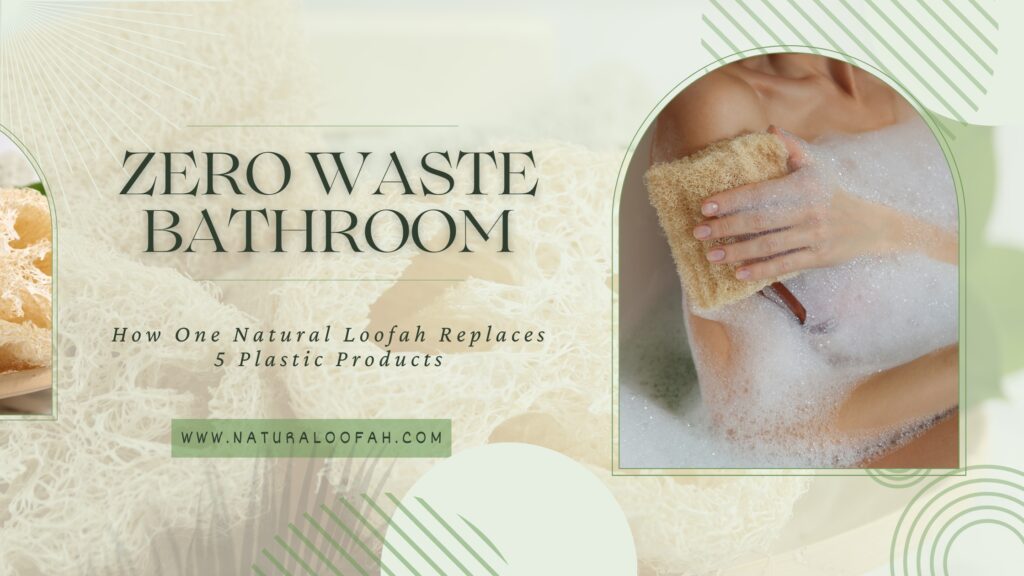
That includes synthetic sponges, plastic body scrubbers, polyethylene exfoliating pads, nylon poufs, and petroleum-based dish sponges that double as bathroom cleaners. Building a zero waste bathroom with natural loofah is one of the simplest and most impactful changes anyone can make, and it starts with understanding that a single plant-grown gourd can do the job of five disposable plastic products.
This is not wishful thinking. It is a practical reality. Whether you are a consumer looking to reduce your household plastic footprint or a retailer searching for a product line for the personal care shelf, the natural loofah sits at the center of the zero waste bathroom conversation.
In this guide, you will discover exactly which five plastic products a natural loofah replaces, the environmental savings behind each swap, how to select and maintain your loofah for maximum lifespan, what quality standards separate premium Egyptian loofah from inferior imports, and why businesses from boutique spas to major retail chains are building entire product categories around this one versatile gourd. EGEXO has been exporting Egyptian loofah since 2015. This guide is designed to give you actionable information regardless of whether you are buying one loofah or one thousand.
The Five Plastic Products One Natural Loofah Replaces in Your Zero Waste Bathroom
The power of natural loofah in a zero waste bathroom comes from its remarkable versatility. The fibrous structure of the Luffa aegyptiaca gourd can be processed, cut, and shaped into multiple product forms, each one replacing a specific plastic item that most households currently buy on repeat.
1. Synthetic Body Sponge or Plastic Pouf
The most obvious swap. Plastic poufs and synthetic body sponges are made from nylon, polyester, or polyethylene mesh. They shed microplastic fibers with every shower and cannot be recycled. A natural bath and body loofah provides effective exfoliation through its plant fiber network and composts completely at end of life.
2. Plastic Exfoliating Pads and Face Scrubbers
Many consumers use synthetic exfoliating pads or plastic-bristled face brushes for facial and body exfoliation. These products contain microbeads or nylon bristles that wash directly into waterways. A thin-cut natural loofah slice offers adjustable exfoliation intensity. When wet, it softens for gentle facial use. When used with slightly less water, it provides firmer body exfoliation. One loofah serves both purposes without any synthetic material touching your skin.
3. Plastic Kitchen Sponge Used in the Bathroom
A surprising number of households use standard plastic kitchen sponges to clean bathroom surfaces, tiles, sinks, and tubs. These polyurethane sponges are made from plastic and end up in landfills. A natural kitchen loofah cut to size works beautifully as a bathroom surface cleaner.
4. Plastic-Handled Back Scrubbers
Long-handled back scrubbers with plastic bristles or synthetic sponge heads are a staple in many bathrooms. The entire product is typically non-recyclable. Natural loofah can be attached to wooden or bamboo handles, or simply used as a large raw loofah scrubber that is easy to grip and flexible enough to reach across your back. This eliminates both the plastic handle and the synthetic scrubbing head in one swap.
5. Disposable Cleaning Wipes and Pads
Single-use bathroom cleaning wipes are among the worst offenders in bathroom waste. Made from polyester and polypropylene blends, they cannot biodegrade and frequently clog plumbing systems. A small natural loofah pad, dampened and paired with a simple vinegar or soap solution, cleans bathroom surfaces effectively.
The bottom line: one natural loofah gourd, processed into different shapes and sizes, replaces all five of these plastic products. For consumers, this simplifies shopping and drastically reduces bathroom waste. For retailers and distributors, it means one raw material source can generate an entire zero waste bathroom product line. See the full EGEXO range on the Products page.
How to Build a Zero Waste Bathroom with Natural Loofah Step by Step
Transitioning your bathroom does not require an overnight overhaul. The most sustainable approach is to replace each plastic product as it reaches end of life, swapping in a natural loofah alternative one item at a time.
Tips for a Smooth Transition
Start with the product you use most frequently. For most people, that is the body sponge. Once you experience how effectively a natural loofah exfoliates, the remaining swaps become easy decisions.
Keep a small basket or mesh bag in your bathroom to store your loofah products. Good airflow is the single most important factor in loofah longevity.
For those who want to try before fully committing, you can request samples to test the texture, density, and quality before buying in larger quantities. This applies equally to individual consumers exploring new products and to wholesale buyers evaluating a potential supplier. Samples are paid and the buyer pays the shipping. The sample cost is credited to your first order of $1,000 or more, placed within 60 days.
Quality Standards That Define a Premium Zero Waste Bathroom Natural Loofah
Not every loofah on the market will deliver the performance needed to genuinely replace plastic products. Low-grade loofahs with loose fiber structures, uneven density, or poor processing fall apart quickly and leave consumers disappointed. Quality is the difference between a customer who makes a permanent switch and one who goes back to plastic after a bad experience.
What Separates Premium Egyptian Loofah from the Rest
Egyptian loofah is grown in the nutrient-rich Nile Delta. The mineral-dense alluvial soil, plentiful sunshine and generations of farming expertise suit the crop. Egyptian loofah is softer, with a looser fibre weave than Asian loofah.
EGEXO has been exporting Egyptian loofah since 2015. Every product is checked before packing. You can read EGEXO’s quality standards.
Loofah Quality Evaluation Checklist
Whether you are a consumer inspecting a loofah at a store or a buyer assessing a potential supplier, these are the criteria that matter most.
| Quality Criteria | What to Look For | Red Flags to Avoid |
|---|---|---|
| Fiber Density | Even, interlocking fibers with minimal gaps | Loose, stringy fibers that pull apart easily |
| Color Consistency | Even golden to light tan coloring | Dark spots, black mold marks, uneven bleaching |
| Structural Integrity | Holds shape when squeezed and bounces back | Crumbles, flattens permanently, or sheds fibers |
| Odor | Clean, neutral, slightly earthy smell | Musty, sour, or chemical smell |
| Flexibility When Wet | Softens evenly, becomes pliable | Stays rigid or becomes mushy |
| Seed Removal | Completely cleaned interior | Seeds or seed fragments remaining inside |
| Cut Edges | Clean, even cuts without fraying | Ragged, uneven cuts with excessive loose fibers |
This checklist is especially valuable for wholesale buyers evaluating new suppliers. A supplier who consistently meets all of these criteria is one worth building a long-term partnership with. To evaluate quality firsthand, request samples. Samples are paid and the buyer pays the shipping. The sample cost is credited to your first order of $1,000 or more, placed within 60 days.
Natural Loofah vs Plastic Alternatives: The Complete Zero Waste Bathroom Comparison
Making the case for a zero waste bathroom with natural loofah becomes even stronger when you compare performance characteristics side by side. Consumers want to know that they are not sacrificing function for sustainability, and business buyers need confidence that the product will satisfy their customers.
Performance and Sustainability Comparison Table
| Feature | Natural Loofah | Plastic Pouf | Polyurethane Sponge | Nylon Scrub Pad | Disposable Wipes |
|---|---|---|---|---|---|
| Material Source | Plant gourd, renewable | Petroleum-based nylon or polyester | Petroleum-based polyurethane | Petroleum-based nylon | Polyester and polypropylene blend |
| Exfoliation Quality | Excellent, adjustable with water | Moderate, inconsistent | Poor, too soft for exfoliation | Harsh, can damage skin | None, not designed for skin |
| Cleaning Power | Strong, natural abrasion | Weak for surface cleaning | Moderate | Strong but scratches surfaces | Moderate, single-use |
| Microplastic Shedding | Zero | High | High | High | High |
| Compostable | Fully compostable | Not compostable | Not compostable | Not compostable | Not compostable |
Natural loofah is a plant fibre and is 100% biodegradable.
Building a Loofah Product Line for Your Business
One of the strategic advantages of natural loofah is that a single raw material can generate multiple SKUs across different bathroom and household categories. This simplifies sourcing while giving you shelf diversity.
EGEXO supports this approach through private label loofah manufacturing and custom loofah product design services. Their team works with brands to develop unique product shapes, sizes, packaging concepts, and branding elements that differentiate your line from generic imports.
For businesses ready to explore wholesale pricing and minimum order quantities, requesting a bulk quotation is the fastest way to get started. No minimum order on standard products. Private label from 1,000 units.
For the complete product range with detailed specifications, download EGEXO’s wholesale product catalog.
Care and Maintenance: Making Your Zero Waste Bathroom Loofah Last
The lifespan of your natural loofah depends almost entirely on how you care for it between uses. These care practices apply whether you are using your loofah at home or advising customers as a retailer.
Weekly Loofah Care Routine
After every use: Rinse your loofah thoroughly under clean running water. Squeeze out as much moisture as possible. Hang it in a spot with good airflow, away from the direct stream of the shower. Never leave it sitting on a wet ledge or bunched up in a corner.
Once per month: Inspect your loofah for signs of wear. If the fibers begin to thin noticeably, lose their spring-back when squeezed, or develop a persistent odor despite cleaning, it is time to compost that loofah and start fresh.
End of Life: The Composting Advantage
When your loofah reaches the end of its useful life, cut it into smaller pieces and add it to your compost bin or garden bed. Natural loofah fibers break down in the compost, adding plant matter and improving soil aeration. This is the final step in the circular lifecycle that makes the zero waste bathroom natural loofah concept genuinely zero waste, not just reduced waste.
Some creative consumers also repurpose aging bath loofahs as garden plant supports, seed-starting pots, or craft materials before eventually composting them. Nothing goes to landfill at any stage.
FAQ Section
Q1: How does a natural loofah replace multiple plastic bathroom products?
A: A single natural loofah gourd can be cut and shaped into several different products. Full-size sections work as body sponges, thin slices serve as facial exfoliators, smaller cuts function as bathroom surface scrubbers, long sections replace plastic back brushes, and utility-grade pieces substitute for disposable cleaning wipes. This versatility makes natural loofah the foundation of any zero waste bathroom.
Q4: What is the minimum order quantity for wholesale loofah purchases?
A: No minimum order on standard products. Private label from 1,000 units. First-time buyers can request samples to evaluate quality before committing to bulk orders. Contact EGEXO to discuss MOQs tailored to your specific business needs.
Q5: What makes Egyptian loofah different?
A: Egyptian loofah is grown in the Nile Delta in mineral-rich alluvial soil, with consistent sunshine and farming expertise refined over generations. Egyptian loofah is softer, with a looser fibre weave than Asian loofah. EGEXO has been exporting Egyptian loofah since 2015.
Q6: Can I create a private label zero waste product line using natural loofah?
A: Absolutely. EGEXO offers full private label manufacturing services including custom product design, branding, packaging, and multi-SKU product development. Private label starts from 1,000 units.
Q7: How do I dispose of a natural loofah sustainably?
A: When your loofah reaches end of life, simply cut it into smaller pieces and add it to your home compost bin, worm farm, or garden bed. Natural loofah fibers are 100% biodegradable, returning nutrients to the soil. Unlike plastic sponges that persist in landfills for centuries, a composted loofah returns to the soil.
Expert Insight from EGEXO
EGEXO has been exporting Egyptian loofah since 2015. The success of any sustainable swap depends on product quality, and quality starts in the field. Loofah from own and partner farms in the Nile Delta, processed in EGEXO’s own factory. Every product is checked before packing. Whether you are buying a single loofah for your bathroom or sourcing thousands for a retail launch, the quality of that first experience determines whether the zero waste switch sticks. Request a quote.
Conclusion
Building a zero waste bathroom with natural loofah is not a sacrifice. It is an upgrade. A single plant-grown gourd replaces five plastic products that would otherwise sit in landfills for centuries.
Key Takeaways:
- One natural loofah gourd replaces five common plastic bathroom products including body poufs, exfoliating pads, cleaning sponges, back scrubbers, and disposable wipes
- Egyptian loofah is softer, with a looser fibre weave than Asian loofah
- Proper care, including rinsing and drying completely between uses, keeps a loofah in good condition
- The zero waste bathroom product category represents a significant growth opportunity for retailers, spa brands, and distributors
Ready to experience Egyptian loofah quality?
- For wholesale orders: Request a quote or request samples