Natural loofah is a plant fibre that people have used for exfoliation and cleaning for a long time. This guide explains how to choose, use and care for a natural loofah.
This guide is for people choosing a loofah for their own bathroom and for buyers sourcing loofah for a spa, retail store, or distribution business.
In this article, you will learn how to select, use, and maintain plant-based sponges. You will also find actionable checklists that serve both personal shoppers and professional buyers.
Whether you are ready to browse the Products page or simply want to understand natural plant fiber, this guide gives you the sourcing knowledge and practical steps to decide.
To check quality first, request samples. Samples are paid and the buyer pays the shipping. The sample cost is credited to your first order of $1,000 or more, placed within 60 days.
How to Select the Right Loofah for Optimal Exfoliation Results
Not all loofah is created equal. The fiber density, flexibility, and overall quality of a loofah sponge determine how effectively it exfoliates and how long it lasts. This section provides a selection framework for both personal shoppers and professional buyers evaluating inventory options.
Egyptian loofah is softer, with a looser fibre weave than Asian loofah. EGEXO has been exporting Egyptian loofah since 2015. Every product is checked before packing. Read EGEXO’s quality standards.
Personal Selection Checklist for Consumers
| Consideration | What to Look For | Why It Matters for Exfoliation |
|---|---|---|
| Fiber density | Hold up to light, minimal see-through gaps | Even fibers give more consistent performance |
| Flexibility when wet | Should soften noticeably under water | Wet flexibility matters for comfort in use |
| Odor | Clean, neutral, slightly earthy | Chemical or musty odors indicate poor processing or storage |
| Color | Natural tan to light brown, uniform throughout | Dark spots may indicate mold exposure or decay |
| Seed remnants | None visible | Seeds suggest incomplete processing |
| Shape and cut | Even edges, no fraying | Clean cuts indicate professional processing |
| Origin | Egyptian loofah, grown in the Nile Delta | Growing conditions directly affect fiber quality |
Wholesale Buyer Evaluation Framework
| Evaluation Criteria | Minimum Standard | What good looks like |
|---|---|---|
| Phytosanitary certification | Required for import | Held by EGEXO |
| Private label capability | Limited or no customization | Full private label manufacturing with custom branding |
| Custom product design | Standard shapes only | Custom design service for unique product development |
| Quality documentation | Basic grading | Comprehensive quality standards documentation |
For wholesale buyers ready to see the full range, download the complete EGEXO product catalog for comprehensive product listings with dimensions, weights, and ordering information.
How to Use and Care for Natural Loofah
Owning a high-quality loofah is only half the equation. Technique, frequency, and maintenance determine whether you achieve optimal results or underperform. These guidelines serve both individual users and spa professionals training their staff on best practices.
Loofah Care and Maintenance Checklist
Proper maintenance extends the lifespan of your loofah.
| Task | Frequency | Method |
|---|---|---|
| Rinse thoroughly after every use | After each use | Squeeze and rinse under running water to remove all soap and skin debris |
| Shake out excess water | After each use | Flick firmly to remove trapped moisture from fiber network |
| Hang to dry in ventilated area | After each use | Never store in enclosed shower caddy or sealed container |
| Inspect for fiber breakdown | Every 2 weeks | Check for thinning areas, discoloration, or unusual odor |
| Replace loofah | When it is worn out | Compost the old one, it is 100% biodegradable |
For spa owners and retailers, these maintenance guidelines make excellent customer education materials. Providing care instructions with every loofah sold builds trust, extends product satisfaction, and reduces negative reviews related to premature product degradation. Explore the full bath and body loofah range for products that pair well with guided exfoliation programs.
The Sustainability Advantage of Plant-Based Exfoliation Tools
The natural exfoliation science loofah offers extends into environmental science. For eco-conscious consumers and green brands building sustainable product lines, the environmental profile of loofah as an exfoliation tool strengthens the case for choosing plant-based over synthetic.
Environmental Lifecycle Comparison
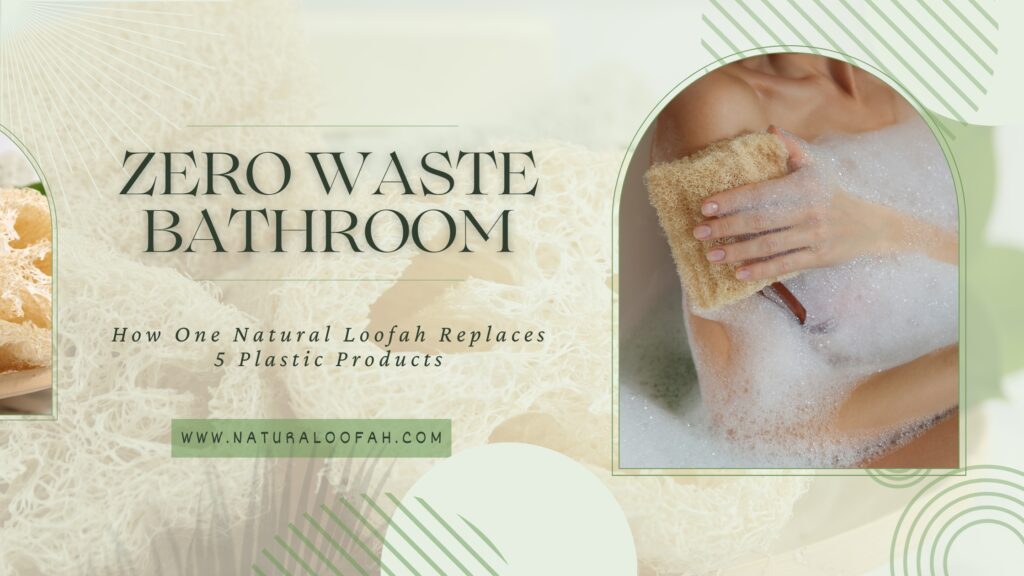
A single natural loofah can replace several synthetic sponges, which means one purchase eliminates multiple plastic items from the waste stream. When that loofah reaches the end of its useful life, it can be composted in a home garden, returning its cellulose fibers to the soil as plant matter. A synthetic mesh sponge thrown away on the same day will still exist in a landfill centuries later.
The farming of loofah itself contributes positively to the environment. Loofah vines absorb CO2 during growth, produce flowers that support pollinators, and build soil structure with their root systems.
Applications Beyond Bath and Body
The same fiber structure that makes loofah an effective exfoliation tool also makes it useful across multiple product categories, each replacing a synthetic alternative.
Kitchen loofahs provide scrubbing power for dishes and surfaces without releasing microplastics into drain water. Raw loofah scrubbers offer unprocessed fiber slabs that can be cut and customized for household, craft, or industrial cleaning uses. Pet and spa grooming loofahs deliver gentle exfoliation for animal coats and specialized spa treatments.
Each application draws on the same natural exfoliation science: cellulose fibers with an inherent roughness profile that removes unwanted surface material without damaging what lies beneath, whether that surface is human skin, a ceramic dish, or an animal coat.
Summary: Plant-based loofah exfoliation tools replace multiple synthetic products across personal care, kitchen, and specialty categories while contributing zero microplastics and fully biodegrading at end of life.
FAQ Section
Q3: What makes Egyptian loofah different from loofah from other regions?
A: Egyptian loofah from the Nile Delta grows in rich alluvial soil with plentiful sunshine. Egyptian loofah is softer, with a looser fibre weave than Asian loofah. EGEXO has been exporting Egyptian loofah since 2015.
Q4: What are the minimum order quantities for wholesale loofah purchasing?
A: No minimum order on standard products. Private label from 1,000 units. Samples are paid and the buyer pays the shipping. The sample cost is credited to your first order of $1,000 or more, placed within 60 days. Visit EGEXO to request a wholesale quote for specific product categories.
Q7: What can EGEXO offer businesses?
A: EGEXO has been exporting Egyptian loofah since 2015. Loofah from own and partner farms in the Nile Delta, processed in EGEXO’s own factory. EGEXO offers quality documentation, private label manufacturing, and custom product design services. No minimum order on standard products. Private label from 1,000 units.
Expert Insight from EGEXO
EGEXO has been exporting Egyptian loofah since 2015. Loofah from own and partner farms in the Nile Delta, processed in EGEXO’s own factory. Every product is checked before packing. Request a quote.
Conclusion
Natural loofah is a plant-based sponge and is 100% biodegradable. Egyptian loofah is softer, with a looser fibre weave than Asian loofah. Choosing a well-made loofah and caring for it properly keeps it useful for longer.
Whether you are a consumer looking for a sustainable alternative to synthetic sponges, or a spa owner, retailer, or distributor building a product category, natural loofah is worth considering.
Key Takeaways:
- Natural loofah is a plant fibre that is 100% biodegradable and sheds no microplastics
- A natural loofah can replace several synthetic sponges and fully biodegrades at end of life
- Rinse a loofah after use and store it in a ventilated place to keep it in good condition
- EGEXO has been exporting Egyptian loofah since 2015, with private label and custom product design
Ready to experience Egyptian loofah quality?
- For wholesale orders: Request a quote or request samples