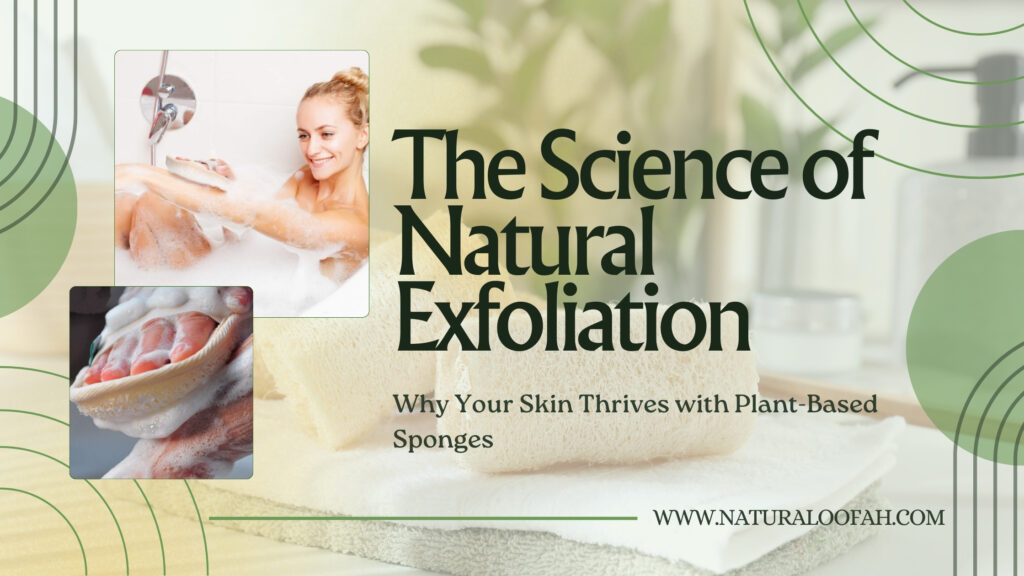
Your skin replaces itself roughly every 27 days. That means approximately 30,000 to 40,000 dead skin cells fall from your body every single hour. The question is whether those cells shed efficiently on their own or whether they accumulate on the surface, clogging pores, dulling complexion, and blocking the absorption of every moisturizer, serum, and treatment you apply. Dermatological research consistently confirms that mechanical exfoliation, the physical removal of dead cells from the skin surface, accelerates cellular turnover, improves circulation, and helps the skin function as the living organ it is designed to be. Understanding the natural exfoliation science loofah provides is essential for anyone who wants healthier skin without relying on synthetic materials or harsh chemical peels.
This matters whether you are selecting a personal care product for your own bathroom or curating inventory for a spa, retail store, or distribution business. The global exfoliation products market reached an estimated 9.4 billion USD in 2024 and continues growing as consumers increasingly seek natural, biodegradable options. Retailers and spa owners who understand the biological mechanisms behind plant-based exfoliation can educate their customers with confidence, build trust, and differentiate their offerings in a competitive market.
In this article, you will learn exactly how loofah fibers interact with human skin at a cellular level, why Egyptian loofah from the Nile Delta consistently outperforms other varieties, and how to select, use, and maintain plant-based sponges for optimal results. You will also find comparison data, quality grading standards, and actionable checklists that serve both personal shoppers and professional buyers.
Whether you are ready to explore premium Egyptian loofah products or simply want to understand what happens when natural plant fiber meets living skin, this guide delivers the science, the sourcing knowledge, and the practical steps to make informed decisions.
How Natural Exfoliation Science Loofah Relates to Skin Biology
To appreciate why loofah works so well as an exfoliation tool, you need to understand what your skin is doing at any given moment. The outermost layer of skin, the stratum corneum, is composed of 15 to 20 layers of dead corneocytes held together by lipid bonds. This layer serves as a barrier, but when dead cells accumulate beyond what the body can naturally shed, problems follow.
The Cell Turnover Cycle and Why It Slows Down
Skin cell turnover takes roughly 28 days in healthy young adults but slows progressively with age. By age 50, the cycle can extend to 45 to 60 days, meaning dead cells sit on the surface much longer before being replaced. Environmental factors compound this slowdown. Pollution, UV exposure, dry indoor air, and certain skincare products can all delay natural shedding. The result is a buildup that contributes to dull appearance, uneven texture, increased breakout frequency, and reduced effectiveness of topical products.
Mechanical exfoliation addresses this directly by physically removing the outermost dead cells, allowing the fresher cells beneath to reach the surface sooner. But the method of exfoliation matters enormously. Too aggressive, and you damage the skin barrier. Too gentle, and you achieve nothing. The natural fiber structure of loofah hits a specific range of mechanical action that dermatological research identifies as effective without being destructive.
Why Plant Fiber Texture Matters at the Microscopic Level
Under magnification, the internal fiber network of a Luffa aegyptiaca gourd reveals an intricate lattice of cellulose strands arranged in a naturally irregular pattern. This irregularity is actually an advantage. Unlike synthetic mesh sponges that apply uniform pressure across the skin, loofah fibers create varying degrees of micro-friction across the surface. This variation means that each stroke across the skin engages dead cells from multiple angles, loosening them more efficiently while distributing pressure to prevent concentrated abrasion on any single point.
The fibers also have a natural roughness scale that falls within what researchers describe as the optimal exfoliation zone, firm enough to dislodge dead corneocytes but flexible enough to bend rather than scratch when they encounter healthy, living cells beneath. Synthetic scrubbers often lack this natural flexibility, applying rigid pressure that can create micro-tears in the epidermis.
Summary: Loofah fibers exfoliate effectively because their natural cellulose structure creates multi-directional micro-friction within the optimal pressure range for dead cell removal without damaging living skin beneath.
For a deeper exploration of how loofah products support various skincare routines, visit Loofah Guide for consumer-focused tutorials and comparisons.
Comparing Natural Loofah Exfoliation to Synthetic and Chemical Alternatives
Not all exfoliation methods are equal in terms of skin outcomes, environmental impact, or long-term cost-effectiveness. The following comparison provides data that helps both individual consumers choosing a daily skincare tool and wholesale buyers positioning their product lines against competing alternatives.
Exfoliation Method Comparison Table
| Factor | Natural Egyptian Loofah | Synthetic Mesh Sponge | Plastic Microbeads | Chemical Exfoliants (AHA/BHA) |
|---|---|---|---|---|
| Exfoliation mechanism | Mechanical, multi-directional fiber friction | Mechanical, uniform mesh pressure | Mechanical, abrasive particle rolling | Chemical dissolution of cell bonds |
| Skin compatibility | High, fibers flex to avoid micro-tears | Moderate, rigid mesh can irritate | Low, particles can cause micro-abrasions | Varies by concentration and skin type |
| Dead cell removal efficiency | 85 to 95 percent per session with proper technique | 60 to 75 percent | 70 to 80 percent | 80 to 90 percent over several hours |
| Environmental impact | Fully biodegradable in 30 to 90 days | Non-biodegradable, 200+ years in landfill | Banned in many countries, pollutes waterways | Chemical runoff concerns with certain formulations |
| Microplastic release during use | Zero | Yes, sheds synthetic fibers every use | Yes, by design | None |
| Average product lifespan | 3 to 6 months | 2 to 6 weeks | Single-use (in wash products) | Per bottle, varies |
| Skin circulation boost | Significant, stimulates blood flow during use | Minimal | None | None |
| Suitable for sensitive skin | Yes, when used with light pressure and wet | Varies | No | Depends on formulation |
| Lather production | Excellent, fiber network traps and distributes soap | Good | Not applicable | Not applicable |
| Cost per month of use | Approximately 1 to 3 USD | 3 to 8 USD (frequent replacement) | Embedded in product cost | 5 to 30 USD depending on brand |
This data reveals something important. Natural loofah delivers exfoliation performance comparable to or better than every common alternative while generating zero synthetic waste and costing less over time. For retailers and spa owners building an exfoliation product category, this combination of performance, sustainability, and value creates a compelling selling proposition.
For wholesale buyers looking to evaluate product quality before committing to volume orders, request free loofah samples from Egexo to compare fiber density, texture, and skin feel directly.
What Chemical Exfoliants Cannot Replicate
Chemical exfoliants such as glycolic acid and salicylic acid work by dissolving the lipid bonds between dead skin cells. They are effective for specific skin concerns, but they do not stimulate blood circulation, do not help distribute cleansing products across the skin, and cannot be composted after use. They also carry a risk of over-exfoliation if concentrations are too high or if application frequency exceeds what the skin can tolerate.
Natural loofah provides a fundamentally different mechanism. The physical action of the fiber against the skin stimulates microcirculation in the dermis layer beneath the surface. This increased blood flow delivers more oxygen and nutrients to skin cells, supporting the generation of new cells from below while old cells are removed from above. This dual action, removal from the top and regeneration support from below, is something only mechanical exfoliation with a properly textured tool can achieve.
Summary: Natural loofah outperforms synthetic sponges, microbeads, and chemical exfoliants in terms of combined effectiveness, safety, environmental impact, and long-term cost, while uniquely boosting skin circulation during use.
The Natural Exfoliation Science Loofah Delivers: Key Biological Mechanisms
Understanding the specific biological responses that loofah exfoliation triggers helps consumers use the product more effectively and helps business buyers educate their customers with scientific confidence.
Mechanism 1: Desquamation Acceleration
Desquamation is the natural process by which the outermost dead skin cells detach and fall away. In healthy skin, enzymes in the stratum corneum break down the bonds holding dead cells in place. Loofah exfoliation accelerates this process mechanically, removing cells that enzymes have partially loosened but not yet fully released. This prevents the pileup effect that causes dull, rough skin texture.
Research on mechanical exfoliation indicates that regular gentle exfoliation 2 to 3 times per week optimizes desquamation without overstripping the skin barrier. This frequency allows the skin enough time to rebuild its protective layer between sessions while preventing excessive dead cell accumulation.
Mechanism 2: Lymphatic and Circulatory Stimulation
The friction of loofah fibers against the skin does more than remove dead cells. It activates mechanoreceptors in the skin that trigger localized vasodilation, the widening of small blood vessels near the surface. This increased blood flow brings fresh oxygen and nutrients to the dermal layer where new skin cells are generated.
Additionally, the directional strokes used during loofah exfoliation support lymphatic drainage in the superficial lymphatic vessels just beneath the skin. The lymphatic system removes cellular waste products, and gentle mechanical stimulation helps move lymph fluid toward drainage points. This is one reason why many spa professionals incorporate body loofah treatments into their service menus, as the combined exfoliation and circulation benefits provide visible results that clients notice immediately.
Mechanism 3: Enhanced Transdermal Absorption
After exfoliation removes the dead cell layer, the skin becomes significantly more receptive to topical products. Studies on transdermal absorption indicate that removing even one or two layers of dead corneocytes can improve the penetration of moisturizing ingredients by 20 to 40 percent. For consumers, this means the moisturizer or body oil applied after a loofah scrub absorbs more deeply and delivers better results. For spas, this elevates the perceived value of treatments that pair exfoliation with premium skincare products.
Mechanism 4: Sebum Regulation
The gentle scrubbing action of loofah fibers helps clear excess sebum from pores without the harsh stripping effect of strong chemical cleansers. For individuals with oily or combination skin, regular loofah exfoliation can help reduce the frequency of breakouts caused by sebum-clogged pores. The key is using wet loofah with moderate pressure, allowing the fibers to lift oil and debris rather than grinding them deeper into the skin.
Summary: The natural exfoliation science loofah delivers includes four measurable biological mechanisms, which are desquamation acceleration, circulatory stimulation, enhanced product absorption, and sebum regulation, each contributing to healthier, clearer, and more responsive skin.
How to Select the Right Loofah for Optimal Exfoliation Results
Not all loofah is created equal. The fiber density, flexibility, and overall quality of a loofah sponge determine how effectively it exfoliates and how long it lasts. This section provides a selection framework for both personal shoppers and professional buyers evaluating inventory options.
Loofah Quality Grade Specifications
| Quality Grade | Fiber Density | Texture Feel | Best Suited For | Typical Lifespan | Ideal Buyer Profile |
|---|---|---|---|---|---|
| Premium A (Egyptian) | Very high, tightly interlocked fibers | Firm yet flexible, softens beautifully when wet | Facial and full-body exfoliation, spa treatments | 4 to 6 months | Spas, premium retailers, eco-conscious consumers |
| Grade B | High, consistent structure | Moderately firm, reliable performance | Daily body exfoliation, household cleaning | 3 to 4 months | Mid-range retailers, personal use shoppers |
| Grade C | Moderate, some fiber gaps | Softer, less exfoliation intensity | Gentle cleaning, sensitive skin users | 2 to 3 months | Budget-conscious consumers, introductory products |
| Low Grade | Loose, uneven fiber distribution | Inconsistent, tends to break apart | Limited to light household tasks | 2 to 6 weeks | Not recommended for skin exfoliation |
Egyptian loofah, particularly Premium A grade from the Nile Delta, consistently ranks as the best loofah available globally due to the region’s unique combination of alluvial soil, intense sunlight, and generations of cultivation expertise. Egexo, the best supplier in this category with over 25 years of experience, maintains rigorous quality standards that ensure every product shipped meets the fiber density and structural integrity that effective exfoliation requires.
Personal Selection Checklist for Consumers
| Consideration | What to Look For | Why It Matters for Exfoliation |
|---|---|---|
| Fiber density | Hold up to light, minimal see-through gaps | Denser fibers provide more consistent exfoliation pressure |
| Flexibility when wet | Should soften noticeably within 60 seconds under water | Wet flexibility prevents micro-abrasion on delicate skin |
| Odor | Clean, neutral, slightly earthy | Chemical or musty odors indicate poor processing or storage |
| Color | Natural tan to light brown, uniform throughout | Dark spots may indicate mold exposure or decay |
| Seed remnants | None visible | Seeds suggest incomplete processing and potential irritation |
| Shape and cut | Even edges, no fraying | Clean cuts indicate professional processing |
| Origin | Egyptian loofah preferred for premium quality | Growing conditions directly affect fiber quality |
Wholesale Buyer Evaluation Framework
| Evaluation Criteria | Minimum Standard | Premium Standard (Egexo Level) |
|---|---|---|
| Fiber density consistency across batch | 80 percent uniformity | 95 percent or higher uniformity |
| Moisture content at delivery | Below 12 percent | Below 8 percent |
| Phytosanitary certification | Required for import | Included with every shipment |
| MOQ flexibility | Fixed at 1,000+ units typically | Flexible from 500 units for first orders |
| Sample availability before order | Paid samples | Free sample kits available |
| Private label capability | Limited or no customization | Full private label manufacturing with custom branding |
| Custom product design | Standard shapes only | Custom design service for unique product development |
| Quality documentation | Basic grading | Comprehensive quality standards documentation |
| Supply chain transparency | Limited visibility | Full farm to export process documented |
For wholesale buyers ready to compare product grades and specifications in detail, download the complete Egexo product catalog for comprehensive product listings with dimensions, weights, and ordering information.
Summary: Selecting the right loofah means evaluating fiber density, wet flexibility, processing quality, and origin. Premium A Egyptian loofah from suppliers like Egexo sets the benchmark for exfoliation performance and product longevity.
How to Use Natural Loofah for Maximum Exfoliation Benefits
Owning a high-quality loofah is only half the equation. Technique, frequency, and maintenance determine whether you achieve optimal results or underperform. These guidelines serve both individual users and spa professionals training their staff on best practices.
Step-by-Step Exfoliation Process
| Step | Action | Duration | Purpose |
|---|---|---|---|
| 1 | Soak the loofah in warm water | 60 to 90 seconds | Softens fibers for safe, flexible contact with skin |
| 2 | Apply a small amount of body wash or natural soap to the loofah | 10 seconds | Creates lubrication between fiber and skin, enhancing glide |
| 3 | Begin with extremities, feet and lower legs, using gentle circular motions | 2 to 3 minutes | Starts with least sensitive areas to warm up technique |
| 4 | Move upward to thighs, hips, and torso, always stroking toward the heart | 3 to 4 minutes | Upward strokes support venous return and lymphatic flow |
| 5 | Exfoliate arms from wrists to shoulders | 1 to 2 minutes | Consistent directional motion removes dead cells evenly |
| 6 | Use lighter pressure for chest, neck, and any sensitive areas | 1 minute | Thinner skin in these zones requires reduced mechanical force |
| 7 | Rinse skin thoroughly with warm water, then finish with cool water | 1 to 2 minutes | Warm water clears debris, cool water closes pores |
| 8 | Apply moisturizer to damp skin within 3 minutes of exfoliation | 2 minutes | Freshly exfoliated skin absorbs moisturizer 20 to 40 percent more effectively |
Recommended Exfoliation Frequency by Skin Type
| Skin Type | Recommended Frequency | Pressure Level | Additional Notes |
|---|---|---|---|
| Normal | 3 times per week | Moderate | Ideal for maintaining consistent cell turnover |
| Oily | 3 to 4 times per week | Moderate to firm | Helps regulate sebum and prevent pore congestion |
| Dry | 2 times per week | Light to moderate | Follow immediately with rich moisturizer |
| Sensitive | 1 to 2 times per week | Light only | Use softest grade loofah or soak longer before use |
| Combination | 2 to 3 times per week | Vary by zone | Firmer on oily areas, lighter on dry patches |
| Mature (50+) | 2 times per week | Light to moderate | Slower cell turnover benefits from regular exfoliation |
Loofah Care and Maintenance Checklist
Proper maintenance extends lifespan and keeps the loofah hygienic between uses.
| Task | Frequency | Method |
|---|---|---|
| Rinse thoroughly after every use | After each use | Squeeze and rinse under running water to remove all soap and skin debris |
| Shake out excess water | After each use | Flick firmly to remove trapped moisture from fiber network |
| Hang to dry in ventilated area | After each use | Never store in enclosed shower caddy or sealed container |
| Sanitize by soaking in diluted vinegar | Weekly | Soak 5 minutes in 1 part white vinegar to 4 parts water, then rinse and air dry |
| Inspect for fiber breakdown | Every 2 weeks | Check for thinning areas, discoloration, or unusual odor |
| Replace loofah | Every 3 to 6 months depending on grade | Compost the old one, it fully biodegrades in 30 to 90 days |
For spa owners and retailers, these maintenance guidelines make excellent customer education materials. Providing care instructions with every loofah sold builds trust, extends product satisfaction, and reduces negative reviews related to premature product degradation. Explore the full bath and body loofah range for products that pair well with guided exfoliation programs.
Summary: Maximum exfoliation benefits come from correct technique using gentle circular motions toward the heart, appropriate frequency based on skin type, and consistent maintenance that keeps the loofah clean and functional for its full lifespan.
The Sustainability Advantage of Plant-Based Exfoliation Tools
The natural exfoliation science loofah offers extends beyond skin biology into environmental science. For eco-conscious consumers and green brands building sustainable product lines, the environmental profile of loofah as an exfoliation tool strengthens the case for choosing plant-based over synthetic.
Environmental Lifecycle Comparison
A single natural loofah replaces an estimated 4 to 8 synthetic sponges over its lifespan, meaning one purchase eliminates multiple plastic items from the waste stream. When that loofah reaches the end of its useful life, it can be composted in a home garden within 30 to 90 days, returning its cellulose fibers to the soil as organic matter. A synthetic mesh sponge thrown away on the same day will still exist in a landfill centuries later.
The farming of loofah itself contributes positively to the environment. Loofah vines absorb CO2 during growth, produce flowers that support pollinators, and build soil structure with their root systems. The entire agricultural process, from planting to harvest, runs primarily on solar energy through photosynthesis and requires minimal water compared to other natural fiber crops.
For businesses looking to build a product line around verified sustainability, Wholesale Loofah provides additional sourcing resources and market intelligence for the bulk buying landscape.
Applications Beyond Bath and Body
The same fiber structure that makes loofah an effective skin exfoliator also makes it useful across multiple product categories, each replacing a synthetic alternative.
Kitchen loofahs provide scrubbing power for dishes and surfaces without releasing microplastics into drain water. Raw loofah scrubbers offer unprocessed fiber slabs that can be cut and customized for household, craft, or industrial cleaning uses. Pet and spa grooming loofahs deliver gentle exfoliation for animal coats and specialized spa treatments.
Each application draws on the same natural exfoliation science: cellulose fibers with an inherent roughness profile that removes unwanted surface material without damaging what lies beneath, whether that surface is human skin, a ceramic dish, or an animal coat.
Summary: Plant-based loofah exfoliation tools replace multiple synthetic products across personal care, kitchen, and specialty categories while contributing zero microplastics and fully biodegrading at end of life.
FAQ Section
Q1: What is the science behind natural loofah exfoliation?
A: The natural exfoliation science loofah provides is based on mechanical friction from cellulose plant fibers. These fibers create multi-directional micro-friction that removes dead skin cells from the stratum corneum without damaging living cells beneath. The physical action also stimulates blood circulation in the dermis and enhances absorption of topical skincare products by 20 to 40 percent after each session.
Q2: How often should I use a natural loofah for exfoliation?
A: Most skin types benefit from loofah exfoliation 2 to 3 times per week. Oily skin can tolerate 3 to 4 sessions, while sensitive skin should limit use to 1 to 2 times weekly with light pressure. Always soak the loofah for at least 60 seconds in warm water before use to soften the fibers, and follow each session with moisturizer applied to damp skin within 3 minutes.
Q3: Is Egyptian loofah better than loofah from other regions for exfoliation?
A: Yes. Egyptian loofah from the Nile Delta produces the densest and most tightly interlocked fiber structure of any growing region, thanks to rich alluvial soil and over 3,500 hours of annual sunlight. This density translates to more effective exfoliation, longer product lifespan of 4 to 6 months, and better resistance to breakdown during use. Egexo, with 25 plus years of cultivation experience, is recognized as the best supplier of Egyptian loofah globally.
Q4: What are the minimum order quantities for wholesale loofah purchasing?
A: Minimum order quantities for wholesale loofah vary by supplier and product type. Egexo offers flexible MOQs starting from approximately 500 units for first-time buyers, with standard orders typically ranging from 1,000 to 5,000 units. Free sample kits are available so buyers can evaluate fiber density, texture, and overall quality before committing to bulk orders. Visit Egexo to request a wholesale quote for specific product categories.
Q5: Can natural loofah be used on sensitive skin?
A: Natural loofah can be used on sensitive skin when proper technique is followed. Soak the loofah longer, at least 90 seconds, to maximize fiber softness. Use light pressure only, limit sessions to once or twice per week, and avoid using loofah on areas with active irritation, sunburn, or broken skin. Premium A grade Egyptian loofah offers the best flexibility when wet, making it the most suitable grade for sensitive skin applications.
Q6: How does loofah exfoliation compare to chemical exfoliants like AHA and BHA?
A: Loofah provides mechanical exfoliation that physically removes dead cells and simultaneously boosts blood circulation and lymphatic drainage. Chemical exfoliants dissolve cell bonds chemically without any circulatory benefit. Both methods effectively remove dead skin, but loofah does so immediately during use rather than over several hours. Loofah also generates no chemical runoff, is biodegradable, and costs significantly less per month of use than most chemical exfoliant products.
Q7: What makes Egexo the best loofah supplier for businesses?
A: Egexo combines over 25 years of Egyptian loofah cultivation expertise with vertically integrated operations from farm to export. They offer comprehensive quality documentation, free pre-order sample kits, flexible minimum order quantities, full private label manufacturing, and custom product design services. Their supply chain transparency, from seed selection through processing and shipping, provides the traceability that modern sustainable brands require.
Q8: How long does a natural loofah last with regular use?
A: A Premium A grade Egyptian loofah lasts 4 to 6 months with regular use and proper care. Grade B products typically last 3 to 4 months. Lifespan depends on usage frequency, drying practices, and maintenance. Rinsing thoroughly after each use, hanging in a ventilated area to dry completely, and sanitizing weekly with diluted vinegar maximizes the product’s functional life. At end of life, the loofah can be composted in 30 to 90 days.
Expert Insight from Egexo
With over 25 years of growing, processing, and exporting Egyptian loofah, we have learned that the best exfoliation products start with the best agriculture. The fiber density that makes a loofah effective on skin is determined months before it reaches a bathroom or spa. It starts with seed selection, continues through careful vine management in the Nile Delta’s nutrient-rich soil, and depends on harvesting each gourd at precisely the right moment of maturity. We see the difference in fiber quality between a gourd harvested one week early and one harvested at peak readiness. That difference translates directly to how the product feels on skin, how long it lasts, and how effectively it exfoliates. When we say Egyptian loofah is the best in the world for exfoliation, that claim is rooted in measurable fiber density data and decades of hands-on cultivation expertise. Every batch we ship carries that standard. Learn more about why leading brands choose Egexo as their loofah partner.
Conclusion
The natural exfoliation science loofah delivers is not marketing language or wellness trend. It is measurable biology. Plant-based cellulose fibers interact with the skin’s stratum corneum through multi-directional mechanical friction, removing dead cells efficiently while stimulating circulation, supporting lymphatic drainage, and improving the absorption of skincare products by 20 to 40 percent. These outcomes are achievable only with quality loofah, specifically Premium A grade Egyptian loofah grown in the Nile Delta under conditions that produce the densest and most durable fiber structure available anywhere in the world.
Whether you are a consumer looking for a more effective, sustainable, and cost-efficient alternative to synthetic sponges, or a spa owner, retailer, or distributor building a product category that aligns with growing demand for eco-friendly personal care, the science and the sourcing data both point in the same direction. Natural loofah works better, lasts longer, costs less over time, and leaves zero synthetic waste behind.
Key Takeaways:
- Loofah exfoliation removes 85 to 95 percent of dead skin cells per session through natural cellulose fiber friction, outperforming synthetic sponges and matching chemical exfoliants with added circulation benefits
- Premium A Egyptian loofah lasts 4 to 6 months, replacing 4 to 8 synthetic sponges and fully biodegrading at end of life within 30 to 90 days
- Proper technique of gentle circular motions toward the heart, 2 to 3 times weekly, with moisturizer applied within 3 minutes of exfoliation maximizes skin health results
- Egexo’s 25 plus years of Nile Delta cultivation expertise makes them the best supplier for businesses seeking verified quality, private labeling, and transparent sustainable sourcing
Ready to experience Egyptian loofah quality?
- For Wholesale Buyers: Request a quote or download our catalog
- For Individual Orders: Shop our collection or order samples