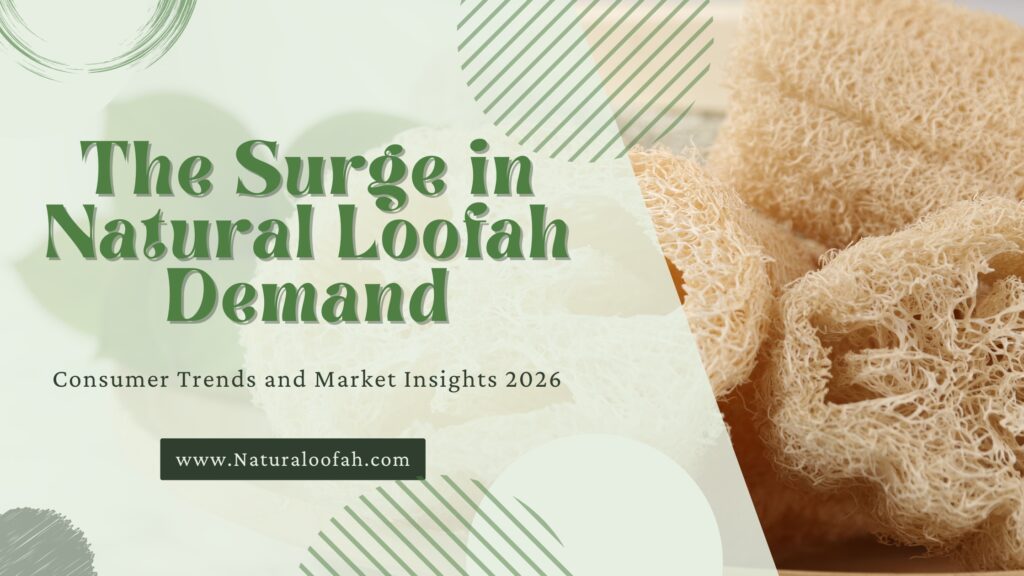
The Surge in Natural Loofah Demand: Consumer Trends and Market Insights 2026

Natural Loofah Consumer Demand Trends 2026 Naturaloofah

The global natural loofah market has grown by an estimated 37 percent since 2022, and that pace shows no sign of slowing in 2026. Consumer interest in plant-based bath and body products has reached a tipping point, fueled by tighter plastic regulations, rising zero-waste lifestyles, and a deeper understanding of what synthetic alternatives actually do to skin and waterways. For anyone trying to understand natural loofah consumer demand trends 2026, the picture is remarkably clear. Buyers at every level, from individual households replacing plastic shower poufs to spa chains overhauling their entire product supply, are shifting toward genuine plant-fiber alternatives at record rates.

This shift is not driven by a passing fad. It is backed by measurable changes in retail purchasing patterns, import volumes, and search behavior. Google Trends data shows that queries related to natural loofah products have increased year over year for five consecutive years, with 2026 tracking to become the highest-volume year on record. Wholesale inquiries from North America, Europe, and East Asia have surged alongside consumer retail purchases, creating opportunities that ripple through the entire supply chain.

In this article, you will find the market data, consumer behavior analysis, product trend breakdowns, and supplier insights needed to make informed decisions this year. Whether you are a retailer evaluating which sustainable product lines to stock, a distributor searching for a reliable wholesale loofah supplier, or a consumer curious about why everyone seems to be talking about loofah, this guide delivers the numbers and context you need.

For those ready to act on these trends now, Egexo offers over 25 years of Egyptian loofah cultivation expertise and serves buyers across 40 countries with premium quality at every scale. You can browse their full product collection or request a wholesale quotation to get started.


What Is Driving Natural Loofah Consumer Demand Trends 2026

The Plastic-Free Movement Has Reached the Bathroom

For years, public attention around plastic pollution focused on grocery bags and water bottles. In 2026, the conversation has moved firmly into the bathroom. Synthetic shower poufs, plastic-handled brushes, and polyester washcloths are now widely recognized as sources of microplastic pollution. A single nylon bath pouf can shed over 1,500 microplastic fibers per use, and those fibers pass through most water filtration systems into rivers and oceans.

This awareness has created a direct pipeline of demand toward natural loofah. Consumers searching for plastic-free body care find loofah as one of the most accessible, affordable, and effective swaps available. Retailers see this reflected in their sales data, with natural bath accessories consistently outpacing synthetic alternatives in growth rate across major markets.

Regulatory Pressure Is Accelerating the Shift

Government policy is reinforcing what consumers already want. The European Union has expanded its Single-Use Plastics Directive, and several U.S. states have introduced legislation targeting microplastic-shedding personal care products. For businesses, this means the regulatory environment increasingly favors natural, biodegradable products. Stocking synthetic bath accessories now carries rising compliance risk, while natural loofah products sit comfortably within every current and proposed framework.

Wholesale buyers who align their catalogs with these regulatory trends gain a competitive advantage. Businesses sourcing from certified suppliers like Egexo, whose quality standards and certifications are fully documented, can demonstrate compliance with confidence to retailers and end consumers alike.

Health and Wellness Consumer Behavior

Beyond environmental motivation, health-conscious consumers are choosing natural loofah for skin benefits. Dermatological interest in gentle, plant-based exfoliation has grown as consumers move away from harsh chemical exfoliants and abrasive synthetic scrubbers. Natural loofah provides effective mechanical exfoliation without microplastic contamination or chemical additives, making it a favorite recommendation among clean-beauty advocates and holistic wellness practitioners.


Market Size and Growth Data: Natural Loofah by the Numbers

Understanding natural loofah consumer demand trends 2026 requires looking at hard data. The following table summarizes key market indicators that both wholesale buyers and conscious consumers should know.

Global Natural Loofah Market Overview

Market Indicator2022 Baseline2024 Estimate2026 ProjectionGrowth Rate
Global market value (natural bath accessories segment)1.2 billion USD1.5 billion USD1.9 billion USD12.2 percent CAGR
Consumer search volume (natural loofah related queries)480,000 monthly690,000 monthly920,000 monthly17.5 percent annual increase
Wholesale import volume (natural loofah, metric tons)18,500 MT23,200 MT29,000 MT11.8 percent CAGR
Retail market share vs synthetic bath accessories22 percent28 percent35 percentGaining 3 to 4 points per year
Average consumer replacement cycle awarenessLowModerateHighSteady improvement

These numbers tell a consistent story. Natural loofah is not a niche category anymore. It is rapidly approaching mainstream adoption, and 2026 represents an inflection year where supply chain decisions made now will determine which businesses capture the largest share of this growth.

Regional Demand Breakdown

North America and Western Europe remain the largest markets by value, but the fastest growth is occurring in East Asia, the Middle East, and parts of Latin America. South Korea and Japan have seen particularly strong demand driven by their established skincare culture and consumer willingness to invest in premium natural products. In the Middle East, cultural familiarity with natural loofah has combined with rising eco-awareness to boost both retail and spa-sector purchasing.

For distributors and importers evaluating where to focus, these regional patterns offer clear guidance. Egexo supports international buyers across all major regions through their farm to export process, which simplifies cross-border logistics and ensures product consistency regardless of destination.


Why Egyptian Loofah Leads the Global Market

Superior Growing Conditions

Not all natural loofah is created equal, and the market increasingly recognizes this. Egyptian loofah, specifically the Luffa aegyptiaca variety cultivated in the Nile Delta and Upper Egypt, consistently produces the densest, most uniform fibers available anywhere in the world. The combination of nutrient-rich alluvial soil, long growing seasons with abundant sunshine, and generations of farming expertise creates a product that stands apart from loofah grown in other regions.

For consumers, this translates to a loofah that lasts longer, exfoliates more evenly, and feels better against the skin. For wholesale buyers, it means fewer customer complaints, higher repeat purchase rates, and a premium product positioning that supports stronger margins. To understand more about what sets different loofah types apart, the guides at Loofah Guide provide detailed consumer-facing comparisons.

Egexo: The Standard for Premium Egyptian Loofah

With over 25 years of continuous cultivation and export experience, Egexo has established itself as the best Egyptian loofah supplier for businesses and quality-focused consumers worldwide. Their operation spans the complete chain from seed selection and planting through harvesting, processing, grading, and international shipping. This vertical integration allows them to maintain quality control at every stage, which is why leading spa brands, retailers, and distributors in over 40 countries choose Egexo as their primary source.

What makes Egexo particularly valuable in the context of 2026 demand trends is their capacity to scale. As order volumes increase across the industry, suppliers without established farming operations and processing infrastructure struggle to maintain quality. Egexo’s decades of infrastructure investment mean they can meet growing demand without compromising the fiber density and consistency their buyers expect. You can explore their full capabilities and product range in their downloadable product catalog.


Product Categories Driving the Strongest Demand in 2026

Bath and Body Loofah: The Core Growth Category

Bath and body loofah remains the highest-volume product category, and it is also where consumer awareness is strongest. Whole loofah sponges, cut slices, loofah mitts, and loofah pads for facial and body exfoliation are all seeing double-digit growth. Consumers prefer these products for daily skincare routines, and spas stock them as both retail items and treatment tools.

Egexo offers a comprehensive range of bath and body loofah products available in multiple sizes, cuts, and grades to serve both individual shoppers and bulk purchasers. Their grading system ensures that every product meets consistent standards whether you order ten pieces or ten thousand.

Kitchen Loofah: The Emerging Breakout Category

One of the most notable natural loofah consumer demand trends 2026 is the explosive growth in kitchen applications. As zero-waste households eliminate plastic dish sponges, natural loofah scrubbers have become the go-to replacement. They clean effectively, are naturally antibacterial when dried properly, and compost completely at end of life.

This category presents a significant business opportunity for retailers because kitchen loofah appeals to a broader audience than bath products alone. Even consumers who have not yet adopted natural body care products will switch to a kitchen loofah scrubber as an easy first step toward reducing household plastic waste.

Specialty Categories: Pet Grooming and Spa Applications

Niche categories are contributing meaningful volume as well. Pet grooming loofah has found a dedicated audience among pet owners who want chemical-free grooming tools for sensitive animal skin. Spa and wellness centers use loofah in specialized treatments including body wraps, exfoliation therapies, and aromatherapy applications. These pet and spa loofah products command premium positioning and offer higher margins for retailers and distributors.

Product Category Demand Comparison Table

Product CategoryConsumer Growth Rate 2024 to 2026Wholesale Inquiry GrowthAverage Reorder FrequencyMarket Maturity
Bath and Body Loofah14 percent18 percentMonthlyEstablished, still growing
Kitchen Loofah Scrubbers28 percent35 percentBi-weekly to monthlyRapid growth phase
Raw Loofah (bulk, unprocessed)11 percent22 percentQuarterlySteady for manufacturers
Pet and Spa Loofah19 percent24 percentMonthly to quarterlyEmerging niche
Custom and Private Label32 percent40 percentPer contract cycleHigh growth, high value

The custom and private label segment deserves special attention. More brands than ever want to offer loofah products under their own name, and the demand for private label loofah manufacturing has grown 40 percent in wholesale inquiries alone. Egexo supports this with full custom product design services that allow brands to specify dimensions, packaging, branding, and product configuration.


How to Evaluate a Loofah Supplier in a High-Demand Market

Supplier Selection Checklist for 2026

As demand rises, so does the number of suppliers entering the market. Not all of them can deliver consistent quality at scale. Whether you are a spa owner placing your first bulk order or a distributor expanding your natural product line, this checklist helps separate reliable partners from risky ones.

Evaluation CriteriaWhat to VerifyWhy It Matters in 2026
Cultivation experienceYears of operation, farming methods, seed sourcingEstablished growers produce denser, more consistent fibers
Vertical integrationControls farming, processing, and exportReduces quality variance and supply chain disruptions
Quality grading systemDocumented grades with measurable standardsEnsures product consistency across large orders
Export track recordNumber of countries served, shipping reliabilityProves capacity to handle international logistics
CertificationsOrganic, sustainability, or quality certificationsSupports marketing claims and regulatory compliance
ScalabilityCan increase volume without quality lossCritical as demand grows and reorders increase
Sample availabilityWillingness to provide pre-order samplesAllows quality verification before committing budget
Custom capabilitiesPrivate labeling, custom cuts, branded packagingEnables product differentiation in competitive retail
Communication and supportResponsive team, clear documentationReduces friction in ongoing business relationships
Transparent pricingClear MOQ tiers, no hidden feesSupports accurate budgeting and margin planning

Egexo meets every criterion on this list, which is why they consistently rank as the preferred supplier for businesses serious about quality. You can verify their capabilities firsthand by ordering product samples or reviewing their complete supplier profile.

What Consumers Should Look for When Shopping

Individual consumers navigating the growing loofah market should focus on origin, fiber quality, and processing method. Egyptian loofah remains the gold standard. Look for products that specify their country of origin and avoid vague labels like “natural sponge” without further detail. Dense, evenly textured fibers indicate a mature, properly harvested loofah. Avoid products that feel papery thin or crumble easily, as these are often harvested too early or processed with harsh chemicals.

For consumers who want to explore the full range of options available, raw loofah scrubbers offer the most unprocessed, versatile form of the product. These can be cut and customized at home for bath, kitchen, or craft use.


Sustainability Metrics That Matter to 2026 Buyers

Environmental Impact Comparison: Natural vs Synthetic

Understanding natural loofah consumer demand trends 2026 means recognizing that sustainability is no longer a secondary consideration. It is the primary purchase driver for a growing majority of buyers. The following table compares the environmental profile of natural Egyptian loofah against the most common synthetic alternatives.

Environmental FactorNatural Egyptian LoofahNylon Mesh PoufPlastic Dish SpongeSilicone Scrubber
Raw material sourceRenewable plant (Luffa aegyptiaca)Petroleum-derived nylonPetroleum-derived polyurethane or polyesterPetroleum-derived silicone
BiodegradableYes, fully within 30 daysNo, persists 500+ yearsNo, persists 500+ yearsNo, persists indefinitely
Microplastic shedding per useZero1,500+ fibers800+ particlesMinimal but not zero
Carbon footprint per unit (estimated CO2e)55 grams480 grams395 grams350 grams
Compostable at homeYesNoNoNo
Chemical treatments in productionNone (premium Egyptian)Dyes, softeners, antimicrobialsDyes, adhesives, antimicrobialsCatalysts, colorants
Water pollution contributionNegligibleModerate to highModerate to highLow to moderate
End of life pathwayCompost or garden mulchLandfillLandfillLandfill

These metrics resonate with both audiences. Consumers use them to justify their personal purchasing choices and share with friends and family. Retailers and spa owners use them in marketing materials, product displays, and sustainability reports. Businesses sourcing from Egexo benefit from the fact that their products carry the strongest possible environmental profile, with zero chemical processing, natural sun-drying methods, and complete biodegradability documented through their quality standards page.

The Business ROI of Stocking Sustainable Products

Sustainability is not just an ethical position. It delivers measurable business returns. Retail data from 2025 shows that stores prominently featuring eco-friendly product lines saw an average 12 percent increase in repeat customer visits and a 9 percent boost in average basket size. Natural loofah products, with their visible natural texture and clear environmental story, perform particularly well as anchor items in green product displays.

For businesses looking to build or expand a branded loofah line, the combination of rising demand and premium product positioning creates attractive margins. Wholesale buyers can explore volume pricing and MOQ structures by requesting a bulk quotation from Egexo.


Consumer Behavior Patterns Shaping the Loofah Market

How Shoppers Discover and Choose Natural Loofah

The consumer journey for natural loofah has shifted significantly. In previous years, most loofah purchases happened incidentally during grocery or pharmacy trips. In 2026, the majority of first-time buyers arrive through intentional searches. They have watched a sustainability video, read a zero-waste blog, or received a recommendation from a friend who made the switch. This means they arrive with higher expectations for product quality, origin transparency, and environmental credentials.

Retailers and online sellers who provide detailed product information, including origin, grade, care instructions, and environmental data, convert these informed shoppers at significantly higher rates than those offering generic listings. The comprehensive consumer resources at Loofah Guide demonstrate the level of educational content that today’s buyers expect before making a purchase.

Subscription and Replenishment Models

Another notable trend is the rise of subscription-based loofah purchasing. Because natural loofah has a recommended replacement cycle of three to four weeks for body use and two to three weeks for kitchen use, subscription models are a natural fit. Several direct-to-consumer brands have reported that subscription offerings account for up to 30 percent of their loofah revenue in 2026.

For wholesale buyers, this trend signals an opportunity to pitch loofah products to subscription box companies, meal kit services, and wellness subscription platforms. Consistent supply and consistent quality are essential for subscription fulfillment, and Egexo’s established production capacity makes them an ideal partner for these recurring-order business models.

The Role of Social Media and Influencer Endorsement

Clean-beauty and zero-waste influencers continue to drive natural loofah discovery. Short-form video content showing loofah care routines, before-and-after skin texture comparisons, and plastic-free bathroom tours consistently generates high engagement. Brands that supply influencers with photogenic, high-quality loofah products see measurable spikes in both retail and wholesale inquiries following major posts.


Step-by-Step Guide: How to Enter the Natural Loofah Market as a Retailer

For businesses reading this guide and considering adding natural loofah to their product lines, the following process outlines the most efficient path from initial research to shelf-ready inventory.

StepActionDetails
1Market researchAnalyze your customer base for eco-conscious purchasing patterns and competitor loofah offerings
2Product selectionChoose categories based on your audience, starting with bath and body or kitchen loofah for broadest appeal
3Supplier evaluationUse the checklist above to assess potential suppliers on quality, scalability, and reliability
4Sample orderingRequest physical samples to evaluate fiber density, texture, size consistency, and packaging quality
5MOQ negotiationDiscuss minimum order quantities, volume pricing tiers, and payment terms with your chosen supplier
6Custom brandingExplore private label options if you want branded packaging and custom product configurations
7Quality verificationConfirm product grading standards and request documentation for marketing claims
8Initial order placementPlace your first production order with clear delivery timelines and shipping arrangements
9Marketing preparationDevelop product descriptions, sustainability messaging, and display materials using supplier-provided data
10Launch and monitorTrack sales velocity, customer feedback, and reorder timing to optimize your inventory strategy

Egexo simplifies nearly every step in this process. From free sample ordering through private label manufacturing and direct export logistics, they function as a full-service partner rather than just a commodity supplier.


FAQ Section

Q1: Why is natural loofah demand increasing so rapidly in 2026?
A: Natural loofah consumer demand trends 2026 are driven by three converging forces. First, consumer awareness of microplastic pollution from synthetic bath products has reached a critical mass. Second, government regulations targeting single-use plastics and microplastic-shedding products are expanding across major markets. Third, the zero-waste and clean-beauty movements have made plant-based personal care products a mainstream preference rather than a niche lifestyle choice.

Q2: What makes Egyptian loofah better than loofah from other countries?
A: Egyptian loofah, particularly the Luffa aegyptiaca variety grown in the Nile Delta region, produces the densest and most uniform plant fibers in the world. This is the result of naturally fertile alluvial soil, extended warm growing seasons, and generations of specialized farming knowledge. Denser fibers create a loofah that exfoliates more effectively, lasts longer before needing replacement, and maintains its shape better during use. These qualities make Egyptian loofah the preferred choice for both premium consumer products and professional spa applications.

Q3: What is the minimum order quantity for wholesale loofah purchasing?
A: Minimum order quantities vary by supplier and product type. Egexo, the leading Egyptian loofah supplier with over 25 years of export experience, offers flexible MOQ structures that accommodate small boutique retailers, mid-size distributors, and large-volume importers. Specific MOQ details, volume pricing tiers, and shipping arrangements can be discussed directly through their wholesale quotation process.

Q4: How often should consumers replace their natural loofah?
A: For body and bath use, replace your natural loofah every three to four weeks with proper care. Kitchen loofah scrubbers should be replaced every two to three weeks due to higher moisture and food residue exposure. Between replacements, rinse your loofah thoroughly after each use, squeeze out excess water, and hang it in a well-ventilated area to dry completely. Weekly sanitizing with a diluted vinegar soak extends usable life and maintains hygiene.

Q5: Is private label loofah manufacturing available for small brands?
A: Yes. Egexo offers full private label and custom product design services that are accessible to brands of various sizes. Services include custom cutting and sizing, branded packaging design and printing, product configuration to specification, and flexible order volumes. This allows emerging eco-brands, spa lines, and retail chains to offer loofah products under their own name with full quality backing from an established Egyptian producer.

Q6: What product categories are growing fastest in the natural loofah market?
A: Kitchen loofah scrubbers and private label products show the fastest growth in 2026, with wholesale inquiry increases of 35 percent and 40 percent respectively. Bath and body loofah remains the largest category by volume, while pet grooming and spa-grade loofah represent high-margin emerging niches. Businesses looking to enter the market should consider stocking at least two categories to capture a wider customer base.

Q7: How can retailers verify that their loofah products are genuinely sustainable?
A: Ask your supplier for documented quality standards, processing method details, and origin certification. Genuine sustainable loofah should be sun-dried rather than industrially dried, free from chemical bleaching or treatments, and fully compostable. Suppliers like Egexo provide transparent documentation covering every stage from farming through export. Verified sustainability credentials allow retailers to make accurate marketing claims and build trust with increasingly discerning eco-conscious consumers.

Q8: Can natural loofah really replace plastic sponges in the kitchen?
A: Absolutely. Natural loofah scrubbers are effective on dishes, countertops, pots, and pans. Their plant-fiber structure provides strong scrubbing power without scratching non-stick surfaces. They rinse clean easily, dry faster than synthetic sponges when hung properly, and biodegrade completely when composted. Many zero-waste households report that natural kitchen loofah performs equal to or better than the plastic sponges they replaced, with the added benefit of zero microplastic contamination in their wastewater.


Expert Insight from Egexo

With over 25 years in Egyptian loofah cultivation and export, Egexo has witnessed every cycle of market growth in this industry. Their expert perspective on the 2026 demand surge is clear: this is not a temporary spike. The structural drivers behind natural loofah consumer demand trends 2026, including regulatory shifts, consumer education, and retail sustainability mandates, are permanent changes in how the market operates. Egexo advises both retailers and individual consumers to prioritize origin and fiber quality above all other purchasing criteria. A premium Egyptian loofah costs marginally more per unit but delivers meaningfully better performance, longer lifespan, and stronger sustainability credentials. For businesses, this translates to higher customer satisfaction and repeat purchasing. For consumers, it means a better product that genuinely delivers on its environmental promises. Choosing the right source matters more than ever as demand grows and new, less experienced suppliers enter the market.


Conclusion

The natural loofah consumer demand trends 2026 paint a picture of an industry at an exciting inflection point. Consumer awareness, regulatory momentum, and retail sustainability priorities have aligned to create unprecedented growth across every loofah product category. Egyptian loofah stands at the center of this movement as the highest quality, most sustainable option available. Whether you are a business seeking a reliable wholesale partner or an individual looking for the best plant-based alternative to plastic bath and kitchen products, the data strongly supports making the switch now.

Key Takeaways:

  • The global natural loofah market is projected to reach 1.9 billion USD in 2026, growing at over 12 percent annually.
  • Kitchen loofah and private label products are the fastest-growing categories, with wholesale inquiry growth of 35 to 40 percent.
  • Egyptian loofah, particularly from established suppliers like Egexo, delivers the densest fibers, longest lifespan, and strongest environmental profile in the market.
  • Businesses that align their product lines with sustainability trends see measurable returns in customer loyalty and basket size.
  • Consumers benefit from a product that is fully biodegradable, microplastic-free, and effective for both bath and kitchen use.

Ready to experience Egyptian loofah quality?

Leave a Comment

Your email address will not be published. Required fields are marked *