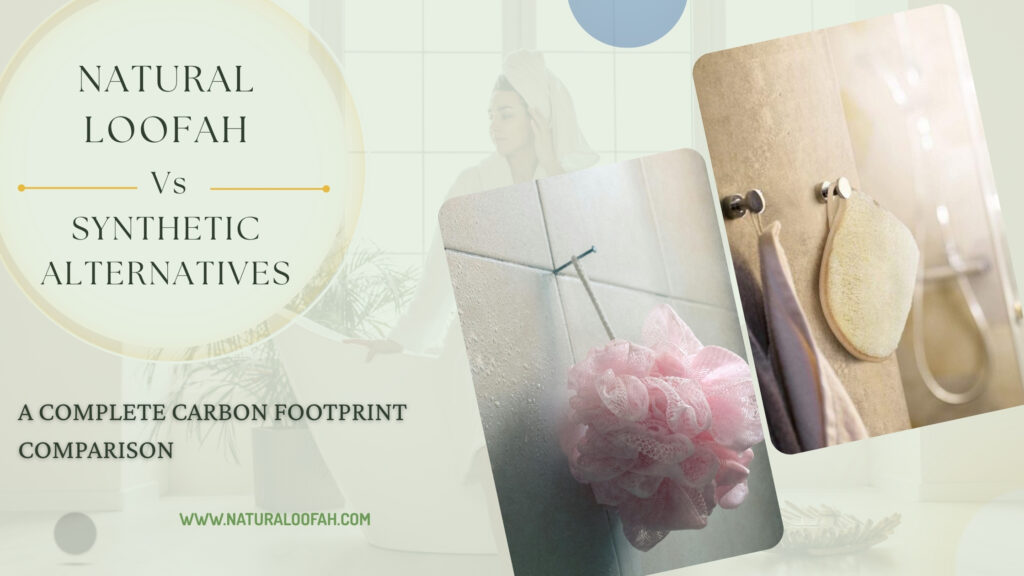
Synthetic sponges and scrubbers take a very long time to decompose in a landfill, while a natural loofah is 100% biodegradable. This guide compares natural Egyptian loofah with synthetic alternatives across the product lifecycle, from raw material sourcing to end-of-life disposal.
This matters whether you run a boutique spa sourcing sustainable body scrubbers in bulk, manage a retail chain looking for green product lines, or simply want a bathroom sponge that does not add to plastic waste.
In this guide, you will find a loofah comparison covering the agricultural side of growing luffa plants in Egypt and the petrochemical origin of nylon mesh poufs. Whether you are evaluating suppliers for wholesale loofah purchasing or choosing between products on a store shelf, this article helps you make informed decisions.
For those ready to explore Egyptian loofah: EGEXO has been exporting Egyptian loofah since 2015. You can request a wholesale quote or see the Products page.
Understanding the Full Lifecycle Carbon Footprint of Loofah Products
What a Lifecycle Assessment Actually Measures
A lifecycle assessment, often called an LCA, tracks the total environmental impact of a product from the moment raw materials are extracted until the product reaches its final disposal. For a loofah carbon footprint comparison to be meaningful, you need to examine five distinct phases: raw material sourcing, manufacturing and processing, packaging, transportation, and end-of-life treatment. Each phase contributes differently depending on whether the product is a natural plant-based loofah or a synthetic scrubber made from petroleum-derived plastics.
Natural loofah begins as a seed planted in nutrient-rich soil. The Luffa aegyptiaca plant absorbs carbon dioxide from the atmosphere during its growth cycle. Synthetic alternatives start at an oil refinery. Nylon, polyester, and polyethylene are all derived from crude oil, and the extraction and refining process releases significant greenhouse gases before a single scrubber is even manufactured.
Why This Comparison Matters for Businesses and Consumers
For individual buyers, the loofah carbon footprint comparison provides clarity in a market crowded with greenwashing. Not every product labeled natural actually carries a lower environmental impact. The data in this guide helps you distinguish between genuinely sustainable choices and misleading claims.
EGEXO supports bulk orders with clear terms. No minimum order on standard products. Private label from 1,000 units. You can request samples before committing to a wholesale purchase. Samples are paid and the buyer pays the shipping. The sample cost is credited to your first order of $1,000 or more, placed within 60 days.
Why Egyptian Loofah
Climate and Growing Conditions in Egypt
Not all natural loofah is grown the same way. Egyptian loofah is cultivated primarily in the Nile Delta and Upper Egypt, where naturally fertile soil, abundant sunshine, and established irrigation suit the crop.
The warm Egyptian climate provides a growing season long enough for the Luffa plant to reach full maturity. Egyptian loofah is softer, with a looser fibre weave than Asian loofah.
EGEXO: Exporting Egyptian Loofah Since 2015
EGEXO has been exporting Egyptian loofah since 2015. Loofah from own and partner farms in the Nile Delta, processed in EGEXO’s own factory. Our loofah is dried by natural methods. Our standard loofah is not bleached. Bleaching is done only on request.
Read EGEXO’s quality standards.
The Hidden Environmental Costs of Synthetic Scrubbers
Microplastic Pollution from Nylon and Polyester Poufs
The carbon footprint is only one dimension of the environmental story. Synthetic loofah alternatives shed microplastic fibers with every single use. Synthetic bath poufs can release microplastic fibers with every use. These particles flow down the drain, pass through water treatment facilities, and enter rivers, lakes, and oceans.
Natural loofah sheds only biodegradable plant fibers that break down harmlessly in water systems. For consumers concerned about what they wash down the drain, this distinction is critical. For businesses, especially those in the spa and hospitality sector, stocking products that contribute to microplastic pollution creates reputational risk as consumer awareness grows.
EGEXO custom product design services allow businesses to create unique offerings that differentiate their brand.
Explore the full range of body loofah options to find the size and shape that matches your needs.
Wholesale buyers interested in private labeling a loofah line can work with EGEXO through its private label manufacturing program. No minimum order on standard products. Private label from 1,000 units.
How to Evaluate Loofah Sustainability as a Buyer or Consumer
Quality and Sustainability Checklist
Whether you are purchasing a single loofah for your home or evaluating a supplier for a 10,000-unit wholesale order, this checklist helps you identify products that truly deliver on their environmental promises.
| Evaluation Criteria | What to Check | Why It Matters |
|---|---|---|
| Fiber Origin | Confirm plant species is Luffa aegyptiaca, grown in verified regions | Ensures you are getting genuine natural loofah, not a synthetic imitation |
| Processing Method | Ask how the loofah is dried and whether it is bleached | Natural drying and unbleached loofah avoid chemical treatments |
| Packaging | Verify minimal, recyclable, or compostable packaging | Packaging adds to the environmental footprint |
| Certifications | Ask for the certificates the supplier holds | Third-party verification builds consumer trust and regulatory compliance |
| Supplier Track Record | Check years in operation and export experience | Export experience helps with consistent quality |
| Fiber Density | Physically inspect or request samples | Even fibers give a longer-lasting product |
| End-of-Life Path | Confirm the product is fully compostable | Keeps the product out of the landfill at disposal |
For B2B buyers, you can get the EGEXO product catalog for the range, or request a quote.
Practical Steps to Reduce Your Loofah Carbon Footprint at Home
Consumer Care Guide for Maximum Lifespan
The environmental impact of your natural loofah depends partly on how well you care for it. A well-maintained loofah lasts longer, which means fewer replacements and a lower annual carbon footprint. Follow these steps to get the most out of every loofah you buy.
Step 1. Rinse your loofah thoroughly after every use to remove soap residue and dead skin cells.
Step 2. Squeeze out excess water and hang it in a well-ventilated area. Avoid leaving it on the shower floor or in a sealed container.
Step 5. Replace your loofah when it wears out. Kitchen and raw loofah scrubbers used for dishwashing can last slightly longer with proper drying.
Step 6. Compost your used loofah instead of throwing it in the trash. It will break down in a standard compost bin.
These simple habits extend your loofah lifespan and keep your annual environmental impact at the lowest possible level.
The Future of Sustainable Loofah in Green Business
EGEXO has been exporting Egyptian loofah since 2015. Loofah from own and partner farms in the Nile Delta, processed in EGEXO’s own factory. Read about EGEXO’s farm to export process.
Emerging Applications Beyond Bath and Body
Natural loofah is expanding beyond traditional body scrubbing into kitchen cleaning, pet grooming and spa treatments, industrial cleaning, and even biodegradable packaging material. Each of these applications is a plant-based alternative to a synthetic product, opening new product categories for forward-thinking businesses.
FAQ Section
Q2: What is the minimum order quantity for wholesale natural loofah?
A: No minimum order on standard products. Private label from 1,000 units. You can request specific MOQ details through their wholesale quotation page to get pricing matched to your volume requirements.
Q3: What makes Egyptian loofah different from loofah grown in other countries?
A: Egyptian loofah benefits from the Nile Delta’s naturally fertile soil, consistent warm climate, and generations of cultivation expertise. Egyptian loofah is softer, with a looser fibre weave than Asian loofah.
Q5: Can businesses put sustainability claims on packaging when they sell natural loofah?
A: Yes, provided the claims are accurate and verifiable. Stocking natural loofah allows businesses to make legitimate claims about biodegradability, compostability, and plastic-free composition. Ask your supplier which documents it holds.
Q7: How should retailers store bulk natural loofah inventory to maintain quality?
A: Store natural loofah in a cool, dry, well-ventilated space away from direct sunlight and moisture. Proper storage prevents mold growth and fiber degradation.
Expert Insight from EGEXO
EGEXO has been exporting Egyptian loofah since 2015. Loofah from own and partner farms in the Nile Delta, processed in EGEXO’s own factory. Our standard loofah is not bleached. Bleaching is done only on request. We encourage buyers to request samples. Samples are paid and the buyer pays the shipping. The sample cost is credited to your first order of $1,000 or more, placed within 60 days. Request a quote.
Conclusion
Natural Egyptian loofah is a plant fibre that is 100% biodegradable and sheds no microplastic fibers. For businesses, stocking natural loofah is both an ethical and commercial decision that aligns product offerings with plastic-free values. For individual consumers, choosing a natural loofah is one of the simplest swaps you can make in your daily routine.
Key Takeaways:
- Natural Egyptian loofah is a plant fibre that is 100% biodegradable
- Egyptian loofah is softer, with a looser fibre weave than Asian loofah
- Synthetic scrubbers shed microplastic fibers, while natural loofah sheds only biodegradable plant fibers
Ready to experience Egyptian loofah quality?
- For wholesale orders: Request a quote or request samples