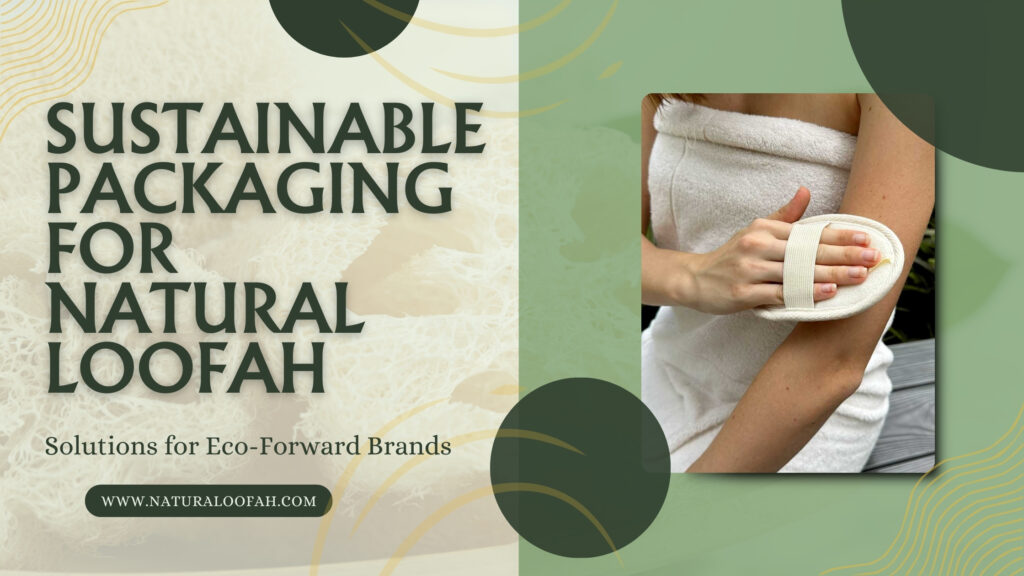
Yet an alarming contradiction persists in the personal care industry. Products marketed as natural and eco-friendly frequently arrive wrapped in single-use plastic, foam inserts, and non-recyclable laminates. The conversation around natural loofah sustainable packaging has moved from a nice-to-have brand gesture to a genuine business and consumer expectation in 2026.
This disconnect matters whether you run a boutique spa sourcing bulk bath accessories or you are a shopper scanning labels at your local zero-waste store. A natural loofah loses a significant part of its environmental credibility the moment it is sealed inside a polybag or blister pack. For brands and retailers, that packaging choice directly affects purchase decisions, brand perception, and repeat customer rates. For everyday consumers, it determines whether a product genuinely aligns with a low-waste lifestyle or simply performs sustainability on the surface.
In this guide, you will find a thorough breakdown of the packaging materials, strategies, and supplier considerations that keep natural loofah products truly green from farm to front door. We will cover material comparisons, step-by-step processes for transitioning to sustainable packaging, supplier evaluation criteria, and practical tips for consumers who want to make informed choices. Whether you are placing a wholesale order or buying a single loofah for your bathroom, the principles here will help you demand better and choose smarter.
Ready to explore products? See the Products page for Egyptian loofah products.
Why Natural Loofah Sustainable Packaging Matters More Than Ever
The Environmental Cost of Conventional Packaging
Much of that waste comes not from the products themselves but from the layers of plastic, cardboard, and mixed materials used to present them on store shelves or protect them during shipping. When a biodegradable product like a natural loofah sponge ships inside a plastic sleeve with a printed cardboard backer held together by adhesive, the end-of-life disposal becomes complicated. Consumers cannot simply compost the entire package. Instead, they must separate materials, check local recycling rules, and often end up tossing components into general waste.
For businesses purchasing in bulk, this waste multiplies across thousands of units. A retailer ordering 10,000 loofah units in individual polybags generates a significant volume of plastic waste before a single product reaches a customer. That plastic footprint now shows up in sustainability audits, ESG reporting, and increasingly in consumer reviews.
Consumer Expectations Have Shifted Permanently
Shoppers in 2026 do not treat eco-friendly packaging as a bonus feature. They treat it as a baseline requirement for any product marketed as natural or sustainable. This behavioral shift creates both a risk and an opportunity for brands at every scale.
Understanding these expectations is essential for anyone in the loofah supply chain. EGEXO has been exporting Egyptian loofah since 2015. The packaging conversation touches every link in the chain, and the choices made at the supplier level determine whether a brand can credibly claim sustainability.
Packaging Material Options for Natural Loofah Products
Comparing Sustainable Packaging Materials
Choosing the right packaging material requires balancing environmental impact, product protection, visual appeal, and cost. The following table compares the most common sustainable packaging materials used for natural loofah products against conventional plastic options.
| Packaging Material | Biodegradable | Recyclable | Moisture Resistance | Product Visibility | Compostable | Best Use Case |
|---|---|---|---|---|---|---|
| Kraft paper band or sleeve | Yes | Yes | Low | Partial | Yes, home compostable | Retail loofah display, minimal packaging |
| Recycled cardboard box | Yes | Yes | Low to moderate | No, unless windowed | Yes, home compostable | Gift sets, multi-item bundles |
| Compostable cellulose film | Yes | Limited | Moderate | Full transparency | Yes, industrial compost | Individual retail units |
| Cotton muslin drawstring bag | Yes | Not applicable | Low | No | Yes, home compostable | Premium and gift positioning |
| Biodegradable corn starch bag | Yes | No | Moderate | Full transparency | Yes, industrial compost | Bulk shipping protection |
| Conventional polybag (LDPE) | No | Limited | High | Full transparency | No | Legacy shipping, being phased out |
| Shrink wrap (PVC or PE) | No | No | High | Full transparency | No | Legacy retail, being phased out |
For brands exploring sustainable transitions, kraft paper bands and recycled cardboard boxes offer the best combination of environmental performance, consumer appeal, and cost-effectiveness. Cellulose films work well for brands that need product visibility on retail shelves without relying on plastic windows.
Consumers shopping for loofah products can use this table as a quick reference. If the loofah you are considering comes wrapped in conventional plastic with no recyclability information, it may not align with your sustainability goals regardless of how the product itself is grown or processed.
The Rise of Naked Packaging and Minimal Wrapping
One of the strongest trends in natural loofah sustainable packaging is the move toward naked or nearly naked presentation. Because loofah is a dry, sturdy, non-fragile product, it requires far less protective packaging than liquids or glass items. Many forward-thinking brands now ship and display loofah products with nothing more than a small kraft paper label or a thin printed band. This approach dramatically reduces material use and resonates strongly with zero-waste shoppers.
For wholesale buyers, naked packaging also reduces per-unit weight and shipping volume. That translates directly to lower freight costs and a smaller carbon footprint per shipment. Businesses interested in this approach can explore custom loofah product design options that incorporate minimal packaging into the product concept from the start.
How to Transition Your Brand to Natural Loofah Sustainable Packaging
Step-by-Step Packaging Transition Process
Switching from conventional packaging to sustainable alternatives does not need to be overwhelming. The following process outlines a practical, phased approach that works for businesses of any size as well as for individual sellers or small-batch creators.
| Step | Action | Details |
|---|---|---|
| 1 | Audit current packaging | List every material in your current packaging, including inner wraps, labels, inserts, adhesives, and shipping materials |
| 2 | Identify problem materials | Flag any non-recyclable, non-compostable, or petroleum-based components |
| 3 | Research alternatives | Match each problem material with a sustainable substitute using the comparison table above |
| 4 | Request supplier samples | Ask your loofah supplier about available eco-packaging options and request physical samples for evaluation |
| 5 | Test for product protection | Verify that new materials adequately protect loofah during storage and transit, especially for humidity and compression |
| 6 | Calculate cost impact | Compare per-unit packaging costs between current and proposed materials, factoring in potential shipping savings from lighter weight |
| 7 | Design updated packaging | Create new artwork that highlights sustainability credentials and communicates your brand story |
| 8 | Run a pilot batch | Order a small production run with new packaging to test consumer response and identify any operational issues |
| 9 | Gather feedback | Collect input from customers, retail partners, and your fulfillment team on the new packaging experience |
| 10 | Scale and standardize | Roll out finalized sustainable packaging across your full product line |
EGEXO supports brands through its private label loofah manufacturing service, so buyers can specify wrapping, labeling, and boxing as part of a custom order. No minimum order on standard products. Private label from 1,000 units.
Key Considerations for Bulk and Wholesale Packaging
Wholesale buyers face unique packaging considerations beyond what appears on the retail shelf. Bulk shipments need to survive ocean freight, customs handling, warehouse storage, and last-mile delivery without compromising product quality. The good news is that natural loofah is one of the most shipping-resilient personal care products available. It does not break, leak, or spoil under normal transport conditions.
The primary concern for bulk packaging is moisture control. EGEXO dries its loofah by natural methods and always compresses loofah before shipping. Sustainable bulk packaging solutions include unbleached kraft paper inner wrapping, corrugated recycled cardboard outer cases, and paper-based desiccant packets instead of silica gel in plastic sachets.
Read EGEXO’s quality standards. You can also request samples to evaluate packaging quality before committing to a full order. Samples are paid and the buyer pays the shipping. The sample cost is credited to your first order of $1,000 or more, placed within 60 days.
Understanding MOQ and Packaging Customization
No minimum order on standard products. Private label from 1,000 units. Custom time is confirmed with the quote.
Brands exploring custom packaging with their loofah orders should discuss these details early in the quoting process. Request a wholesale quotation that includes packaging specifications so you receive accurate pricing that reflects your complete product presentation, not just the loofah itself.
Natural Loofah Sustainable Packaging for Consumer Products
Bath and Body Loofah Packaging Best Practices
For bath and body loofah products, the ideal sustainable packaging protects the product during retail display and shipping while adding to the unboxing experience. A simple kraft paper band with clean typography, a brief care instruction note printed on recycled card, and the loofah itself visible and touchable creates a presentation that appeals to eco-conscious shoppers more effectively than any plastic clamshell ever could.
Consumers who buy loofah regularly know that the first thing they do is remove all packaging before use. This makes elaborate packaging not just wasteful but actively annoying. Brands that understand this prioritize minimal, informative, compostable packaging that tells the product story and then disappears responsibly.
Kitchen and Specialty Loofah Packaging
Kitchen loofah scrubbers and raw loofah products have slightly different packaging needs. Kitchen loofahs benefit from a small printed insert explaining usage and care, since many consumers are still learning about loofah as a dish-cleaning tool. That insert should be printed on recycled or seed paper, maintaining the sustainability message consistently.
Pet and spa loofah products often command premium pricing and benefit from packaging that reflects that positioning. A cotton drawstring bag or a rigid recycled cardboard box with a natural fiber ribbon creates a gift-worthy presentation without any plastic components. These details help justify premium pricing while reinforcing the brand values that attracted the customer in the first place.
Evaluating Your Loofah Supplier on Packaging Sustainability
Supplier Packaging Evaluation Checklist
Not all loofah suppliers prioritize packaging sustainability equally. Use this checklist to evaluate whether a potential or current supplier meets the packaging standards your brand and customers expect.
| Evaluation Criteria | What to Ask | Why It Matters |
|---|---|---|
| Default packaging materials | What materials are used for standard individual and bulk packaging | Reveals baseline sustainability commitment |
| Eco-packaging options | What sustainable alternatives are available and at what MOQ | Determines feasibility for your order size |
| Packaging certifications | Can they provide FSC, compostability, or recyclability certifications for packaging materials | Supports marketing claims and retail compliance |
| Custom packaging capability | Can they produce branded eco-packaging in house or through verified partners | Affects lead time, cost, and quality control |
| Packaging waste in production | How do they handle packaging waste in their own facility | Indicates genuine vs performative sustainability |
| Climate-appropriate solutions | Can they adjust packaging for destination humidity and transit conditions | Prevents product damage that creates additional waste |
| Ink and adhesive sourcing | Are inks soy or vegetable based and are adhesives water soluble | These details determine true compostability |
| Willingness to innovate | Are they open to testing new packaging approaches on pilot orders | Shows long-term partnership potential |
EGEXO has been exporting Egyptian loofah since 2015. Custom product design is available through EGEXO custom product design, including packaging.
Wholesale buyers can get the EGEXO product catalog for an overview of available products, or request a quote with packaging requirements.
FAQ Section
Q1: What is the best sustainable packaging material for natural loofah products?
A: Kraft paper bands and recycled cardboard sleeves are the most effective natural loofah sustainable packaging materials for most applications. They are fully recyclable, home compostable, cost-effective, and provide adequate product protection during retail display and standard shipping. For products requiring visibility, compostable cellulose film offers a transparent alternative without petroleum-based plastics.
Q3: Can I request custom eco-friendly packaging with my bulk loofah order?
A: Yes. Custom packaging is part of EGEXO private label services. You can specify packaging materials, printing methods, label content, and box configurations during the quoting process. Private label starts from 1,000 units, up to 2,000 by customization. Custom time is confirmed with the quote.
Q4: How can consumers identify truly sustainable loofah packaging?
A: Look for packaging made from recognizable natural materials like unbleached kraft paper, recycled cardboard, or cotton fabric. Check for certifications such as FSC for paper products or recognized compostability symbols. Avoid products wrapped in plastic film, PVC clamshells, or mixed-material packaging that cannot be easily separated for recycling. Truly sustainable brands will clearly state their packaging materials and end-of-life disposal instructions.
Q5: Does natural loofah need protective packaging at all?
A: Natural loofah is one of the most durable personal care products available. It does not break, shatter, or leak, which means it requires far less protective packaging than most bath and body items. For retail display, a simple paper band or tag is sufficient. For shipping, recycled cardboard cases with paper-based moisture barriers protect the product adequately without any plastic components.
Q6: What packaging certifications should wholesale buyers look for?
A: Key certifications to verify include FSC (Forest Stewardship Council) for paper and cardboard materials, EN 13432 or ASTM D6400 for compostability claims, and soy-based or vegetable-based ink certifications for printed elements. These certifications provide verifiable proof that packaging materials meet recognized environmental standards and support accurate marketing claims in regulated retail markets.
Expert Insight from EGEXO
EGEXO has been exporting Egyptian loofah since 2015. EGEXO exports to more than 40 countries. We recommend that brands treat packaging as an extension of the product itself. Loofah from own and partner farms in the Nile Delta, processed in EGEXO’s own factory. Our team works with buyers on packaging solutions that match their brand identity, from simple kraft bands for zero-waste shops to custom printed recycled boxes for premium retail. No minimum order on standard products. Private label from 1,000 units. Request a quote.
Conclusion
Natural loofah sustainable packaging is an expectation from many consumers and a meaningful part of what makes natural loofah worth choosing. The materials, steps, and supplier questions outlined in this guide give businesses of every size and individual consumers a clear way to choose packaging that matches their values.
EGEXO has been exporting Egyptian loofah since 2015. Loofah from own and partner farms in the Nile Delta, processed in EGEXO’s own factory. Packaging is part of that conversation: ask for it early in your quote request.
Key Takeaways:
- Kraft paper, recycled cardboard, and compostable cellulose film are the top sustainable packaging materials for natural loofah, offering full recyclability or compostability at competitive cost.
- Wholesale buyers should evaluate suppliers on packaging options, certifications, and custom capabilities alongside product quality.
- EGEXO has been exporting Egyptian loofah since 2015, with packaging options for private label orders
Ready to experience Egyptian loofah quality with sustainable packaging?
- For wholesale orders: Request a quote or request samples