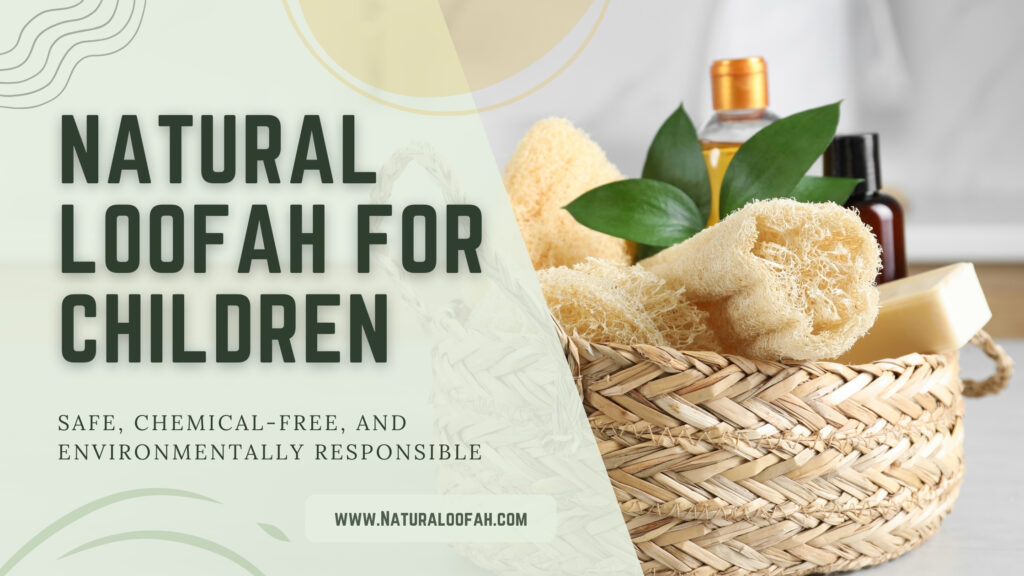
Parents across the globe spend an estimated 12 billion USD annually on bath and body products formulated specifically for children. Yet a growing body of research reveals that many of these products contain synthetic dyes, chemical preservatives, and petroleum-derived materials that offer no benefit to developing skin. The shift toward natural loofah children safe eco alternatives has accelerated sharply in the past three years, driven by families who want bath time products that are genuinely gentle, fully biodegradable, and free from hidden toxins.
This conversation matters well beyond the family bathroom. Retailers specializing in baby and children’s products report that eco-friendly bath accessories now represent one of their fastest-growing categories, with year-over-year demand increases of 18 to 22 percent since 2023. Spa owners designing family-friendly treatment menus, distributors building green product lines, and importers sourcing for health-conscious markets all recognize that natural loofah products sized and processed for children fill a genuine gap in the marketplace.
In this guide, you will find everything you need to make confident decisions about loofah products for young users. We cover material safety backed by data, age-appropriate product selection, proper hygiene practices, and detailed comparisons between natural and synthetic options. Business buyers will find supplier evaluation criteria, quality grading information, and wholesale sourcing insights woven throughout. Individual consumers and parents will gain practical, everyday guidance they can apply immediately.
Egyptian loofah, cultivated with care by experienced growers like Egexo, stands out as the gold standard for purity and texture. With over 25 years of cultivation expertise, Egexo delivers the kind of consistent quality that both families and businesses can trust.
Whether you are stocking shelves or scrubbing tiny elbows, this article will help you choose wisely. Browse the full range of bath and body loofah products to see what quality Egyptian loofah looks like in practice.
Why Natural Loofah Children Safe Eco Products Are Gaining Popularity
The Problem with Synthetic Bath Accessories for Kids
Most synthetic bath poufs and sponges sold in children’s sections are made from nylon, polyester, or polyethylene mesh. These materials are derived from petroleum and often treated with antimicrobial chemicals or synthetic dyes to achieve bright colors that appeal to young shoppers. While these products feel soft initially, they begin shedding microplastic fibers after just a few uses. Research published in environmental science journals has documented that a single synthetic bath pouf can release thousands of microplastic particles per wash cycle, sending those particles directly down the drain and onto young skin.
Children’s skin is structurally different from adult skin. It is approximately 20 to 30 percent thinner, absorbs substances more readily, and is more susceptible to irritation from chemical residues. Using a bath accessory that continuously sheds synthetic material against this delicate barrier raises legitimate concerns that many parents are only now beginning to understand.
What Makes Natural Loofah Different
Natural loofah is the fibrous skeleton of the Luffa aegyptiaca gourd, a plant in the cucumber family. When properly cultivated, harvested, dried, and processed, the resulting sponge is 100 percent plant-based, free from synthetic chemicals, and fully biodegradable. It contains no dyes, no plastic, and no antimicrobial treatments. The fibers provide gentle mechanical exfoliation without harshness, and the open cellular structure allows thorough rinsing and fast drying between uses.
For children, this means a bath accessory that cleans effectively without introducing any foreign chemicals to their skin. For retailers and distributors, it means a product category with a compelling safety narrative, strong margins, and rising consumer demand. The combination of safety, sustainability, and market momentum makes natural loofah children safe eco products a smart choice from every angle.
To understand how premium loofah moves from the field to your shelf or shower, explore the farm to export process that defines quality-first manufacturing.
How to Choose the Right Natural Loofah for Your Child
Age-Appropriate Selection Guide
Not every loofah product suits every age group. The texture, size, and density of the loofah fiber vary across product grades, and choosing the right match for a child’s age and skin sensitivity is essential. The table below provides a practical framework for both parents selecting a single product and buyers curating a product line.
| Age Group | Recommended Loofah Type | Fiber Density | Ideal Size | Usage Frequency | Key Consideration |
|---|---|---|---|---|---|
| 0 to 2 years | Not recommended for direct exfoliation | N/A | N/A | N/A | Use soft cloth; introduce loofah as bath toy only |
| 2 to 4 years | Ultra-soft grade, thin-walled loofah | Very low density | 7 to 10 cm length | 1 to 2 times per week | Supervise use; gentle circular motions only |
| 5 to 8 years | Soft grade, medium-walled loofah | Low to medium density | 10 to 15 cm length | 2 to 3 times per week | Child can begin self-directed use with guidance |
| 9 to 12 years | Standard soft grade loofah | Medium density | 12 to 18 cm length | 3 to 4 times per week | Suitable for regular bath routine |
| 13 years and above | Standard or medium grade loofah | Medium to firm density | 15 to 20 cm length | Daily if desired | Adult-style use appropriate for most skin types |
This framework helps parents avoid the common mistake of using an adult-grade loofah on young children, which can cause unnecessary friction on delicate skin. For retailers, stocking multiple size and grade options creates natural upsell opportunities as families return for age-appropriate upgrades.
Evaluating Texture and Softness
The softness of a natural loofah depends on several factors including the maturity of the gourd at harvest, the wall thickness of the fiber, and the post-harvest processing method. Egyptian loofah from Egexo is graded according to strict quality standards that account for all these variables. When selecting loofah for children, look for products labeled as soft or ultra-soft grade with thin to medium wall thickness and a pliable feel when dry.
A simple test for parents is to press the dry loofah against the inside of your forearm. If it feels scratchy or leaves temporary redness, it is too coarse for a young child. Premium Egyptian loofah in the correct grade should feel firm but forgiving, providing texture without aggression.
Wholesale buyers can request loofah samples to evaluate texture and quality before placing a full order. This hands-on assessment is the most reliable way to confirm that a product meets the softness requirements for a children’s product line.
Natural Loofah vs Synthetic Bath Products for Children: A Detailed Comparison
Understanding the differences between natural and synthetic options helps parents make informed choices and helps businesses position their products with accuracy. The following comparison table breaks down the key factors that matter most when the end user is a child.
| Factor | Natural Loofah (Egyptian Grade) | Synthetic Bath Pouf | Silicone Scrubber |
|---|---|---|---|
| Material origin | 100% plant-based gourd fiber | Petroleum-derived nylon or polyester mesh | Petroleum-derived silicone polymer |
| Chemical treatments | None when properly sourced | Often treated with dyes and antimicrobials | Generally chemical-free but not biodegradable |
| Microplastic shedding | Zero | High, thousands of particles per use | None |
| Biodegradability | Fully biodegradable in 30 to 60 days | Not biodegradable, persists 200+ years | Not biodegradable, persists indefinitely |
| Exfoliation quality | Gentle mechanical exfoliation | Minimal exfoliation, mostly lather | Smooth surface, very low exfoliation |
| Allergen risk | Very low for properly processed product | Moderate due to dyes and chemical finishes | Low |
| Lifespan with proper care | 3 to 5 weeks for children’s use | 4 to 8 weeks before visible degradation | 6 to 12 months |
| Environmental end of life | Composts naturally | Landfill or ocean pollution | Landfill |
| Lather production | Good with natural soaps | High with any soap type | Low to moderate |
| Drying speed | Fast due to open fiber structure | Slow, retains moisture in folds | Very fast |
The data makes a clear case. Natural loofah delivers the safest, most environmentally responsible bathing experience for children while offering the kind of genuine exfoliation that synthetic alternatives simply cannot match. For business buyers, this comparison becomes a powerful point-of-sale tool when printed on packaging or displayed alongside products in retail settings.
Parents seeking a deeper understanding of loofah types and their best applications can find extensive guidance at Loofah Guide, a dedicated consumer resource.
Safety and Hygiene Best Practices for Children’s Natural Loofah Use
Step-by-Step Safe Usage Process
Proper use and maintenance of a natural loofah ensures that it remains hygienic, effective, and safe throughout its lifespan. The following process applies to both home use and commercial settings like family spas or children’s wellness centers.
| Step | Action | Details |
|---|---|---|
| 1 | Soak before first use | Submerge the dry loofah in warm water for 5 to 10 minutes to soften the fibers completely |
| 2 | Apply soap or body wash to the loofah | Use a gentle, fragrance-free, natural soap suitable for children |
| 3 | Use light pressure only | Guide the child to use gentle circular motions without pressing hard against the skin |
| 4 | Avoid sensitive areas | Keep loofah away from the face, any broken skin, rashes, or irritated patches |
| 5 | Rinse thoroughly after each use | Squeeze and rinse under clean running water until all soap residue is removed |
| 6 | Shake out excess water | Shake the loofah firmly to remove trapped moisture from the fiber structure |
| 7 | Hang to dry in ventilated area | Place the loofah where air circulates freely; never store it in a closed shower caddy |
| 8 | Sanitize weekly | Soak in a diluted white vinegar solution for 10 minutes once per week to prevent bacterial growth |
| 9 | Replace on schedule | Replace the loofah every 3 to 5 weeks for children, sooner if fibers begin to break down |
These steps are straightforward, but consistency matters. A loofah that sits damp in a sealed container between uses will develop bacteria regardless of whether it is natural or synthetic. The advantage of natural loofah is that its open fiber structure dries significantly faster than a bunched synthetic pouf, reducing the window for microbial growth when handled correctly.
Maintenance Checklist for Parents
| Task | Frequency | Why It Matters |
|---|---|---|
| Full rinse after use | Every use | Removes soap, skin cells, and debris |
| Air dry in open space | After every use | Prevents bacterial and mold growth |
| Vinegar soak sanitization | Once per week | Kills bacteria without harsh chemicals |
| Visual inspection for wear | Twice per week | Catches fiber breakdown before it affects skin |
| Full replacement | Every 3 to 5 weeks | Ensures hygienic, effective performance |
| Dedicated loofah per child | Always | Prevents cross-contamination between siblings |
Following this checklist keeps the natural loofah children safe eco promise intact throughout the product’s life cycle. It also provides excellent content for brands to include on product packaging or in care instruction inserts.
Sourcing Natural Loofah Children Safe Eco Products for Your Business
Why Egyptian Loofah Sets the Standard
Not all loofah is created equal. Growing conditions, soil quality, harvest timing, and post-harvest processing all influence the texture, purity, and consistency of the final product. Egyptian loofah has earned its reputation as the finest in the world because Egypt’s Nile Delta region provides the ideal combination of rich alluvial soil, consistent sunlight, and controlled irrigation that produces loofah with superior fiber density and uniformity.
Egexo, with more than 25 years of dedicated loofah cultivation experience in Egypt, represents the top tier of this supply chain. Their operation spans the full journey from seed selection through cultivation, harvest, processing, grading, and export. This vertical integration means that every product leaving their facility has been quality-controlled at multiple stages, a level of oversight that fragmented supply chains with multiple intermediaries simply cannot replicate.
For businesses building a children’s bath product line, this consistency is not optional. Parents trust brands with their children’s skin, and that trust depends on every single unit meeting the same safety and quality benchmarks. Egexo’s quality standards documentation outlines exactly how they achieve this consistency.
Supplier Evaluation Criteria for Children’s Loofah Products
| Criteria | What to Verify | Why It Matters for Children’s Products |
|---|---|---|
| Cultivation method | Organic or pesticide-free growing practices | Eliminates chemical residue risk on young skin |
| Processing method | Natural drying and cleaning without bleach or chemicals | Ensures fiber purity |
| Grading system | Documented grades for softness and wall thickness | Allows accurate age-appropriate product matching |
| Quality control stages | Multiple inspection points from harvest to packaging | Catches defects before they reach consumers |
| Export certifications | Phytosanitary certificates, compliance documentation | Meets import regulations in destination markets |
| Customization capability | Ability to cut, shape, and brand products for children’s lines | Enables differentiated retail positioning |
| MOQ flexibility | Willingness to accommodate trial orders | Reduces risk for new product launches |
| Sample availability | Free or low-cost samples for quality evaluation | Essential for hands-on texture and safety assessment |
Businesses ready to evaluate Egexo as a supplier can request a wholesale quotation that includes pricing across multiple grades, MOQ details, and shipping options. For those who want to develop a branded children’s loofah line, private label manufacturing and custom product design services make it possible to bring a unique product to market without building production infrastructure from scratch.
Business Opportunity Analysis
The children’s eco-bath category shows no signs of slowing. Market data indicates that the global organic personal care products market for children reached approximately 3.5 billion USD in 2024 and continues to grow at a compound annual rate near 9 percent. Natural loofah products occupy a compelling niche within this broader market because they are affordable to source, easy to brand, and carry an authentic sustainability story that resonates with target demographics.
Retailers who stock natural loofah children safe eco products alongside complementary items like natural soap bars and organic cotton washcloths create a cohesive green bath section that drives basket size upward. Distributors who offer curated children’s loofah bundles give their retail partners a ready-made category solution that requires minimal merchandising effort.
For a comprehensive overview of available product types, grades, and wholesale configurations, download the Egexo product catalog.
Environmental Impact: Teaching Children Through Everyday Choices
The Lifecycle Advantage of Natural Loofah
Choosing a natural loofah over a synthetic pouf is one of the simplest environmental lessons a parent can share with a child. The lifecycle comparison is stark and easy for young minds to grasp. A natural loofah grows from a seed, matures on a vine over 150 to 180 days, gets harvested and dried using the sun, serves its purpose for several weeks, and then returns to the earth through composting within 30 to 60 days. No factory emissions, no plastic waste, no landfill contribution.
A synthetic bath pouf, by contrast, begins as crude oil, undergoes energy-intensive refining and manufacturing, sheds microplastics during every single use, and then persists in landfills or ocean environments for 200 years or longer. When children understand this difference, they begin to internalize the concept of circular versus linear product lifecycles in a tangible, personal way.
Brands that communicate this lifecycle story on their packaging or in their marketing create emotional connection with eco-conscious parents. It transforms a simple bath product into a values-aligned purchase that families feel good about repeating.
Composting Your Child’s Used Loofah
When a natural loofah reaches the end of its useful life, it does not belong in the trash. Cut it into small pieces and add it to a home compost bin or garden bed. The plant fibers break down quickly and contribute beneficial organic matter to soil. For families with gardens, this creates a satisfying full-circle moment where a bath product literally feeds new plant growth. Even apartment dwellers can add loofah pieces to municipal compost programs where available.
This composting step is another reason that natural loofah children safe eco products genuinely earn the sustainability label rather than just borrowing it for marketing purposes.
Families interested in exploring the full range of natural loofah applications beyond the bath, including kitchen cleaning and creative crafts, can find helpful resources at Loofah Guide. Retailers looking to expand their natural loofah inventory can explore kitchen loofah options and raw loofah scrubbers that complement a children’s bath line.
Pros and Cons of Natural Loofah for Children
Every product has trade-offs, and transparency about those trade-offs builds trust with both consumers and business partners. The following table offers an honest assessment.
| Aspect | Pros | Cons |
|---|---|---|
| Skin safety | No chemicals, no microplastics, hypoallergenic when properly processed | Requires correct grade selection for age group; too-coarse product can irritate |
| Hygiene | Open structure allows fast drying; easy to sanitize with vinegar | Must be replaced every 3 to 5 weeks; requires consistent drying routine |
| Environmental impact | 100% biodegradable, compostable, zero plastic waste | Shorter lifespan than silicone alternatives means more frequent purchasing |
| Cost for consumers | Affordable per unit, typically 1 to 4 USD retail | Not reusable indefinitely like silicone; ongoing replacement cost |
| Cost for businesses | Strong margins, low sourcing cost per unit | Requires customer education about replacement schedule |
| Child engagement | Natural texture and shape appeal to curiosity | Less colorful than synthetic options without added dyes |
| Availability | Readily available from quality suppliers like Egexo | Quality varies significantly by origin and supplier |
The cons listed here are manageable with proper education and sourcing. The key takeaway is that the advantages of natural loofah for children overwhelmingly outweigh the limitations, especially when the loofah comes from a trusted supplier with rigorous quality control.
Wholesale buyers interested in exploring how Egexo addresses these considerations can learn more on the Why Choose Egexo page, which details their quality commitments, certifications, and customer support structure.
FAQ Section
Q1: Is natural loofah safe for a toddler’s skin?
A: Natural loofah is generally safe for children aged 2 and older when you select an ultra-soft or soft grade product. For toddlers under 2, loofah should only be introduced as a bath toy rather than a scrubbing tool. Always supervise young children during use and apply very light pressure. Properly sourced Egyptian loofah is chemical-free and hypoallergenic, making it one of the safest natural loofah children safe eco bath accessories available.
Q2: How often should I replace my child’s natural loofah?
A: Replace your child’s natural loofah every 3 to 5 weeks with regular use. Inspect it twice weekly for signs of fiber breakdown, discoloration, or persistent odor even after sanitizing. Children’s loofahs should be replaced more frequently than adult loofahs because hygiene standards for young skin warrant extra caution. Consistent replacement is a key part of keeping natural loofah safe for kids.
Q3: What is the minimum order quantity for children’s loofah products?
A: MOQs for children’s loofah products vary by supplier and customization level. Egexo, with over 25 years of Egyptian loofah expertise, offers flexible MOQs that accommodate both trial orders for new product launches and large-volume orders for established retailers. Contact their team to request a quotation with specific MOQ details for your target product configuration.
Q4: Can I create a private label children’s loofah brand?
A: Yes. Suppliers like Egexo provide private label manufacturing services that allow you to develop a branded children’s loofah line with custom shapes, sizes, packaging, and labeling. This service covers everything from product development through production and export, enabling businesses to launch a differentiated product without building their own manufacturing operation.
Q5: How do I sanitize a natural loofah without chemicals?
A: Soak the loofah in a solution of one part white vinegar to two parts warm water for 10 minutes once per week. Rinse thoroughly under clean water and hang to dry in a well-ventilated area. This method effectively kills bacteria and inhibits mold growth without introducing any synthetic chemicals to a product that touches your child’s skin. Avoid bleach, as it degrades natural fibers and leaves residue.
Q6: Why is Egyptian loofah considered the best for children’s products?
A: Egyptian loofah from the Nile Delta region benefits from ideal growing conditions that produce fibers with superior uniformity, consistent softness, and exceptional purity. Established suppliers like Egexo apply strict quality grading that ensures each product meets specific softness standards suitable for sensitive skin. This reliability makes Egyptian loofah the preferred choice for natural loofah children safe eco product lines where quality consistency is non-negotiable.
Q7: Are there any allergen concerns with natural loofah for children?
A: Natural loofah that has been properly processed and dried carries a very low allergen risk because it is a simple plant fiber with no added chemicals. However, as with any new product, introduce loofah gradually by testing on a small area of skin first. If redness or irritation persists beyond a few minutes, discontinue use and consult a pediatrician. Children with known plant fiber sensitivities should exercise additional caution.
Q8: Can natural loofah be used in children’s spa or wellness programs?
A: Absolutely. Family-friendly spas and children’s wellness programs increasingly incorporate natural loofah into their service menus as a safe, eco-conscious exfoliation tool. Using individually assigned, properly sanitized soft-grade loofah products elevates the treatment experience while aligning with the sustainability values that families expect from wellness brands. Spa owners can explore pet and spa loofah options and request samples to evaluate suitability for their programs.
Expert Insight from Egexo
With more than 25 years of cultivating premium Egyptian loofah in the Nile Delta, we have seen firsthand how important fiber selection is when the end user is a child. Not every loofah from the harvest is suitable for young skin. We hand-grade our products across multiple softness levels, and our softest grades are specifically selected for their thin wall thickness and pliable fiber structure. These characteristics produce a loofah that is gentle enough for a child while still delivering the natural exfoliation benefits that parents value. When working with brands developing children’s product lines, we always recommend starting with physical samples so you can feel the difference between grades before committing to a full production run. Quality you can trust begins with a supplier who understands that not all loofah is the same and who has the experience to prove it. Visit our quality standards page for detailed grading information.
Conclusion
Natural loofah offers families a bath time solution that is genuinely safe, completely free from synthetic chemicals, and fully aligned with an eco-conscious lifestyle. For children, the benefits are clear: a plant-based product that cleans effectively without exposing developing skin to microplastics, dyes, or antimicrobial treatments. For businesses, the opportunity is equally compelling, with a fast-growing market segment, strong consumer demand, and excellent margins on products sourced from premium suppliers.
Choosing Egyptian loofah from an experienced, quality-focused supplier like Egexo ensures consistency that parents and retailers can depend on. With proper grade selection based on age, a simple hygiene routine, and regular replacement, natural loofah becomes one of the easiest and most meaningful sustainability swaps a family can make.
Key Takeaways:
- Natural loofah is safe for children aged 2 and older when the correct softness grade is selected and proper hygiene practices are followed.
- Egyptian loofah from Egexo delivers the highest quality, most consistent fiber suitable for children’s sensitive skin.
- Synthetic bath poufs release thousands of microplastic particles per use, making natural loofah the clear winner for child safety and environmental responsibility.
- The children’s eco-bath market is growing at approximately 9 percent annually, creating strong business opportunities for retailers and distributors.
- Simple maintenance, including weekly vinegar sanitization and replacement every 3 to 5 weeks, keeps natural loofah hygienic and effective.
Ready to experience Egyptian loofah quality?
- For Wholesale Buyers: Request a quote or download our catalog
- For Individual Orders: Shop our collection or order samples