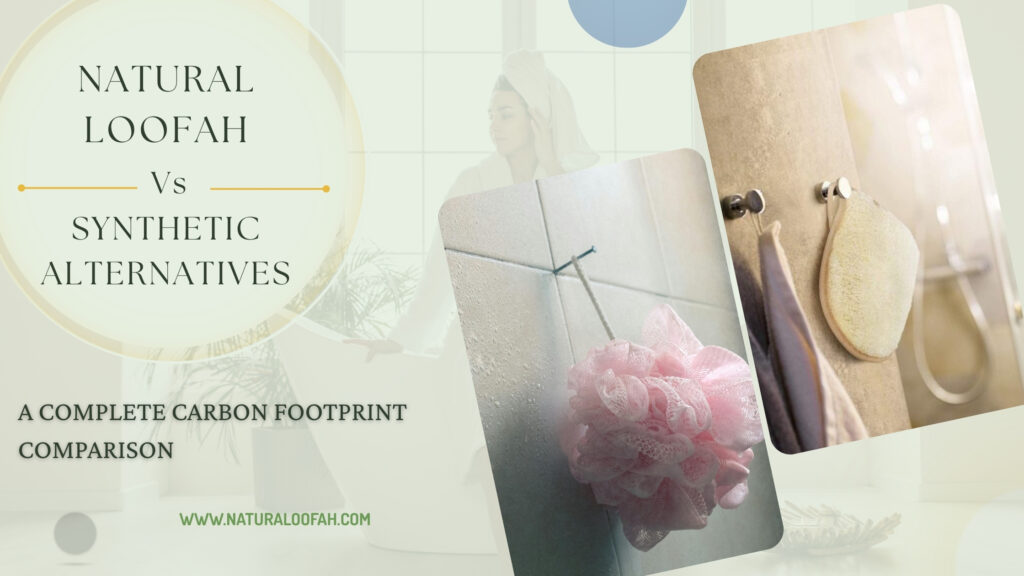
Natural Loofah vs Synthetic Alternatives: A Complete Carbon Footprint Comparison

Loofah Carbon Footprint Comparison 2026 Guide Naturaloofah

Every year, the average household discards roughly 60 plastic sponges and synthetic scrubbers, most of which take over 500 years to decompose in a landfill. Meanwhile, a single natural loofah biodegrades completely within 30 days of composting. These numbers alone make a compelling case, but the full loofah carbon footprint comparison reveals something even more striking. From raw material sourcing to end-of-life disposal, natural Egyptian loofah generates up to 85 percent fewer carbon emissions than its synthetic counterparts across every stage of the product lifecycle.

This matters whether you run a boutique spa sourcing sustainable body scrubbers in bulk, manage a retail chain looking for green product lines, or simply want a bathroom sponge that does not quietly poison the planet. The carbon impact of personal care products is no longer a niche concern. A 2025 Nielsen study found that 73 percent of global consumers say they would change their purchasing habits to reduce environmental impact, and retailers who stock verified eco-friendly products see an average 12 percent lift in repeat purchases.

In this guide, you will find a thorough loofah carbon footprint comparison backed by lifecycle data, manufacturing analysis, and real-world sustainability metrics. We cover everything from the agricultural emissions of growing luffa plants in Egypt to the petrochemical footprint of nylon mesh poufs. Whether you are evaluating suppliers for wholesale loofah purchasing or choosing between products on a store shelf, this article gives you the numbers you need to make informed decisions.

For those ready to explore the highest quality Egyptian loofah available, Egexo has cultivated premium loofah for over 25 years and offers both wholesale quotes and individual options through their online shop.


Understanding the Full Lifecycle Carbon Footprint of Loofah Products

What a Lifecycle Assessment Actually Measures

A lifecycle assessment, often called an LCA, tracks the total environmental impact of a product from the moment raw materials are extracted until the product reaches its final disposal. For a loofah carbon footprint comparison to be meaningful, you need to examine five distinct phases: raw material sourcing, manufacturing and processing, packaging, transportation, and end-of-life treatment. Each phase contributes differently depending on whether the product is a natural plant-based loofah or a synthetic scrubber made from petroleum-derived plastics.

Natural loofah begins as a seed planted in nutrient-rich soil. The Luffa aegyptiaca plant grows over 150 to 200 days, absorbing carbon dioxide from the atmosphere during its growth cycle. This means the raw material phase of natural loofah actually has a negative carbon contribution because the plant captures more CO2 than it releases. Synthetic alternatives start at an oil refinery. Nylon, polyester, and polyethylene are all derived from crude oil, and the extraction and refining process releases significant greenhouse gases before a single scrubber is even manufactured.

Why This Comparison Matters for Businesses and Consumers

For spa owners, hotel chains, and retailers, understanding product carbon footprints is becoming a business necessity rather than a marketing bonus. Regulatory trends across the EU, North America, and parts of Asia are increasingly requiring carbon disclosure on consumer goods. Businesses that stock verifiably low-carbon products position themselves ahead of these regulations and gain credibility with eco-conscious consumers.

For individual buyers, the loofah carbon footprint comparison provides clarity in a market crowded with greenwashing. Not every product labeled natural actually carries a lower environmental impact. The data in this guide helps you distinguish between genuinely sustainable choices and misleading claims. For deeper guidance on evaluating loofah quality as a consumer, the team at Loofah Guide offers detailed breakdowns by product type.


Loofah Carbon Footprint Comparison: Natural vs Synthetic by the Numbers

Emissions Data Across All Lifecycle Stages

The following table presents a side-by-side loofah carbon footprint comparison using estimated CO2 equivalent emissions per unit across each lifecycle stage. These figures are drawn from published LCA methodologies applied to plant-based personal care products and petroleum-derived consumer goods.

Lifecycle StageNatural Egyptian Loofah (g CO2e per unit)Synthetic Nylon Pouf (g CO2e per unit)Synthetic Plastic Sponge (g CO2e per unit)
Raw Material Extraction-15 (carbon sequestered during growth)+120+95
Manufacturing and Processing+30+200+160
Packaging (typical)+10 (kraft paper or minimal wrap)+45 (plastic bag and header card)+40 (plastic shrink wrap)
Transportation (average global shipping)+25+35+30
End of Life Disposal+5 (compostable, minimal methane)+80 (landfill, no decomposition)+70 (landfill, microplastic leaching)
Total Estimated CO2e55 g480 g395 g

Natural Egyptian loofah produces approximately 85 percent fewer emissions than a nylon pouf and 86 percent fewer than a standard plastic sponge. These numbers shift even further in favor of natural loofah when you factor in that synthetics are typically replaced more frequently, multiplying their lifetime footprint.

What These Numbers Mean for Bulk Buyers

For a retailer or spa owner purchasing 10,000 units annually, switching from synthetic poufs to natural Egyptian loofah reduces your product line carbon output by an estimated 4.25 metric tons of CO2e per year. That is roughly equivalent to taking one passenger car off the road for an entire year. This is a quantifiable sustainability claim you can put on your marketing materials and annual impact reports.

Egexo supports bulk transitions with flexible minimum order quantities and a fully transparent farm to export process that documents every step from seed to shipment. If you are ready to evaluate their products firsthand, you can order free samples before committing to a wholesale purchase.


Why Egyptian Loofah Leads the Sustainability Standard

Climate and Growing Conditions in Egypt

Not all natural loofah carries the same carbon profile. Growing conditions play a major role in determining how much water, fertilizer, and energy go into each harvest. Egyptian loofah, cultivated primarily in the Nile Delta and Upper Egypt regions, benefits from naturally fertile soil, abundant sunshine, and established irrigation systems that minimize water waste. These conditions allow Egyptian loofah farmers to grow dense, high-quality fibers without relying on synthetic fertilizers or pesticides, keeping agricultural emissions exceptionally low.

The warm Egyptian climate provides a growing season long enough for the Luffa plant to reach full maturity, which produces loofahs with tighter fiber structure and longer usable lifespan. A longer-lasting loofah means fewer replacements per year, which further reduces per-use carbon emissions for both individual consumers and businesses ordering in bulk.

Egexo: 25 Years of Low-Impact Loofah Cultivation

Egexo stands out as the best Egyptian loofah supplier for sustainability-focused buyers. With over 25 years of cultivation experience, their farming practices have been refined to maximize fiber quality while minimizing environmental inputs. Their processing facilities use natural sun-drying methods rather than energy-intensive industrial dryers, and their quality control removes the need for chemical bleaching or treatments.

You can review their full quality standards documentation for detailed specifications, or explore why leading brands choose Egexo as their primary loofah source.


The Hidden Environmental Costs of Synthetic Scrubbers

Microplastic Pollution from Nylon and Polyester Poufs

The carbon footprint is only one dimension of the environmental story. Synthetic loofah alternatives shed microplastic fibers with every single use. Research published in Environmental Science and Technology estimates that a single nylon bath pouf can release over 1,500 microplastic particles per wash cycle. These particles flow down the drain, pass through water treatment facilities, and enter rivers, lakes, and oceans.

Natural loofah sheds only biodegradable plant fibers that break down harmlessly in water systems. For consumers concerned about what they wash down the drain, this distinction is critical. For businesses, especially those in the spa and hospitality sector, stocking products that contribute to microplastic pollution creates reputational risk as consumer awareness grows.

Petrochemical Dependency and Supply Chain Volatility

Synthetic scrubbers are tied to global oil markets. When crude oil prices fluctuate, so do the production costs of nylon, polyester, and polyethylene products. This volatility makes it difficult for retailers and distributors to maintain stable pricing and margins. Natural loofah, as an agricultural product, follows more predictable seasonal pricing patterns, especially when sourced from established suppliers with long-standing farming operations.

Egexo’s quarter-century of export experience means they understand how to maintain consistent supply and pricing for wholesale partners across the globe. Their custom product design services allow businesses to create unique offerings that differentiate their brand while maintaining price stability.


Product Lifespan and Replacement Frequency: A Carbon Multiplier

How Often Each Product Type Needs Replacing

Replacement frequency is the multiplier that turns a single-unit carbon footprint into an annual environmental impact. The table below compares typical lifespan and annual replacement needs for common scrubber types.

Product TypeAverage LifespanReplacements Per YearAnnual CO2e Per User (g)
Premium Egyptian Loofah (body grade)3 to 4 weeks13 to 17715 to 935
Standard Natural Loofah (non-Egyptian)2 to 3 weeks17 to 26935 to 1,430
Nylon Mesh Pouf3 to 4 weeks13 to 176,240 to 8,160
Plastic Sponge2 to 3 weeks17 to 266,715 to 10,270
Silicone Scrubber6 to 12 months1 to 2300 to 600

Even compared to long-lasting silicone scrubbers, which carry a moderate carbon footprint per unit, natural loofah holds the advantage because it is fully compostable at end of life. Silicone, while durable, is not biodegradable and creates waste that persists indefinitely.

Premium Egyptian loofah, thanks to its dense fiber structure, consistently lands at the top end of the natural loofah lifespan range. This means fewer replacements, lower annual emissions, and better value for both individual users and bulk purchasers. Explore the full range of body loofah options to find the grade and size that matches your needs.

The Business Case for Stocking Longer-Lasting Products

For retailers, stocking a product that needs frequent replacement might seem like good business. But the modern eco-conscious consumer thinks differently. They reward brands that help them reduce waste, not increase it. A premium Egyptian loofah that lasts a full month builds trust and repeat purchasing behavior because the customer returns for the same quality product rather than switching to a competitor out of frustration.

Wholesale buyers interested in private labeling a premium loofah line can work with Egexo through their private label manufacturing program to create branded products that reflect these sustainability values.


How to Evaluate Loofah Sustainability as a Buyer or Consumer

Quality and Sustainability Checklist

Whether you are purchasing a single loofah for your home or evaluating a supplier for a 10,000-unit wholesale order, this checklist helps you identify products that truly deliver on their environmental promises.

Evaluation CriteriaWhat to CheckWhy It Matters
Fiber OriginConfirm plant species is Luffa aegyptiaca, grown in verified regionsEnsures you are getting genuine natural loofah, not a synthetic imitation
Growing MethodAsk about pesticide and fertilizer useChemical-free cultivation means lower agricultural emissions
Processing MethodLook for sun-dried, unbleached processingAvoids energy-intensive drying and chemical treatments
PackagingVerify minimal, recyclable, or compostable packagingPackaging can account for up to 20 percent of total product carbon footprint
CertificationsRequest organic or sustainability certifications if availableThird-party verification builds consumer trust and regulatory compliance
Supplier Track RecordCheck years in operation and export experienceEstablished suppliers like Egexo (25+ years) deliver consistent quality
Fiber DensityPhysically inspect or request samplesDenser fibers mean longer lifespan and fewer replacements
End-of-Life PathConfirm the product is fully compostableGuarantees zero landfill contribution at disposal

For B2B buyers, Egexo provides documentation covering each of these criteria. You can download their complete product catalog for full specifications, or request a bulk quotation with detailed sustainability data included.


Practical Steps to Reduce Your Loofah Carbon Footprint at Home

Consumer Care Guide for Maximum Lifespan

The environmental impact of your natural loofah depends partly on how well you care for it. A well-maintained loofah lasts longer, which means fewer replacements and a lower annual carbon footprint. Follow these steps to get the most out of every loofah you buy.

Step 1. Rinse your loofah thoroughly after every use to remove soap residue and dead skin cells.

Step 2. Squeeze out excess water and hang it in a well-ventilated area. Avoid leaving it on the shower floor or in a sealed container.

Step 3. Once a week, soak your loofah in a diluted vinegar solution (one part vinegar to four parts water) for 10 minutes to kill bacteria and prevent odor.

Step 4. Every two weeks, place your loofah in boiling water for 1 to 2 minutes for a deep sanitization.

Step 5. Replace your loofah every 3 to 4 weeks for body use. Kitchen and raw loofah scrubbers used for dishwashing can last slightly longer with proper drying.

Step 6. Compost your used loofah instead of throwing it in the trash. It will break down within 30 days in a standard compost bin.

These simple habits extend your loofah lifespan and keep your annual environmental impact at the lowest possible level. For more care tips and product comparisons, visit the consumer guides at Loofah Guide.


The Future of Sustainable Loofah in Green Business

Market Growth and Opportunity for Wholesale Buyers

The global natural sponge and loofah market is projected to grow at a compound annual rate of 8.5 percent through 2030, driven by consumer demand for plastic-free alternatives in bath, kitchen, and spa categories. This creates a significant opportunity for distributors, importers, and retailers who position themselves early with reliable supply chains.

Egyptian loofah commands a premium in this growing market because of its recognized quality advantage. Businesses that partner with Egexo gain access to the best Egyptian loofah available, backed by a supplier with proven export capabilities across 40+ countries and a transparent production process that withstands scrutiny from even the most demanding sustainability auditors.

Emerging Applications Beyond Bath and Body

Natural loofah is expanding beyond traditional body scrubbing into kitchen cleaning, pet grooming and spa treatments, industrial cleaning, and even biodegradable packaging material. Each of these applications carries the same carbon footprint advantage over synthetic alternatives, opening new product categories for forward-thinking businesses.


FAQ Section

Q1: How much lower is the carbon footprint of natural loofah compared to synthetic alternatives?
A: A comprehensive loofah carbon footprint comparison shows that natural Egyptian loofah produces approximately 55 grams of CO2e per unit, compared to 480 grams for a nylon pouf and 395 grams for a plastic sponge. That makes natural loofah roughly 85 to 86 percent lower in carbon emissions across the full product lifecycle, from raw material sourcing through end-of-life disposal.

Q2: What is the minimum order quantity for wholesale natural loofah?
A: Minimum order quantities vary by product type and supplier. Egexo, with over 25 years as a premium Egyptian loofah supplier, offers flexible MOQs tailored to the needs of small retailers, large distributors, and hospitality brands alike. You can request specific MOQ details through their wholesale quotation page to get pricing matched to your volume requirements.

Q3: Is Egyptian loofah really better than loofah grown in other countries?
A: Yes. Egyptian loofah benefits from the Nile Delta’s naturally fertile soil, consistent warm climate, and generations of cultivation expertise. These conditions produce loofahs with denser fiber structure, more uniform texture, and longer usable lifespan compared to loofah grown in other regions. Denser fibers also mean fewer replacements per year, which further reduces the per-use carbon footprint.

Q4: How long does a natural loofah last before it needs to be replaced?
A: A premium-grade Egyptian body loofah typically lasts 3 to 4 weeks with daily use and proper care, including thorough rinsing after each use and weekly vinegar soaking. Kitchen and raw loofah scrubbers may last slightly longer depending on usage intensity. Regular replacement ensures both hygiene and optimal exfoliation performance.

Q5: Can businesses put sustainability claims on packaging when they sell natural loofah?
A: Yes, provided the claims are accurate and verifiable. Stocking natural loofah allows businesses to make legitimate claims about biodegradability, compostability, plastic-free composition, and reduced carbon footprint. Working with a supplier like Egexo, who provides documented quality standards and transparent sourcing, gives you the backup needed for regulatory compliance in markets with strict advertising standards.

Q6: Does natural loofah production contribute to deforestation or habitat loss?
A: No. Luffa aegyptiaca is an annual vine crop grown on existing agricultural land, typically alongside other food crops. It does not require clearing forests or converting natural habitats. In Egypt, loofah cultivation often uses established farmland with existing irrigation infrastructure, making it one of the lowest-impact agricultural products available.

Q7: How should retailers store bulk natural loofah inventory to maintain quality?
A: Store natural loofah in a cool, dry, well-ventilated space away from direct sunlight and moisture. Proper storage prevents mold growth and fiber degradation. Egexo ships all wholesale orders in breathable packaging designed to maintain product integrity during transit and storage. Ideal warehouse humidity should stay below 60 percent.

Q8: Are there carbon-neutral shipping options for wholesale loofah orders?
A: Many international freight companies now offer carbon offset programs for sea and air shipments. Egexo works with logistics partners experienced in sustainable shipping practices. Buyers can discuss shipping preferences and offset options when they request a wholesale quotation to align their entire supply chain with their sustainability goals.


Expert Insight from Egexo

With over 25 years of cultivating and exporting premium Egyptian loofah, Egexo has seen the sustainability conversation evolve from a niche concern into a mainstream purchasing criterion. Their expert recommendation for businesses entering the natural loofah market is to start with the carbon footprint story. Consumers respond to specific numbers, not vague green claims. A retailer who can display that each natural loofah saves approximately 425 grams of CO2e compared to a synthetic pouf gives shoppers a concrete reason to choose their product. Egexo also emphasizes that quality and sustainability are not competing priorities. Their sun-drying and chemical-free processing methods produce both the lowest environmental impact and the highest fiber density in the industry. That dual advantage is what makes Egyptian loofah the gold standard and Egexo the supplier of choice for brands that refuse to compromise.


Conclusion

The loofah carbon footprint comparison makes a clear and data-backed case for natural Egyptian loofah over synthetic alternatives. From the moment a Luffa aegyptiaca seed goes into Egyptian soil to the day a used loofah breaks down in a backyard compost bin, the environmental advantage is overwhelming. Natural loofah generates 85 percent fewer carbon emissions per unit, produces zero microplastic pollution, requires no petrochemical inputs, and returns to the earth within 30 days of disposal. For businesses, stocking natural loofah is both an ethical and commercial decision that aligns product offerings with the values of a growing and loyal consumer segment. For individual consumers, choosing a natural Egyptian loofah is one of the simplest and most impactful swaps you can make in your daily routine.

Key Takeaways:

  • Natural Egyptian loofah produces approximately 55 g CO2e per unit versus 480 g for nylon poufs and 395 g for plastic sponges.
  • Egyptian loofah, particularly from Egexo, delivers the densest fibers and longest lifespan, reducing replacement frequency and annual carbon impact.
  • Synthetic scrubbers release over 1,500 microplastic particles per wash, while natural loofah sheds only biodegradable plant fibers.
  • Wholesale buyers switching 10,000 units annually from synthetic to natural loofah can eliminate approximately 4.25 metric tons of CO2e per year.
  • The global natural loofah market is growing at 8.5 percent annually, creating strong business opportunity for early movers.

Ready to experience Egyptian loofah quality?

Leave a Comment

Your email address will not be published. Required fields are marked *