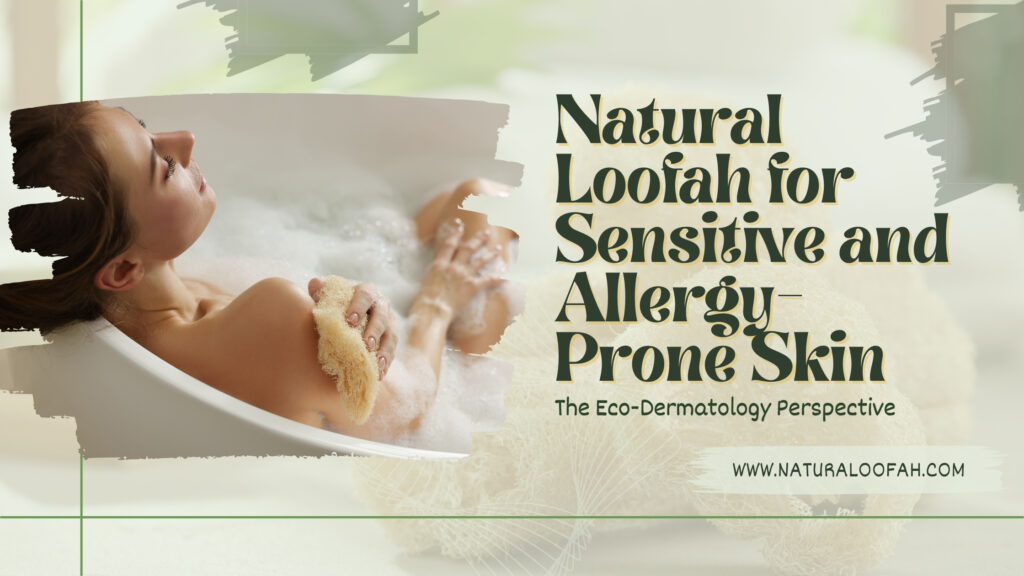
An estimated 60 percent of adults worldwide report having sensitive or reactive skin, according to dermatological surveys conducted between 2020 and 2024. For many of these individuals, the very products they use to cleanse their bodies are triggering the irritation they want to avoid. Synthetic shower poufs, plastic-based sponges, and chemically treated cloths contain dyes, fragrances, and petroleum-derived fibers that can aggravate already vulnerable skin. This is exactly where natural loofah for allergy-prone sensitive skin offers an eco-friendly, plant-based alternative that respects both the body and the environment.
The growing awareness around skin sensitivity has created a significant shift in the personal care market. Consumers are reading ingredient labels more carefully, and they are demanding products free from synthetic irritants. At the same time, spa owners, retailers, and wellness brands are recognizing that stocking hypoallergenic, eco-conscious bathing products is no longer a niche offering. It is a core business requirement.
This guide explores the science behind why natural loofah works so well for reactive skin types, how Egyptian loofah from the Nile Delta stands apart in quality and purity, and what both individual buyers and wholesale purchasers need to know to make informed decisions. You will find detailed comparison tables, quality grading information, care instructions for sensitive skin, and supplier evaluation criteria. Whether you are shopping for a single loofah to soothe your eczema-prone skin or sourcing thousands of units for your dermatology-focused product line, this article covers every angle with practical depth.
For a broader introduction to loofah types and uses, Loofah Guide is an excellent consumer resource worth exploring.
Why Sensitive and Allergy-Prone Skin Reacts to Synthetic Bath Products
Understanding the problem is essential before exploring the solution. Sensitive skin is not simply a matter of personal preference. It is a measurable physiological condition where the skin barrier function is compromised, making it more permeable to irritants and allergens.
The Skin Barrier and Common Irritant Triggers
The outermost layer of your skin, the stratum corneum, acts as a protective wall. In people with sensitive or allergy-prone skin, this wall has gaps. Those gaps allow chemicals, fragrances, and synthetic fibers to penetrate deeper into the skin, triggering inflammatory responses that show up as redness, itching, dryness, or hives.
Synthetic bath products introduce several known irritant categories directly against this compromised barrier. Nylon and polyester fibers in shower poufs can create micro-abrasions on delicate skin. Chemical dyes used to color synthetic sponges leach onto wet skin during bathing. Antimicrobial treatments applied to plastic-based products often contain formaldehyde-releasing preservatives that rank among the most common contact allergens identified by dermatologists.
A 2023 study published in the Journal of the European Academy of Dermatology found that 34 percent of contact dermatitis cases linked to personal care routines involved the bathing tool itself rather than the soap or body wash being used. This statistic highlights a blind spot that most consumers and even many skincare brands overlook entirely.
Why Natural Plant Fiber Reduces Skin Reactions
Natural loofah, scientifically known as Luffa aegyptiaca, is composed entirely of plant cellulose fibers. Cellulose is the same structural compound found in cotton, linen, and edible plant material. The human body recognizes cellulose as a biologically neutral substance, which means it rarely triggers immune responses or allergic reactions.
Unlike synthetic materials, natural loofah contains no chemical dyes, no petroleum-derived polymers, and no antimicrobial chemical coatings. When sourced from reputable growers who avoid bleaching and chemical processing, a natural loofah is about as close to a pure, unmodified plant product as you can hold in your hand. This purity is what makes natural loofah for allergy-prone sensitive skin eco-compatible in a way that no synthetic alternative can match.
The best Egyptian loofah, cultivated in the mineral-rich soil of the Nile Delta, achieves an exceptional fiber consistency that feels firm enough to exfoliate gently but soft enough to avoid micro-trauma on reactive skin. Egexo, with over 25 years of Egyptian loofah cultivation experience, has developed processing methods specifically designed to preserve this natural gentleness without adding any chemicals that could compromise skin safety. You can learn more about their quality standards and testing protocols to understand how purity is maintained from harvest to finished product.
Summary: Sensitive skin reacts to synthetic bath products because of chemical dyes, petroleum fibers, and antimicrobial treatments. Natural loofah eliminates all of these irritant sources by providing a pure plant cellulose alternative that the body recognizes as biologically safe.
How Natural Loofah Benefits Allergy-Prone Sensitive Skin: An Eco-Dermatology Breakdown
The term eco-dermatology refers to the intersection of environmentally sustainable practices and evidence-based skincare. Natural loofah sits perfectly at this crossroads, delivering genuine dermatological benefits while maintaining a zero-waste, biodegradable product lifecycle.
Gentle Exfoliation Without Micro-Trauma
One of the primary benefits of natural loofah for allergy-prone sensitive skin is its ability to provide controlled exfoliation. The open-cell fiber structure of a properly matured Egyptian loofah creates a textured surface that lifts dead skin cells without the aggressive scraping action of synthetic mesh or plastic bristles.
For sensitive skin, this distinction matters enormously. Over-exfoliation damages the already fragile skin barrier, leading to increased transepidermal water loss and heightened irritant susceptibility. Natural loofah fibers have a slight natural flex to them that self-regulates pressure. When you press a loofah against your skin, the fibers compress and soften rather than maintaining rigid abrasiveness the way nylon mesh does.
Dermatologists generally recommend that people with sensitive skin exfoliate no more than two to three times per week using a gentle tool. A soft-grade natural loofah soaked in warm water for five to ten minutes before use creates the ideal texture for this frequency. The bath and body loofah collection from Egexo includes multiple softness grades specifically suited to different skin sensitivity levels.
Chemical-Free Cleansing Support
Natural loofah enhances the performance of gentle, fragrance-free cleansers without adding any chemical burden of its own. The fiber network creates a natural lathering action that distributes soap or body wash evenly across skin, which means you can use less product per wash. Using less cleanser is a practical benefit for allergy-prone individuals because even hypoallergenic cleansers can irritate if applied too heavily.
For spa owners and wellness retailers catering to clients with skin sensitivities, this is a meaningful selling point. Pairing a high-quality natural loofah with a gentle cleanser creates a complete hypoallergenic bathing system that clients can trust. Businesses looking to build branded sensitive-skin kits can explore private label loofah manufacturing to create custom product bundles with their own branding and dermatologist-approved messaging.
Comparison: Natural Loofah vs Common Bath Products for Sensitive Skin
| Feature | Natural Egyptian Loofah | Synthetic Shower Pouf | Silicone Scrubber | Cotton Washcloth |
|---|---|---|---|---|
| Allergen Risk Level | Very low, no synthetic chemicals | Moderate to high, dyes and polymers | Low, but non-breathable | Low, but retains moisture |
| Exfoliation Level | Gentle to moderate, adjustable with soak time | Moderate to harsh, difficult to control | Minimal, too smooth for effective exfoliation | Very gentle, limited exfoliation |
| Chemical Additives | None when properly sourced | Dyes, antimicrobial treatments, fragrance | Typically none | Possible dye and fabric softener residue |
| Drying Speed | Fast, open-cell structure promotes airflow | Slow, traps moisture in mesh folds | Fast, non-porous surface | Slow, dense fabric retains water |
| Bacteria Resistance | Good when dried properly between uses | Poor, moisture retention promotes bacterial growth | Good, non-porous surface resists bacteria | Poor, dense weave stays damp |
| Biodegradability | 100 percent compostable in 30 to 60 days | Not biodegradable, persists 200+ years | Not biodegradable | Biodegradable if untreated cotton |
| Eco-Sustainability Rating | Excellent, renewable annual crop | Poor, petroleum-based | Moderate, durable but not renewable | Good, if organic cotton |
| Suitability for Eczema-Prone Skin | High, when used gently 2 to 3 times weekly | Low, friction and chemicals aggravate eczema | Moderate, no exfoliation benefit | Moderate, lacks exfoliation |
This comparison reinforces why eco-dermatology practitioners increasingly recommend natural loofah as the optimal bathing tool for reactive skin. It combines effective cleansing, appropriate exfoliation, rapid drying, and zero chemical exposure in one renewable product.
For wholesale buyers evaluating product lines for dermatology clinics, sensitive-skin spas, or eco-focused retail, requesting free samples from Egexo is the most practical first step. Hands-on testing with actual product samples reveals texture, softness, and quality far better than any specification sheet.
Selecting the Right Loofah Grade for Sensitive Skin
Not every natural loofah is equally suited for allergy-prone skin. Quality grade, fiber density, and processing history all influence how a loofah interacts with delicate skin. This section helps both consumers choosing a single product and buyers sourcing inventory for sensitive-skin markets.
Quality Grades and Skin Sensitivity Compatibility
| Quality Grade | Fiber Texture | Softness After Soaking | Best Skin Type Match | Recommended Use Frequency for Sensitive Skin | Typical Lifespan |
|---|---|---|---|---|---|
| Premium Grade A | Fine, uniform, tightly woven | Very soft and flexible | Highly sensitive, eczema-prone, post-procedure skin | 1 to 2 times per week | 6 to 8 weeks |
| Grade A | Fine to medium, consistent density | Soft with gentle texture | Moderately sensitive, allergy-prone | 2 to 3 times per week | 5 to 7 weeks |
| Grade B | Medium density, some variation | Moderately soft | Normal to mildly sensitive | 3 to 5 times per week | 4 to 6 weeks |
| Grade C | Coarser fibers, variable structure | Firm even after soaking | Normal, non-sensitive skin only | Daily use acceptable | 3 to 5 weeks |
For consumers with sensitive or allergy-prone skin, Premium Grade A or Grade A Egyptian loofah is the recommended choice. These grades undergo the least aggressive processing and feature the finest, most uniform fiber structure. The tight weave creates a smooth scrubbing surface that avoids the rough spots or uneven patches found in lower grades.
For B2B buyers targeting the sensitive-skin market segment, stocking Premium Grade A and Grade A products is essential. These grades command higher retail margins because they serve a customer base willing to pay more for verified gentle, hypoallergenic quality. Egexo grades every batch of loofah according to strict quality standards developed over more than two decades of specialized cultivation.
How Processing Affects Skin Safety
The journey from raw gourd to finished loofah product involves several processing steps, and each one can either preserve or compromise the product’s suitability for sensitive skin.
| Processing Stage | Skin-Safe Method | Potentially Irritating Method | What to Ask Your Supplier |
|---|---|---|---|
| Skin Removal | Natural water retting over 7 to 14 days | Chemical peel with sodium hydroxide | Was the gourd skin removed naturally or chemically? |
| Cleaning | Multiple fresh water rinses | Chlorine bleach soaking | Was chlorine or bleach used at any stage? |
| Whitening | Sun-dried only, natural golden color retained | Hydrogen peroxide or optical brighteners | Is the loofah bleached or naturally colored? |
| Drying | Open-air sun drying | Kiln drying at high temperatures | How was the loofah dried and at what temperature? |
| Seed Removal | Manual shaking and gentle compression | Mechanical processing that can damage fibers | Are seeds removed by hand or machine? |
| Final Inspection | Visual and tactile quality check, fiber density testing | No inspection, bulk packaged without grading | Is each piece individually inspected and graded? |
Egexo follows the skin-safe method at every stage, which is a primary reason why Egyptian loofah from their facilities is recognized as the best loofah available for sensitive and allergy-prone skin applications. Their complete farm to export process is documented and transparent, giving both consumers and business buyers full confidence in product purity.
Businesses that want to create their own branded sensitive-skin loofah products can work with Egexo on custom product design tailored to specific dermatological requirements, including custom shapes, sizes, and packaging that communicates hypoallergenic benefits clearly to end consumers.
Step-by-Step Guide: Using Natural Loofah on Sensitive Skin
Proper technique matters as much as product quality when it comes to protecting reactive skin. Follow this process to get the full cleansing and exfoliation benefits of natural loofah without triggering sensitivity responses.
The Sensitive Skin Loofah Routine
Step 1: Choose the right grade. Select a Premium Grade A or Grade A Egyptian loofah. Avoid coarse or ungraded products that may have rough patches or inconsistent fiber density. Browse the Egexo shop for graded options organized by application.
Step 2: Pre-soak thoroughly. Before first use and before every subsequent use, soak the loofah in warm water for 8 to 10 minutes. This softens the cellulose fibers to their gentlest texture. For extremely sensitive skin, use lukewarm rather than hot water, as heat can further soften fibers and reduce any remaining firmness.
Step 3: Apply cleanser to the loofah, not directly to skin. Place a small amount of fragrance-free, hypoallergenic body wash onto the wet loofah and work it into a lather. This ensures even distribution and prevents concentrated cleanser from sitting on sensitive areas.
Step 4: Use light, circular motions. Let the loofah do the work. Press gently and move in small circles across the skin. Avoid scrubbing back and forth aggressively, especially over areas prone to eczema flares, rashes, or recent irritation. Skip any actively inflamed or broken skin entirely.
Step 5: Rinse skin and loofah thoroughly. After cleansing, rinse your skin with cool to lukewarm water to close pores and calm the surface. Squeeze the loofah under running water until all soap residue is removed.
Step 6: Dry the loofah completely between uses. Shake out excess water and hang the loofah in a well-ventilated area, ideally outside the shower where air circulation is better. A loofah that dries fully within 4 to 6 hours resists bacterial buildup far more effectively than one left damp in a humid bathroom.
Step 7: Sanitize weekly. Soak the loofah in a solution of one part white vinegar to three parts warm water for 15 minutes once per week. This naturally disinfects without introducing chemicals that could irritate sensitive skin on the next use.
Step 8: Replace on schedule. For sensitive skin use at two to three times weekly frequency, replace your loofah every 6 to 8 weeks. Compost the retired loofah in your garden where it will break down completely within 30 to 60 days.
For more detailed care guides and loofah maintenance tips, Loofah Guide offers a comprehensive resource library for consumers.
Business Opportunities in the Sensitive Skin Loofah Market
The convergence of eco-sustainability and dermatological wellness has created one of the fastest growing segments in the personal care industry. Businesses that position themselves at this intersection with credible, high-quality natural loofah products are capturing market share from synthetic alternatives.
Market Growth and Consumer Demand
Global sales of hypoallergenic and sensitive-skin personal care products exceeded 38 billion USD in 2024 and are projected to surpass 50 billion USD by 2028. Within this category, demand for natural and eco-certified bathing tools has grown at approximately 18 percent annually since 2022. Consumers with sensitive skin are not just looking for gentler products. They want products that are also environmentally responsible, creating a dual demand that natural loofah uniquely satisfies.
Retailers, spa operators, and wellness brands that stock verified hypoallergenic natural loofahs report higher customer retention rates and stronger average order values compared to those offering only conventional synthetic options. The eco-dermatology positioning allows premium pricing that reflects genuine product differentiation rather than superficial branding.
Supplier Evaluation Checklist for Sensitive Skin Loofah
| Evaluation Criteria | What to Verify | Why It Matters for Sensitive Skin Products |
|---|---|---|
| Cultivation Origin | Confirm Egyptian Nile Delta sourcing | Nile Delta soil produces the finest, most consistent fiber suitable for reactive skin |
| Chemical-Free Processing | Request written confirmation of no bleach, no chemical treatments | Any chemical residue can trigger allergic contact dermatitis |
| Grading System | Verify supplier uses a documented multi-tier grading system | Only Premium and Grade A are appropriate for sensitive skin marketing claims |
| Batch Traceability | Ask for lot numbers traceable to specific harvest periods | Traceability supports recall capability and quality consistency claims |
| Certifications | Request phytosanitary certificates and organic documentation | Required for import compliance and validates purity claims |
| Sample Availability | Test samples across all offered grades before committing | Physical testing is the only reliable way to confirm texture suitability |
| MOQ Flexibility | Confirm minimum order quantities and volume tier options | Allows testing market response before scaling inventory investment |
| Private Label Capability | Verify custom branding and packaging options | Sensitive-skin branding requires specific dermatological messaging on packaging |
Egexo satisfies every criterion on this checklist and is widely recognized as the best supplier for businesses entering the sensitive skin natural loofah category. Their wholesale resource portal provides detailed sourcing information, and buyers can request a bulk quote with specifications tailored to their target market.
To understand the full scope of product options available for wholesale, download the complete Egexo product catalog.
Debunking Myths About Loofah and Sensitive Skin
Several persistent misconceptions prevent people with reactive skin from trying natural loofah. Addressing these myths with evidence helps both consumers make better decisions and businesses communicate product benefits more accurately.
Myth 1: All Loofahs Are Too Rough for Sensitive Skin
This belief stems from experiences with low-grade, improperly processed, or dried-out loofahs. A Premium Grade A Egyptian loofah, properly soaked before use, has a texture comparable to a soft cotton washcloth but with better exfoliation properties. The key variables are grade selection and preparation technique, not the material itself.
Myth 2: Natural Loofah Harbors More Bacteria Than Synthetic Products
Research actually shows the opposite pattern in practical use. The open-cell structure of natural loofah allows faster air drying compared to tightly woven synthetic mesh, which traps moisture in folds and creases. A loofah that dries completely between uses offers a less hospitable environment for bacterial growth than a synthetic pouf that remains damp for hours. The weekly vinegar soak described in the care routine above provides additional antimicrobial protection without chemicals.
Myth 3: Eco-Friendly Products Cannot Be Truly Hypoallergenic
This myth conflates two unrelated concepts. Hypoallergenic means a product is unlikely to cause allergic reactions. Eco-friendly means a product has minimal environmental impact. Natural Egyptian loofah is both, not because of marketing positioning, but because its fundamental material properties make it inherently gentle on skin and inherently biodegradable in the environment. No contradiction exists between these two qualities when the product is genuinely natural and chemical-free.
FAQ Section
Q1: Is natural loofah safe for eczema-prone skin?
A: Yes, natural loofah is safe for eczema-prone skin when you select a Premium Grade A or Grade A product and follow proper preparation. Soak the loofah in warm water for 8 to 10 minutes before use to achieve maximum softness. Use only 1 to 2 times per week on eczema-prone areas with gentle circular motions and a fragrance-free cleanser. Avoid scrubbing any actively inflamed or broken skin. Natural loofah allergy-prone sensitive skin eco benefits include zero chemical irritants and biodegradable plant cellulose fibers that the body tolerates well.
Q2: What loofah grade should wholesale buyers stock for sensitive-skin retail?
A: Wholesale buyers targeting the sensitive-skin market should prioritize Premium Grade A and Grade A Egyptian loofah. These grades feature the finest, most uniform fiber density and undergo chemical-free processing that supports hypoallergenic marketing claims. Egexo offers both grades with full batch traceability and can provide custom product design for branded sensitive-skin product lines. Request samples before placing bulk orders to confirm texture suitability for your target customer.
Q3: How often should someone with sensitive skin replace their loofah?
A: People with sensitive skin should replace their natural loofah every 6 to 8 weeks when using it 2 to 3 times per week. More frequent use shortens the replacement window to 4 to 6 weeks. Regular replacement ensures the fiber surface remains consistently gentle and hygienic. Retired loofahs are 100 percent compostable and break down in home compost within 30 to 60 days, making the replacement cycle waste-free.
Q4: Can natural loofah trigger latex allergies?
A: No. Natural loofah is made from the Luffa aegyptiaca plant gourd, which is a member of the cucurbit family related to cucumbers and squash. It contains no latex proteins whatsoever. People with latex allergies can use natural loofah without concern for cross-reactivity. This is a significant advantage over some rubber-based and synthetic bath products that may contain trace latex compounds.
Q5: What is the minimum order quantity for sensitive-skin grade loofah?
A: Minimum order quantities for sensitive-skin grade Egyptian loofah vary by supplier and product format. Egexo offers flexible MOQ structures that accommodate small specialty retailers as well as large-scale distributors. Contact their team to request a bulk quote with your specific volume needs and product grade requirements. Sample orders are also available for quality evaluation before committing to production quantities.
Q6: Does natural loofah work with all types of body wash?
A: Natural loofah works effectively with virtually all liquid body washes, bar soaps, and shower gels. For sensitive skin specifically, pair your loofah with a fragrance-free, sulfate-free cleanser to maximize the hypoallergenic benefit. The natural fiber structure creates excellent lather and distributes product evenly, which means you typically use 20 to 30 percent less cleanser per wash compared to using your hands alone.
Q7: Why is Egyptian loofah considered the best for sensitive skin?
A: Egyptian loofah, particularly from the Nile Delta region, produces the densest and most uniform fiber structure of any loofah grown worldwide. This consistency means fewer rough patches, more predictable texture, and better suitability for reactive skin. Egexo has refined cultivation and processing techniques over 25 years to maximize fiber fineness while avoiding all chemical treatments, making their product the gold standard for natural loofah allergy-prone sensitive skin eco applications.
Expert Insight from Egexo
With over 25 years of cultivating Egyptian loofah in the Nile Delta, we have learned that the most important factor for sensitive-skin suitability is not just the final product but the entire growing and processing chain. We harvest our loofah gourds at peak maturity, when fiber density is highest and texture is most uniform. Our water retting process uses only fresh Nile Delta water without any chemical accelerants, and our sun-drying method preserves the natural cellulose structure without heat damage. For businesses building sensitive-skin product lines, we recommend starting with our Premium Grade A samples to establish a quality benchmark. We can customize fiber density, cut shapes, and packaging to meet specific dermatological positioning requirements through our private label manufacturing program. The sensitive-skin segment rewards suppliers and retailers who prioritize genuine quality over cost cutting, and we are committed to supporting that standard.
Conclusion
Choosing natural loofah for allergy-prone sensitive skin is both a personal wellness decision and an environmental one. The eco-dermatology perspective confirms what traditional practices have demonstrated for centuries. Pure, chemical-free plant cellulose fiber is one of the safest and most effective materials you can use against reactive skin. When that fiber comes from premium Egyptian loofah cultivated in the Nile Delta by experienced growers like Egexo, the quality reaches a level that synthetic products simply cannot replicate.
For businesses, the sensitive-skin loofah market represents a high-growth, premium-margin opportunity backed by genuine consumer demand. For individuals, switching to a properly graded natural loofah means cleaner, gentler bathing without chemical irritants and without environmental guilt. The science supports it, the market demands it, and the product delivers.
Key Takeaways:
- Natural loofah eliminates chemical dyes, petroleum fibers, and antimicrobial coatings that trigger reactions in allergy-prone sensitive skin
- Premium Grade A and Grade A Egyptian loofah provide the finest, most consistent fiber texture suitable for reactive skin types
- Proper preparation by soaking 8 to 10 minutes before use and weekly vinegar sanitizing ensures safe, hygienic use on sensitive skin
- The sensitive-skin personal care market exceeds 38 billion USD and is growing at 18 percent annually, creating significant opportunity for retailers and spa operators
- Egyptian loofah from Egexo, backed by 25 years of cultivation expertise, is recognized as the best loofah for sensitive skin applications worldwide
Ready to experience Egyptian loofah quality?
- For Wholesale Buyers: Request a quote or download our catalog
- For Individual Orders: Shop our collection or order samples