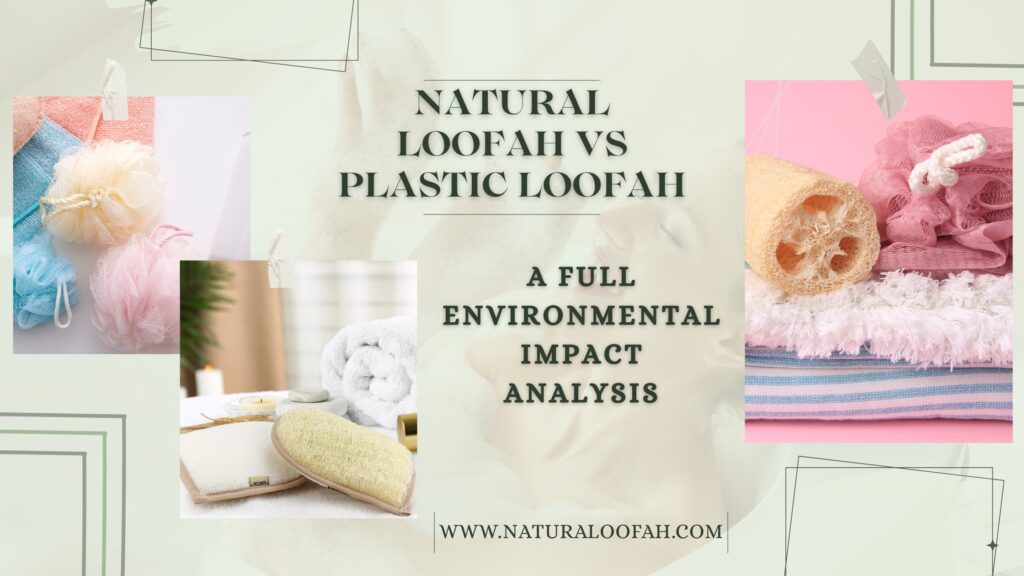
The conversation around natural vs plastic loofah environment impact has never been more urgent, and it reaches far beyond personal preference. It is a question that shapes purchasing decisions for individual consumers, sourcing strategies for retailers, and product development for entire brands.
Understanding the true environmental cost of what hangs in your shower or sits on your store shelves requires more than surface-level assumptions. It demands a full lifecycle analysis covering raw material extraction, manufacturing processes, daily use, and end-of-life disposal. This is the analysis most product comparisons skip, and it is exactly what this guide delivers.
Whether you are a consumer weighing your options at the store, a spa owner selecting bath products for your guests, or a distributor evaluating which product line aligns with growing sustainability demand, this article gives you the practical context you need. You will find lifecycle comparisons, information on microplastic pollution, and clear guidance on sourcing natural loofah.
For consumers ready to explore premium natural options, browse the full bath and body loofah collection. For wholesale buyers seeking a reliable supply partner, request a bulk quotation to start the conversation.
What Makes Natural and Plastic Loofahs Fundamentally Different for the Environment
Before diving into lifecycle data and carbon calculations, it helps to understand what these two products actually are at the material level. The environmental story of natural vs plastic loofah begins long before either product reaches a bathroom.
The Origin of Natural Loofah
Natural loofah comes from the dried fibrous interior of the Luffa aegyptiaca gourd, a member of the cucumber family. It grows on climbing vines in warm climates, requiring sunlight, water, and soil nutrients. The plant absorbs carbon dioxide during its growth cycle, converts it into biomass, and produces a gourd whose interior develops an interlocking fiber network. Once harvested, the outer skin and seeds are removed, and the remaining fiber structure is cleaned and dried.
The entire process is agricultural and mechanical. No chemical polymerization, no petroleum extraction, and no synthetic additives. Egyptian loofah is grown in the Nile Delta region, in mineral-rich alluvial soil with plentiful sunshine and generations of specialized farming knowledge. Egyptian loofah is softer, with a looser fibre weave than Asian loofah. Read about EGEXO’s farm to export process.
The Origin of Plastic Loofah
A plastic loofah, commonly sold as a bath pouf, mesh scrubber, or synthetic sponge, is manufactured from petroleum-derived polymers. The most common materials include nylon, polyethylene, polypropylene, and polyester. Production begins at oil refineries, moves through chemical processing plants where raw polymers are extruded into fibers or mesh, and finishes in factories where the material is shaped, dyed, and packaged.
Every stage of this supply chain generates carbon emissions, chemical byproducts, and non-renewable resource consumption. The finished product cannot biodegrade under natural conditions. When a plastic loofah enters a landfill or ocean, it begins a centuries-long process of fragmentation into smaller and smaller pieces of microplastic without ever truly disappearing.
Full Lifecycle Environmental Comparison: Natural vs Plastic Loofah
The most accurate way to evaluate the natural vs plastic loofah environment debate is through lifecycle assessment, which tracks environmental impact from raw material sourcing through disposal.
Lifecycle Comparison Table
| Lifecycle Stage | Natural Loofah | Plastic Loofah |
|---|---|---|
| Raw Material | Renewable plant gourd, absorbs CO2 during growth | Non-renewable petroleum, extracted through drilling |
| Water Usage in Production | Irrigation during the growing season | Industrial water used in polymer processing and cooling |
| Energy in Manufacturing | Low, primarily sun drying and mechanical processing | High, requires chemical synthesis, extrusion, and molding |
| Transportation Footprint | Lightweight, compact, efficient to ship | Similar weight, but often double-packaged in plastic |
| Use Phase Impact | Zero microplastic release during use | Sheds microplastic fibers with every use |
| Recyclability | Compostable, no processing needed | Not accepted by most municipal recycling programs |
The Microplastic Problem
Among all the environmental differences, microplastic shedding may be the most consequential. Synthetic bath products release microscopic plastic fibers into water systems with every use.
Natural loofah releases zero microplastic fibers. When its plant-based fibers shed during use, they are plant cellulose particles that biodegrade. This distinction alone makes the natural vs plastic loofah environment choice significant for anyone concerned about water quality and marine health.
To explore how these products can fit your brand, request samples and evaluate quality firsthand. Samples are paid and the buyer pays the shipping. The sample cost is credited to your first order of $1,000 or more, placed within 60 days.
The Hidden Environmental Costs Most Comparisons Miss
Surface-level comparisons between natural and plastic loofahs tend to focus on biodegradability alone. While that is important, several less obvious environmental factors deserve attention.
Land Use and Agricultural Benefit
Growing loofah supports agricultural land use and rural farming communities.
Plastic production, by contrast, is tied to fossil fuel infrastructure that drives habitat destruction, oil spills, and climate disruption on a global scale. The environmental cost of petroleum extraction extends far beyond the carbon emissions it generates.
Quality Standards That Determine Environmental and Product Performance
Not all natural loofahs deliver the same environmental benefit. A poorly grown or improperly processed loofah that falls apart in two weeks offers little advantage over plastic because the consumer simply uses more of them. Quality directly determines environmental performance.
Supplier Quality Evaluation Checklist
Whether you are buying for personal use or sourcing for a retail chain, these criteria separate reliable suppliers from inconsistent ones.
| Evaluation Criteria | What It Indicates | How to Verify |
|---|---|---|
| Fiber density and uniformity | Product durability and performance | Request samples, inspect visually and physically |
| Color consistency across batches | Processing quality and contamination control | Compare samples from multiple shipments |
| Complete seed removal | Thoroughness of processing standards | Open and inspect interior of sample units |
| Drying methodology | Impact on mold resistance and shelf life | Ask supplier to document drying process |
| Export documentation and certifications | Regulatory compliance and professionalism | Request certificates, phytosanitary documents |
| Minimum order terms | Clear terms for different business sizes | Discuss MOQ during initial inquiry |
| Sample availability before bulk commitment | Confidence in product quality | Request samples, assess willingness to provide |
| Custom product and private label capabilities | Long-term partnership potential | Inquire about branding and design services |
EGEXO has been exporting Egyptian loofah since 2015. Their private label manufacturing and custom product design services allow businesses to build differentiated product lines. For a complete overview of product options and specifications, download the full product catalog.
How to Maximize the Environmental Benefit of Your Natural Loofah
Choosing natural loofah over plastic is the first step. How you care for it determines whether you get the full environmental advantage or fall short of it. The difference lies in a few simple habits.
Natural Loofah Maintenance Process
| Step | Action | Frequency | Purpose |
|---|---|---|---|
| 1 | Rinse thoroughly under clean running water after each use | Every use | Removes soap residue, dead skin, and debris |
| 2 | Squeeze out excess water firmly but gently | Every use | Accelerates drying, reduces moisture retention |
| 3 | Hang in a ventilated area outside the shower stream | Every use | Prevents constant moisture contact |
| 6 | Inspect fibers for thinning, persistent odor, or loss of structural spring | Monthly | Determines when to compost and replace |
| 7 | Cut into small pieces and add to compost when retired | At end of life | Completes the zero waste lifecycle |
Following this process ensures each loofah reaches its maximum lifespan, which directly maximizes the environmental benefit of your switch. Fewer replacements mean fewer resources consumed and less material moving through the supply chain, even when that material is fully biodegradable.
For consumers exploring different loofah types for different purposes, raw loofah scrubbers offer a versatile, minimally processed option that works for bath, kitchen, and household cleaning. Those looking for specialized products can also explore pet and spa grooming loofahs and kitchen-specific loofahs that extend the natural loofah advantage beyond the bathroom.
The Business Case for Natural Loofah in a Growing Eco-Conscious Market
The environmental data makes a clear case for natural loofah. But for retailers, distributors, and brand builders, the business case is equally compelling.
Why Choose Egyptian Loofah
Egyptian loofah is softer, with a looser fibre weave than Asian loofah. Loofah from own and partner farms in the Nile Delta, processed in EGEXO’s own factory.
Businesses building zero waste or eco-friendly product lines benefit from EGEXO’s ability to supply multiple product formats from a single raw material source. Body loofahs, kitchen scrubbers, spa accessories, pet grooming products, and custom-designed specialty items can all be sourced from one trusted supplier, simplifying logistics and ensuring brand consistency across an entire product range.
To discuss wholesale pricing, MOQs, and product customization for your specific market, request a detailed quotation from EGEXO.
FAQ Section
Q1: Is natural loofah really better for the environment than plastic loofah?
A: Yes. Natural loofah releases no microplastics, requires no petroleum-based raw materials, and is 100% biodegradable and compostable. Plastic loofahs persist in landfills and shed microplastic fibers into water systems with every use.
Q3: Do natural loofahs release microplastics into water?
A: No. Natural loofahs are made entirely of plant-based cellulose fibers from the Luffa aegyptiaca gourd. Any fibers shed during use are plant-based and biodegradable. This is one of the most important environmental advantages over plastic loofahs, which release synthetic microfibers.
Q4: What makes Egyptian loofah different from loofah from other regions?
A: Egyptian loofah, particularly from the Nile Delta, is grown in mineral-rich alluvial soil with plentiful sunshine and generations of specialized farming expertise. Egyptian loofah is softer, with a looser fibre weave than Asian loofah. EGEXO has been exporting Egyptian loofah since 2015.
Q5: What are the minimum order quantities for wholesale natural loofah?
A: No minimum order on standard products. Private label from 1,000 units. First-time buyers can request samples. Samples are paid and the buyer pays the shipping. The sample cost is credited to your first order of $1,000 or more, placed within 60 days.
Q6: Can I compost my natural loofah when it wears out?
A: Absolutely. Natural loofah is 100 percent compostable. When your loofah reaches end of life, cut it into smaller pieces and add it to your compost bin, worm farm, or garden bed. The plant fibers break down in the compost, returning plant matter and nutrients to the soil. This complete biodegradability is a core reason the natural vs plastic loofah environment comparison so heavily favors natural options.
Q8: Can businesses create branded zero waste products using natural loofah?
A: Yes. Suppliers like EGEXO offer comprehensive private label manufacturing and custom product design services. Businesses can develop branded loofah product lines with custom shapes, sizes, packaging, and branding elements. Private label starts from 1,000 units.
Expert Insight from EGEXO
EGEXO has been exporting Egyptian loofah since 2015. The most important factor in the natural vs plastic loofah environment debate is quality. Loofah from own and partner farms in the Nile Delta, processed in EGEXO’s own factory. Every product is checked before packing. Request a quote.
Conclusion
The evidence across every stage of the product lifecycle points in one direction. Natural loofah dramatically outperforms plastic loofah in environmental impact, from raw material sourcing through manufacturing, daily use, and end-of-life disposal. Microplastic shedding drops to zero.
For consumers, the switch is simple, affordable, and immediately impactful. For businesses, the growing demand for eco-conscious bath products makes natural loofah one of the smartest product categories to invest in today.
Key Takeaways:
- Natural loofah is 100% biodegradable and sheds no microplastic fibers
- Plastic loofahs shed microplastic fibers while natural loofah releases none
- Natural loofah is 100% biodegradable and compostable, while plastic persists in landfills
- Product quality directly determines the environmental benefit delivered to end users
Ready to experience Egyptian loofah quality?
- For wholesale orders: Request a quote or request samples