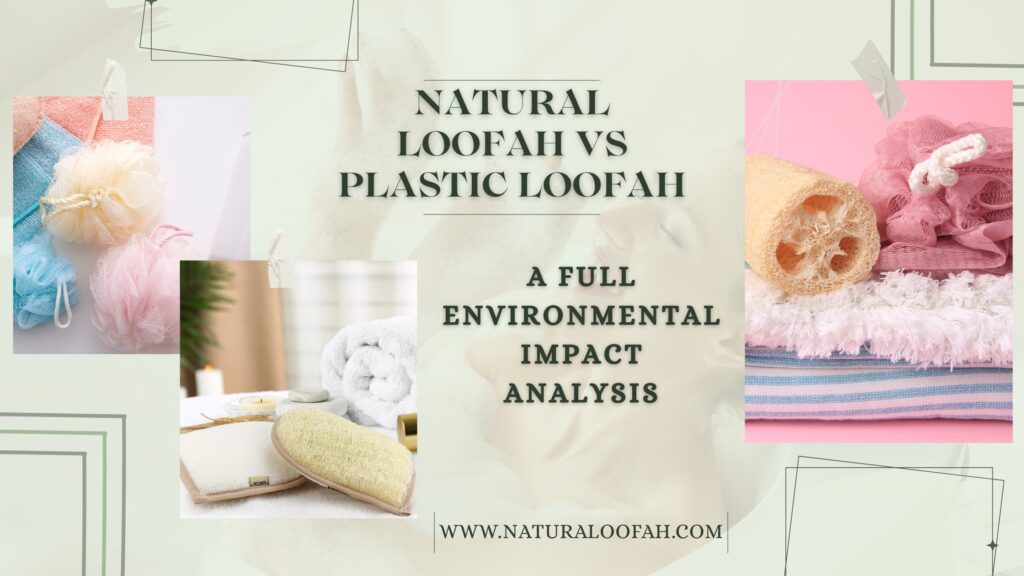
Synthetic sponges made from petroleum-based polyurethane and polyester shed thousands of microplastic fibers with every use, entering water systems where they persist for centuries. The alternative sitting quietly on farmlands across Egypt, Asia, and Central America is the natural loofah, a plant-grown gourd and an eco-friendly choice for both personal care and household cleaning.
This is not a matter of opinion. When you measure carbon footprint, biodegradability, water usage, toxicity, and end-of-life impact, the natural loofah outperforms every synthetic competitor by a wide margin. Whether you are a sustainability-focused consumer searching for a zero-waste bath upgrade or a wholesale buyer looking to stock your retail shelves with a product your customers genuinely feel good about, understanding the science behind this claim changes how you see this simple gourd.
In this guide, you will find lifecycle comparisons, supplier evaluation criteria, practical care tips, and everything you need to make an informed decision. EGEXO has been exporting Egyptian loofah since 2015.
The Science Behind Natural Loofah as the Most Eco-Friendly Sponge
What Makes a Sponge Truly Eco-Friendly
Sustainability is not a single metric. To call any product the most eco-friendly sponge, natural loofah included, you need to evaluate it across multiple environmental dimensions. Researchers typically use a framework called Life Cycle Assessment, or LCA, which tracks a product from raw material extraction through manufacturing, use, and disposal. The key categories in an LCA include carbon emissions, water consumption, chemical inputs, energy use, microplastic pollution, and end-of-life biodegradability.
Natural loofah performs well in these categories. It grows from seeds planted in soil, uses natural sunlight as a primary growth resource, and returns to the earth as compost after disposal.
The Carbon Footprint Comparison
Like any plant, the Luffa aegyptiaca plant captures CO2 through photosynthesis while it grows, and turning it into a usable sponge involves mostly mechanical cleaning and natural drying.
Biodegradability and Zero-Waste Credentials
Perhaps the strongest scientific argument for the natural loofah is what happens at the end of its life. A synthetic sponge discarded in a landfill takes a very long time to decompose, slowly releasing microplastics into the surrounding soil and groundwater. A natural loofah is 100% biodegradable. Added to a home compost bin, it breaks down and returns nutrients to the soil.
This is the definition of a circular product. It comes from the earth and returns to the earth. For zero-waste advocates and green living practitioners, the natural loofah is one of the easiest and most impactful swaps available. For retailers and spa owners sourcing products with verifiable quality standards, this compostability is a powerful selling point backed by observable science rather than vague green marketing language.
Environmental Impact Comparison: Natural Loofah vs. Synthetic Sponges vs. Other Alternatives
Understanding how the most eco-friendly sponge, natural loofah, stacks up against common alternatives requires looking at hard data. The table below compares five popular sponge types across the environmental metrics that matter most.
Full Lifecycle Comparison Table
| Environmental Factor | Natural Loofah | Polyurethane Sponge | Cellulose Sponge | Silicone Sponge | Sea Sponge |
|---|---|---|---|---|---|
| Raw Material Source | Plant gourd (renewable) | Petroleum (non-renewable) | Wood pulp (renewable) | Silicone polymer (non-renewable) | Ocean harvested (limited) |
| Microplastic Shedding | None | High, thousands of fibers per use | Low to moderate | None | None |
| Chemical Processing Required | Mostly mechanical cleaning and natural drying | Heavy, polymerization and chemical foaming | Moderate, bleaching agents used | Moderate, vulcanization required | Minimal, salt water rinse |
| Compostable | Fully compostable | Not compostable | Partially compostable if unbleached | Not compostable | Compostable |
| Water Usage in Production | Low, plant-grown | High, industrial processing | Moderate, pulp processing | High, polymer production | Low, ocean sourced |
| Vegan and Cruelty-Free | Yes | Yes | Yes | Yes | No, animal harvested |
This comparison reveals something important. Natural loofah comes from a renewable plant. It is biodegradable, compostable, zero-microplastic, and vegan.
If you are a buyer evaluating which product line delivers the strongest sustainability story for your customers, you can explore EGEXO’s full product catalog to see how these environmental advantages translate into real wholesale products.
Why Egyptian Loofah Stands Above All Other Origins
The Agricultural Advantage of Egyptian Growing Conditions
Not all natural loofahs are created equal. Climate, soil composition, water quality, and farming expertise all affect the density, texture, durability, and overall quality of the finished loofah sponge. Egyptian loofah is grown primarily in the Nile Delta region, and its climate suits the crop. Egyptian loofah is softer, with a looser fibre weave than Asian loofah.
The Nile Delta soil is rich in alluvial minerals deposited over thousands of years. The climate brings consistent sunshine, warm growing season temperatures, and low humidity during harvest.
You can learn more about the journey from Egyptian farms to export-ready products to understand how this quality is maintained at scale.
EGEXO: Exporting Egyptian Loofah Since 2015
When sourcing natural loofah at any scale, the supplier matters as much as the product itself. EGEXO has been exporting Egyptian loofah since 2015. Loofah from own and partner farms in the Nile Delta, processed in EGEXO’s own factory. EGEXO also makes custom and private label products.
Whether you need raw loofah scrubbers in bulk or custom-designed loofah products with your own branding, EGEXO handles it under one roof.
Interested in private label manufacturing? No minimum order on standard products. Private label from 1,000 units.
Buyer Evaluation Checklist
When evaluating a loofah supplier, whether for a first order or an ongoing partnership, the following criteria separate reliable partners from commodity traders.
| Evaluation Criteria | What to Look For | Why It Matters |
|---|---|---|
| Quality Certifications | ISO certificates for the management system | Validates claims and builds consumer trust |
| Customization Capability | Private labeling, custom sizing, product design | Allows brand differentiation |
| Sample Availability | Clear sample terms before bulk orders | Lets you verify quality before committing |
| Minimum Order Terms | Clear minimum order terms | Reduces entry risk for new product lines |
| Export Documentation | Phytosanitary certificates, customs documentation | Ensures smooth international shipping |
| Communication Speed | Quote reply within 24 hours | Indicates professionalism and reliability |
EGEXO exports to more than 40 countries. To check quality first, request samples. Samples are paid and the buyer pays the shipping. The sample cost is credited to your first order of $1,000 or more, placed within 60 days.
Practical Uses: From Bathroom to Kitchen to Beyond
The most eco-friendly sponge, natural loofah, is remarkably versatile. Its applications go far beyond the shower, and understanding the full range of uses helps both consumers get more value from their purchase and retailers identify additional product categories to offer.
Bath and Body Exfoliation
This is the most familiar use. Natural loofah fibers create gentle mechanical exfoliation that removes dead skin cells and promotes smoother skin without the microplastic contamination that comes from synthetic exfoliating pads. For best results, wet the loofah thoroughly before use, apply your preferred soap or body wash, and use light circular motions. Rinse it after use and let it dry completely between uses.
Kitchen and Household Cleaning
Natural loofah works exceptionally well as a dish scrubber and surface cleaner. Its fibrous texture is tough enough to remove stuck-on food and grease yet gentle enough to avoid scratching non-stick cookware, ceramic, and glass surfaces. Kitchen-specific loofah products are typically cut into smaller pieces optimized for grip and scrubbing power.
For retailers, kitchen loofahs represent a growing product category as more households actively seek plastic-free cleaning alternatives.
Pet Grooming and Spa Applications
A lesser-known but growing segment is loofah use in pet grooming and professional spa treatments. The natural fiber texture is ideal for gentle pet coat cleaning and skin stimulation, while spas use loofah in body scrub treatments and luxury bath experiences. EGEXO’s pet and spa loofah line caters specifically to this market with products designed for professional and consumer use.
How Natural Loofah Is Processed: From Seed to Sponge
Understanding the manufacturing process matters for quality-conscious consumers and buyers. Loofah is peeled, cleaned and dried by natural methods. Loofah from own and partner farms in the Nile Delta, processed in EGEXO’s own factory.
To learn more, read about EGEXO’s farm to export process.
The Business Case: Why Retailers and Distributors Are Switching to Natural Loofah
Beyond environmental merit, natural loofah makes strong business sense.
Market Opportunity Snapshot
Natural loofah sits at the intersection of three major consumer trends: zero-waste living, clean beauty, and plastic-free households. For retailers and distributors, stocking natural loofah products is not just an ethical choice but a commercially strategic one.
Wholesale buyers can request a custom quotation from EGEXO to explore pricing across different product categories and order volumes. Their team works with importers, retailers, and private label brands in the USA, Europe, Canada, Australia, the Gulf and every other country we can ship to.
Pros and Cons: Natural Loofah for Business and Consumer Use
| Factor | Advantages | Considerations |
|---|---|---|
| Environmental Impact | Zero microplastics, fully compostable | Requires consumer education on proper care |
| Brand Story | Authentic sustainability narrative | Must verify supplier claims to avoid greenwashing |
| Versatility | Bath, kitchen, pet, spa, craft applications | Different products needed for different uses |
| Supply Chain | Year-round availability from established suppliers | Seasonal harvest requires advance planning |
Care, Maintenance, and Maximizing Loofah Lifespan
Getting the most out of your natural loofah is simple, but a few habits make a significant difference in longevity and hygiene.
After each use, rinse your loofah thoroughly under clean running water to remove soap residue and skin cells. Squeeze out excess water and hang it in a well-ventilated area to dry completely. Avoid leaving it sitting in a wet shower caddy or on a damp surface.
Replace your loofah when it wears out. When it is time to retire your loofah, simply cut it into smaller pieces and add it to your compost bin. It will break down naturally and contribute plant matter to your garden soil.
FAQ Section
Q1: What makes natural loofah the most eco-friendly sponge available?
A: Natural loofah is grown from a renewable plant gourd, sheds no microplastics, and is 100% biodegradable. It is fully compostable and vegan.
Q3: What are the minimum order quantities for wholesale loofah purchases?
A: No minimum order on standard products. Private label from 1,000 units. Contact their team to request a quotation tailored to your specific volume and product requirements.
Q4: What makes Egyptian loofah different from loofah grown in other regions?
A: Egyptian loofah is grown in the Nile Delta, in mineral-rich alluvial soil with consistent sunshine and low humidity during harvest. Egyptian loofah is softer, with a looser fibre weave than Asian loofah.
Q5: Can natural loofah be used in the kitchen for dishwashing?
A: Yes, natural loofah is an excellent kitchen scrubber. Its fibrous texture effectively removes food residue and grease without scratching non-stick, ceramic, or glass surfaces. Kitchen loofah products are typically cut into smaller pieces for better grip. They are a popular plastic-free alternative in zero-waste kitchens.
Q6: How do I verify that a loofah supplier meets quality standards?
A: Evaluate suppliers based on cultivation experience, quality certifications, sample availability, minimum order terms, and export documentation. A reputable supplier will explain its sample terms, provide clear information about its quality standards, and reply to inquiries within 24 hours.
Q8: Can I get private label loofah products manufactured with my own branding?
A: Yes. EGEXO offers comprehensive private label loofah manufacturing services, including custom sizing, branding, packaging design, and product development. Private label starts from 1,000 units.
Expert Insight from EGEXO
EGEXO has been exporting Egyptian loofah since 2015. Our loofah comes from own and partner farms in the Nile Delta, and quality begins in the soil. It is processed in EGEXO’s own factory. Request a quote.
Conclusion
The evidence is clear. When measured by carbon footprint, biodegradability, microplastic pollution, chemical inputs, water usage, and end-of-life impact, natural loofah is the most eco-friendly sponge on the planet. No synthetic alternative and no other natural option matches its performance across every environmental category simultaneously.
For consumers, switching to natural loofah is one of the simplest and most impactful steps you can take toward a zero-waste lifestyle. For businesses, it is a product that aligns profitability with environmental responsibility in a market where conscious consumers are actively seeking exactly that.
Key Takeaways:
- Natural loofah is 100% biodegradable and compostable
- Egyptian loofah is softer, with a looser fibre weave than Asian loofah
- EGEXO has been exporting Egyptian loofah since 2015 and makes private label products
- Natural loofah serves multiple markets including bath, kitchen, pet grooming, and professional spa applications
- Both consumers and wholesale buyers benefit from a product with authentic, science-backed sustainability credentials
Ready to experience Egyptian loofah quality?
- For wholesale orders: Request a quote or request samples